
Gravitation - JEE Main Previous Year Questions with Solutions

eSaral Academic and Editorial Team
Summary
Practice Gravitation JEE Main previous year questions with detailed solutions. Master orbital velocity, gravitational potential & more. Start free on eSaral.

Home > JEE Main Previous Year Questions > Gravitation JEE Main PYQs with Solutions

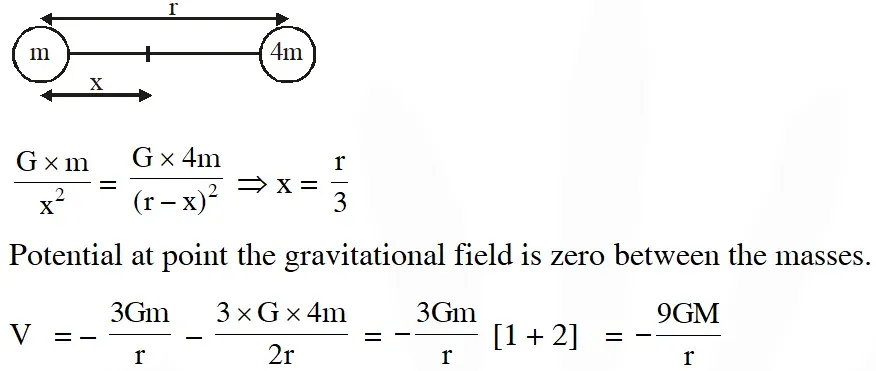
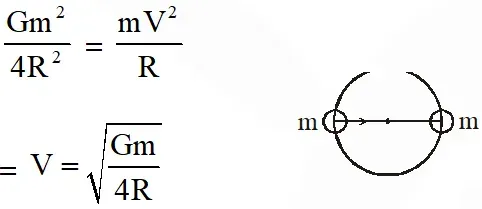
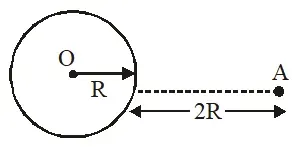
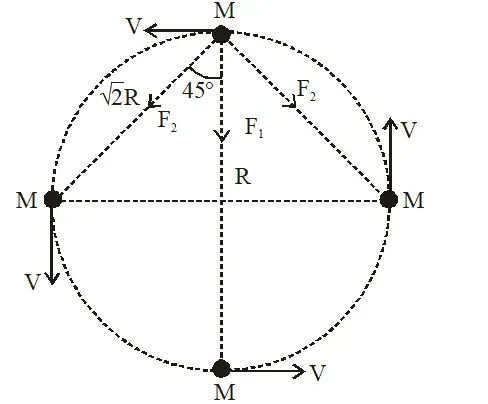
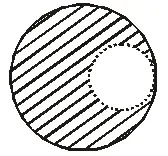
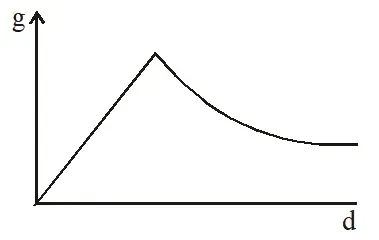
JEE Main Previous Year Question of Physics with Solutions are available here. Practicing JEE Main Previous Year Papers Questions of Physics will help all the JEE aspirants in realizing the question pattern as well as help in analyzing their weak & strong areas. Get detailed Class 11th &12th Physics Notes to prepare for Boards as well as competitive exams like IIT JEE, NEET etc. eSaral helps the students in clearing and understanding each topic in a better way. eSaral is providing complete chapter-wise notes of Class 11th and 12th both for all subjects. Besides this, eSaral also offers NCERT Solutions, Previous year questions for JEE Main and Advance, Practice questions, Test Series for JEE Main, JEE Advanced and NEET, Important questions of Physics, Chemistry, Math, and Biology and many more. Download eSaral app for free study material and video tutorials. Simulator Previous Years AIEEE/JEE Mains Questions [esquestion] The height at which the acceleration due to gravity becomes $\frac{g}{9}$ (where g = the acceleration due to gravity on the surface of the earth) in terms of R, the radius of the earth, is :- (1) $\frac{\mathrm{R}} {2}$ (2) $\sqrt{2} \mathrm{R}$ (3) 2R (4) $\frac{\mathrm{R}}{\sqrt{2}}$ #tag# [AIEEE - 2009] #sol# (3) $\mathrm{g}_{\mathrm{h}}=\frac{\mathrm{g}}{\left(1+\frac{\mathrm{h}}{\mathrm{R}}\right)^{2}} \Rightarrow\left(1+\frac{\mathrm{h}}{\mathrm{R}}\right)^{2}=\frac{\mathrm{g}}{\mathrm{g}_{\mathrm{h}}}=9$ $\Rightarrow 1+\frac{\mathrm{h}}{\mathrm{R}}=3 \Rightarrow \mathrm{h}=2 \mathrm{R}$ [/esquestion] [esquestion] Two bodies of masses m and 4m are placed at a distance r. The gravitational potential at a point on the line joining them where the gravitational field is zero is :- $(1)-\frac{6 \mathrm{Gm}}{\mathrm{r}}$ $(2)-\frac{9 \mathrm{Gm}}{\mathrm{r}}$ (3) zero $(4)-\frac{4 \mathrm{Gm}}{\mathrm{r}}$ #tag# [AIEEE - 2011] #sol# (2) [/esquestion] [esquestion] Two particles of equal mass 'm' go around a circle of radius R under the action of their mutual gravitational attraction. The speed of each particle with respect to their centre of mass is:- (1) $\sqrt{\frac{\mathrm{Gm}}{\mathrm{R}}}$ (2) $\sqrt{\frac{\mathrm{Gm}}{4 \mathrm{R}}}$ (3) $\sqrt{\frac{\mathrm{Gm}}{3 \mathrm{R}}}$ (4) $\sqrt{\frac{\mathrm{Gm}}{2 \mathrm{R}}}$ #tag# [AIEEE-2011] #sol# (2) [/esquestion] [esquestion] The mass of a spaceship is 1000 kg. It is to be launched from the earth's surface out into free space. The value of 'g' and 'R' (radius of earth) are 10 m/s2 and 6400 km respectively. The required energy for this work will be :- (1) $6.4 \times 10^{10}$ Joules (2) $6.4 \times 10^{11}$ Joules (3) $6.4 \times 10^{8}$ Joules (4) $6.4 \times 10^{9}$ Joules #tag# [AIEEE-2012] #sol# (1) $\mathrm{PE}_{\mathrm{i}}+\mathrm{KE}_{\mathrm{i}}=\mathrm{PE}_{\mathrm{f}}+\mathrm{KE}_{\mathrm{f}}$ $-\mathrm{mgR}+\mathrm{KE}_{\mathrm{i}}=0+0$ $\mathrm{KE}_{\mathrm{i}}=+\mathrm{mgR}=1000 \times 10 \times 6.4 \times 10^{6}$ work done $=6.4 \times 10^{10} \mathrm{J}$ [/esquestion] [esquestion] What is the minimum energy required to launch a satellite of mass m from the surface of a planet of mass M and radius R in a circular orbit at an altitude of 2R ? (1) $\frac{5 \mathrm{GmM}}{6 \mathrm{R}}$ (2) $\frac{2 \mathrm{GmM}}{3 \mathrm{R}}$ (3) $\frac{\mathrm{GmM}}{2 \mathrm{R}}$ (4) $\frac{\mathrm{GmM}}{3 \mathrm{R}}$ #tag# [JEE-Mains 2013] #sol# (1) From energy conservation $\frac{\mathrm{GMm}}{\mathrm{R}}+\mathrm{KE}=\frac{-\mathrm{GMm}}{3 \mathrm{R}}+\frac{1}{2} \mathrm{mV}^{2} \ldots(\mathrm{i})$ ...(i) From force balance at A, $\frac{\mathrm{GMm}}{(3 \mathrm{R})^{2}}=\frac{\mathrm{mv}^{2}}{3 \mathrm{R}} \Rightarrow \mathrm{V}^{2}=\frac{\mathrm{GM}}{3 \mathrm{R}}$ ...........(ii) from (i) & (ii) $\mathrm{KE}_{\text {suface }}=\frac{5}{6} \frac{\mathrm{GMm}}{\mathrm{R}}$ [/esquestion] [esquestion] Four particles, each of mass M and equidistant from each other, move along a circle of radius R under the action of their mutual gravitational attraction. The speed of each particle is : (1) $\sqrt{\frac{\mathrm{GM}}{\mathrm{R}}(1+2 \sqrt{2})}$ (2) $\frac{1}{2} \sqrt{\frac{\mathrm{GM}}{\mathrm{R}}(1+2 \sqrt{2})}$ (3) $\sqrt{\frac{\mathrm{GM}}{\mathrm{R}}}$ (4) $\sqrt{2 \sqrt{2} \frac{\mathrm{GM}}{\mathrm{R}}}$ #tag# [JEE-Mains 2014] #sol# (2) Net force on one particle $\mathrm{F}_{\mathrm{net}}=\mathrm{F}_{1}+2 \mathrm{F}_{2} \cos 45^{\circ}=$ Centripetal force $\Rightarrow \frac{\mathrm{GM}^{2}}{(2 \mathrm{R})^{2}}+\left[\frac{2 \mathrm{GM}^{2}}{(\sqrt{2} \mathrm{R})^{2}} \cos 45^{\circ}\right]=\frac{\mathrm{MV}^{2}}{\mathrm{R}}$ $\mathrm{V}=\frac{1}{2} \sqrt{\frac{\mathrm{GM}}{\mathrm{R}}(1+2 \sqrt{2})}$ $\mathrm{V}=-\frac{\mathrm{GM}}{2 \mathrm{R}^{3}}\left[3 \mathrm{R}^{2}-\frac{\mathrm{R}^{2}}{4}\right]+\frac{3 \mathrm{G}}{2} \frac{\mathrm{M}}{8 \frac{\mathrm{R}}{2}}$ $=\frac{-11 \mathrm{GM}}{8 \mathrm{R}}+\frac{3 \mathrm{GM}}{8 \mathrm{R}}=-\frac{\mathrm{GM}}{\mathrm{R}}$ [/esquestion] [esquestion] From a solid sphere of mass M and radius R, a spherical portion of radius $\frac{\mathrm{R}}{2}$ is removed, as shown in the figure. Taking gravitational potential V = 0 at r = $\infty$, the potential at the centre of the cavity thus formed is : (G = gravitational constant) (1) $\frac{-2 \mathrm{GM}}{3 \mathrm{R}}$ (2) $\frac{-2 \mathrm{GM}}{\mathrm{R}}$ (3) $\frac{-\mathrm{GM}}{2 \mathrm{R}}$ (4) $\frac{-\mathrm{GM}}{\mathrm{R}}$ #tag# [JEE-Mains 2015] #sol# (4) By principle of superosition $\mathrm{V}=-\frac{\mathrm{GM}}{2 \mathrm{R}^{3}}\left[3 \mathrm{R}^{2}-\frac{\mathrm{R}^{2}}{4}\right]+\frac{3 \mathrm{G}}{2} \frac{\mathrm{M}}{8 \frac{\mathrm{R}}{2}}$ $=\frac{-11 \mathrm{GM}}{8 \mathrm{R}}+\frac{3 \mathrm{GM}}{8 \mathrm{R}}=-\frac{\mathrm{GM}}{\mathrm{R}}$ [/esquestion] [esquestion] A satellite is reolving in a circular orbit at a height 'h' from the earth's surface (radius of earth R ; h << R). The minimum increase in its orbital velocity required, so that the satellite could escape from the earth's gravitational field, is close to : (Neglect the effect of atmosphere). (1) $\sqrt{\mathrm{gR}}(\sqrt{2}-1)$ (2) $\sqrt{2 \mathrm{gR}}$ (3) $\sqrt{\mathrm{gR}}$ (4) $\sqrt{\mathrm{gR} / 2}$ #tag# [JEE-Mains 2016] #sol# (1) $\mathrm{V}_{0}=\sqrt{\frac{\mathrm{GM}}{\mathrm{R}}}$ or $\sqrt{\mathrm{gR}}$ $\mathrm{V}_{\mathrm{e}} \sqrt{\frac{2 \mathrm{GM}}{\mathrm{R}}}$ or $\sqrt{2 \mathrm{gR}}$ $\therefore$ Increase in velocity $=\sqrt{\mathrm{gR}}[\sqrt{2}-1]$ [/esquestion] [esquestion] The variation of acceleration due to gravity g with distance d from centre of the earth is best represented by (R = Earth's radius) :- #tag# [JEE-Mains 2017] #sol# (2) $\mathrm{g}=\frac{\mathrm{GMx}}{\mathrm{R}^{3}}$ inside the Earth (straight line) $\mathrm{g}=\frac{\mathrm{GM}}{\mathrm{r}^{2}}$ outside the Earth where M is Mass of Earth option (2) [/esquestion]

Once you finish Gravitation, use the JEE Mains PYQs chapter wise archive to move smoothly into the next topics.
Solved a few Gravitation problems here? The complete JEE Main last year paper has full, year-wise papers so you can see how Gravitation questions actually show up in the real exam.
Frequently Asked Questions
What is the difference between orbital velocity and escape velocity?
Orbital velocity (v₀ = √(GM/R)) is the speed needed to maintain a circular orbit at radius R. Escape velocity (v_e = √(2GM/R)) is the speed needed to escape the gravitational field entirely from that radius. The escape velocity is always √2 times the orbital velocity at the same radius — a relationship that appears directly in the 2016 JEE Main question above.
Is Gravitation important for JEE Main or only for JEE Advanced?
Gravitation is important for both exams, but the JEE Main questions are more formula-based and direct. JEE Advanced tests deeper conceptual understanding — for example, variable density planets or non-uniform gravitational fields. For JEE Main preparation, mastering the standard PYQ question types shown above is sufficient to score full marks on this chapter.
How many questions come from Gravitation in JEE Main each year?
JEE Main typically includes 1 to 2 questions from Gravitation per paper, worth 4–8 marks. According to NTA's official question distribution, the chapter appears in almost every session. While the marks count is modest, the questions are often straightforward if you know the three core formulas (g variation, gravitational potential, orbital/escape velocity), making it a reliable scoring opportunity.
What is the minimum energy required to launch a satellite to an altitude of 2R from the planet's surface?
The minimum launch energy is 5GMm/6R, where M is the planet's mass, m is the satellite's mass, and R is the planet's radius. This result comes from adding the kinetic energy needed for the circular orbit at 3R (= GMm/6R) to the change in gravitational potential energy from the surface to altitude 2R (= 2GMm/3R). The full derivation appears in the 2013 JEE Main solution above.
Which chapters in Class 11 Physics are most closely linked to Gravitation?
Gravitation connects most directly to Laws of Motion (centripetal force for orbital problems), Work, Energy and Power (launch/escape energy calculations), and Rotational Motion (angular momentum in Kepler's second law). Reviewing these chapters alongside Gravitation will speed up your problem-solving. The NCERT Solutions for Class 11 Physics cover all four chapters with solved examples.
How do I find the gravitational potential at the point where the field is zero between two masses?
First, locate the zero-field point by setting the two gravitational fields equal and solving for distance (the point lies closer to the smaller mass). Then calculate the scalar gravitational potential from each mass at that point separately — potential is a scalar so you simply add them with their negative signs. This method solved the 2011 AIEEE question above
Team eSaral
eSaral Academic and Editorial Team
Team eSaral is the collective author profile for educational content created by eSaral’s teachers and academic contributors. The team draws on expertise from IIT graduates, doctors, experienced educators and subject specialists to develop resources for JEE, NEET and school students. Our articles aim to explain concepts clearly and help students study with confidence.
Related Posts
Plant Cell Diagram: Labelled Structure, Parts and Functions
Simple, labelled plant cell diagram with parts and functions. Covers plant cell structure for Class 6, 7, 8, 9, 10 and 11 students, CBSE-aligned.

Saransh Gupta Sir's Visit to IIT Patna: Hostel Life, Placements & Lessons for JEE Aspirants
Inside Saransh Gupta Sir's IIT Patna visit — hostel life, the library, placements, internships, and real advice for JEE aspirants from students living the IIT dream.
Molality Formula: Formula for Molality, Derivation & Solved Examples
Molality formula is $m = \dfrac{n}{W}$. Learn the formula of molality, its SI unit, derivation, relation with molarity, and solved examples for Class 11, JEE and NEET.
BITSAT Previous Year Question Paper PDF
Download BITSAT previous year question papers PDF. Get year-wise BITSAT PYQs, memory-based papers, exam pattern, and preparation tips to improve your BITSAT preparation.

Teachers’ Day 2026 at eSaral Gurukul: Celebrating the Bond Between Students, Teachers & Mentors
See how Teachers’ Day 2026 was celebrated at eSaral Gurukul, reflecting the bond among students, teachers, and mentors, and the role of guidance beyond academics.
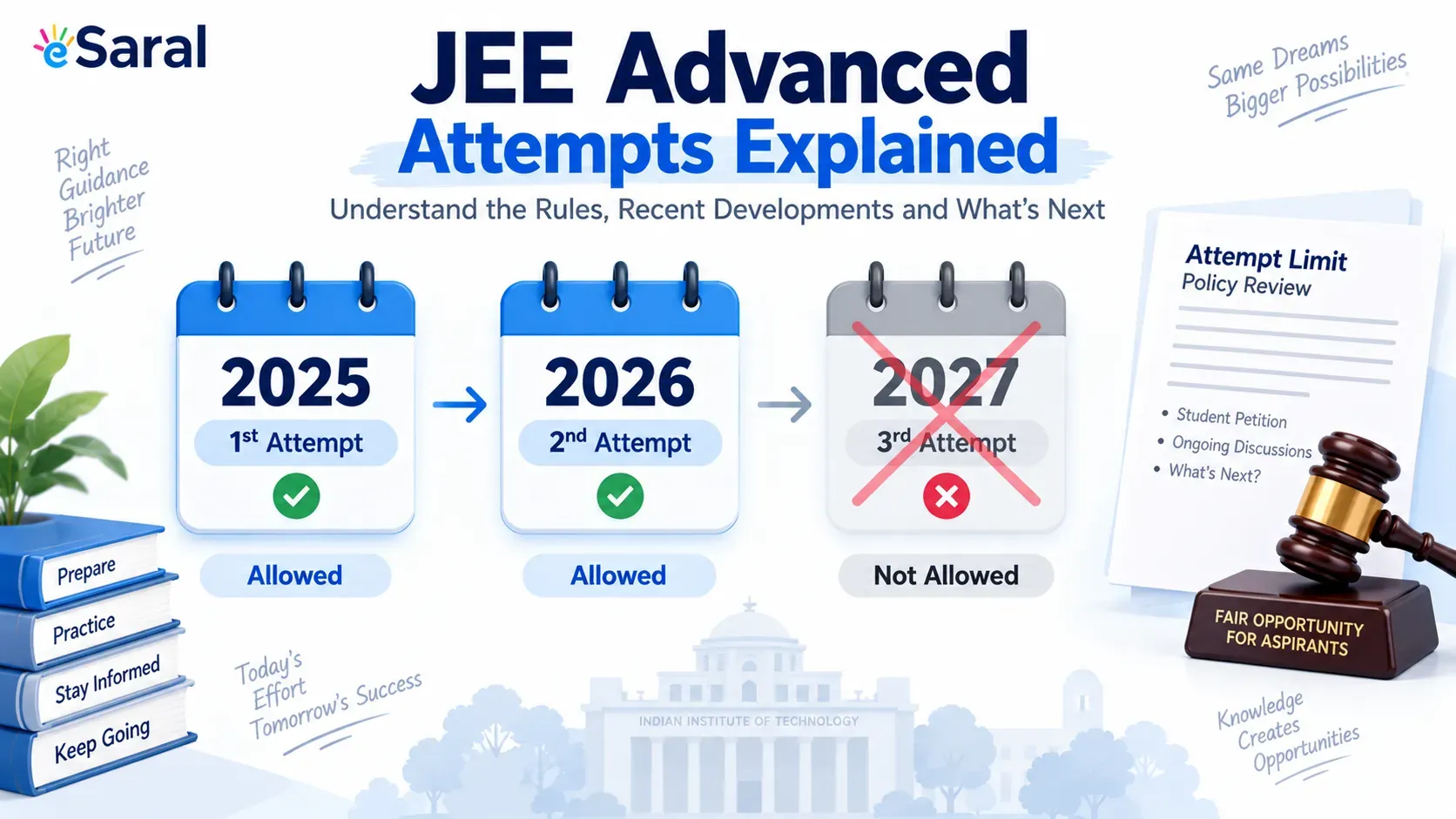
JEE Advanced Attempts: Can You Give It a Third Time? Rules Explained
JEE Advanced attempts: current rule is 2 consecutive years only: full eligibility criteria, the 2025 third-attempt controversy, and the latest 2026 petition news.

Best JEE Preparation App
Best JEE preparation app for Main & Advanced: AI mock tests, live doubt-solving, thousands of practice questions. JEE preparation app for droppers & Class 11-12.
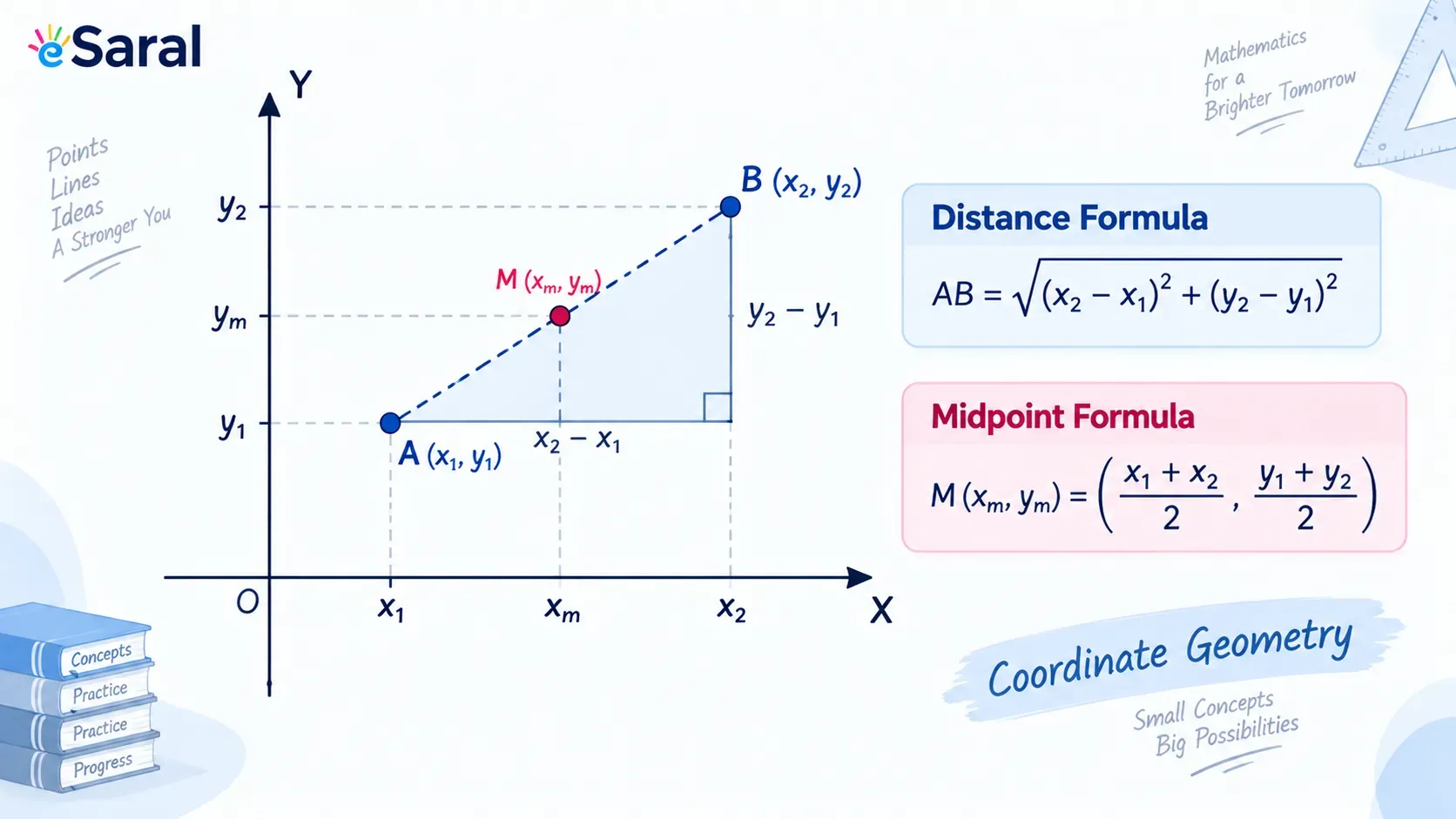
Coordinate Geometry Class 10: Formulas, Notes & Solved Examples
Coordinate geometry class 10: complete CBSE formulas — distance, section, midpoint and area of triangle — with derivation, notes and solved examples.
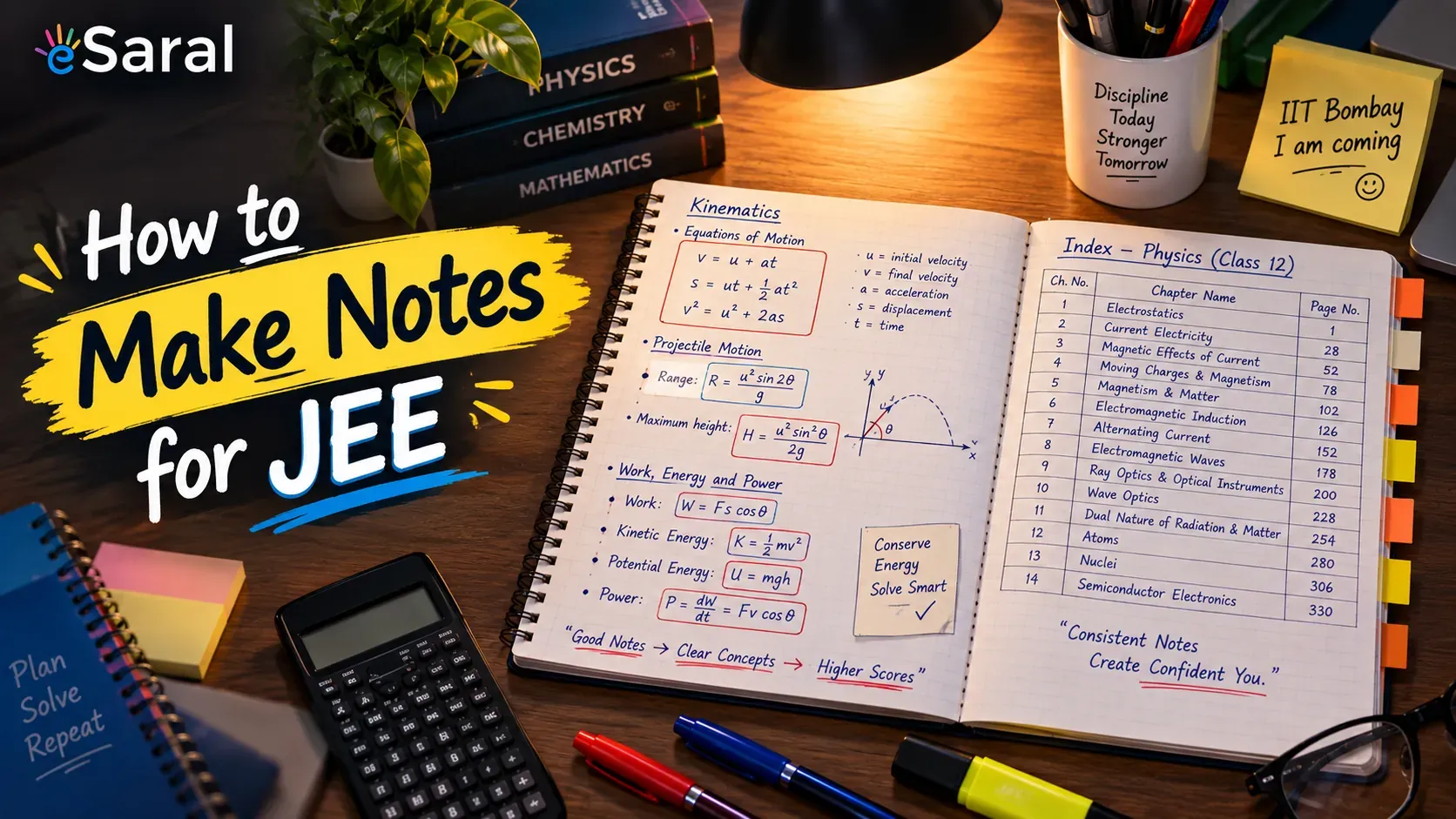
How to make Notes For JEE Smart Notes Strategy of an AIR 41
Learn how to make notes for JEE the way toppers do — indexing, shorthand, and smart short notes for JEE that cut revision time to just 5–7 days.
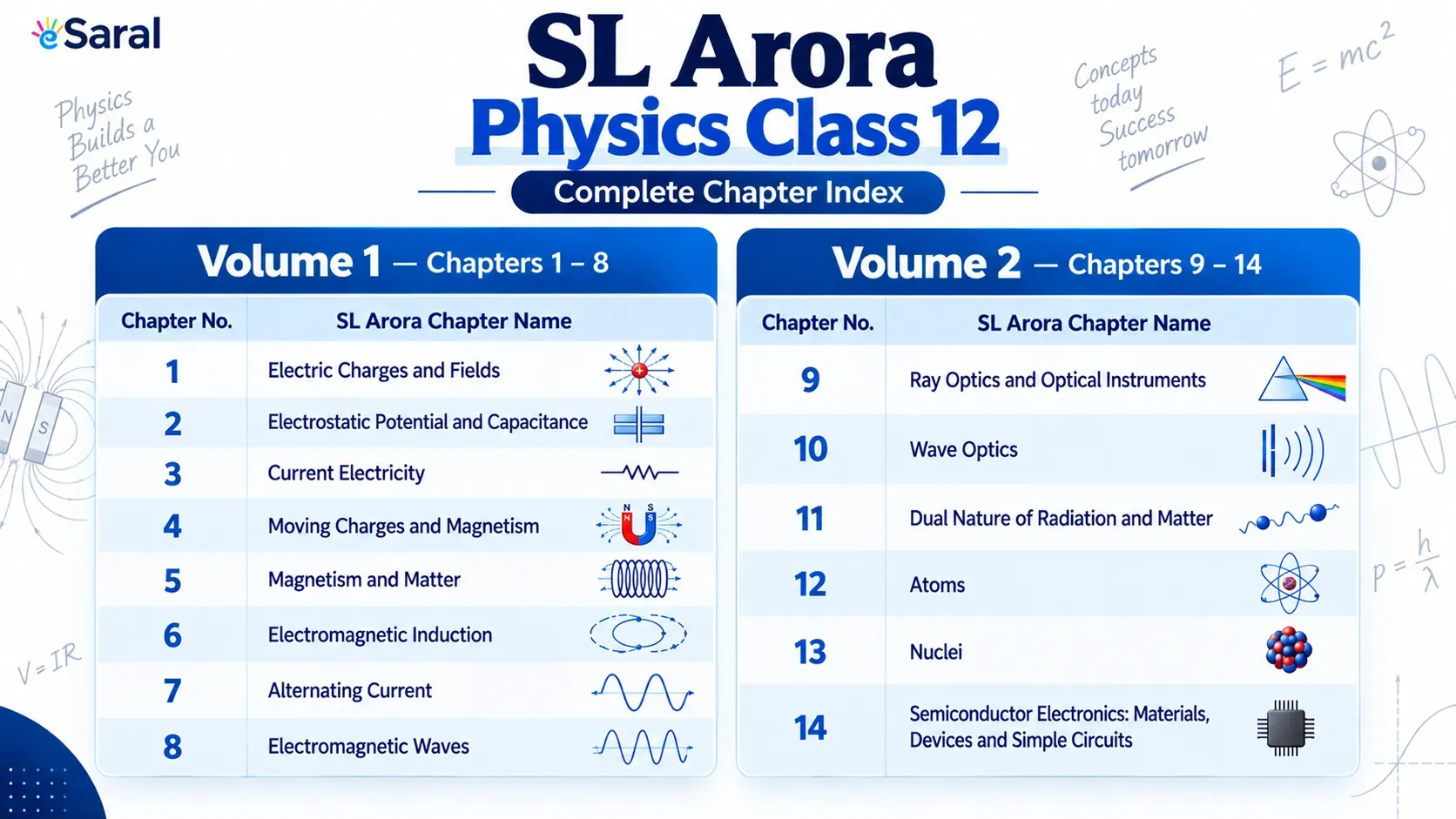
SL Arora Physics Class 12 Index – Chapter List for Volume 1 & 2
SL Arora Physics Class 12 index — complete chapter list for Volume 1 & 2, mapped to NCERT solutions for board, JEE Main, and NEET preparation.