
Photoelectric Effect - JEE Main Previous Year Questions with Solutions

eSaral Academic and Editorial Team
Summary
Photoelectric Effect questions in JEE Main predominantly test Einstein's photoelectric equation, work function calculations, stopping potential, and threshold frequency. NTA/AIEEE has asked 1–2 questions from this topic almost every year. Step-by-step solutions to all major previous year questions are listed below.

eSaral > JEE Main Previous Year Questions > Photoelectric Effect JEE Main Previous Year Questions with Solutions

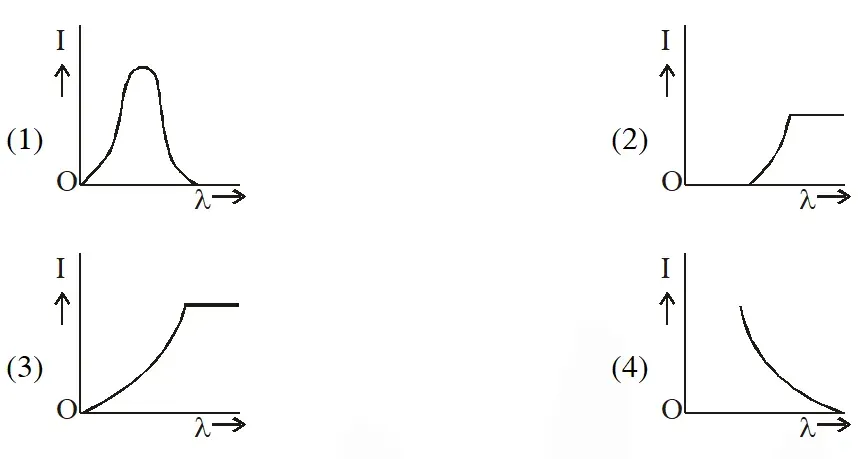
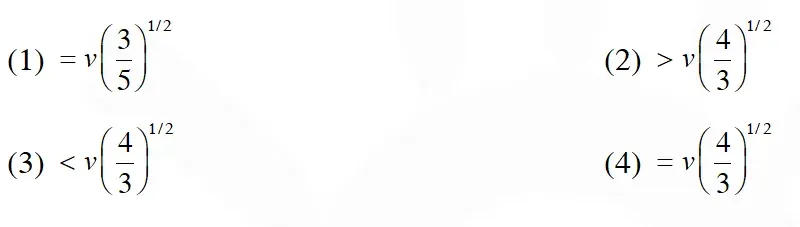
JEE Main Previous Year Question of Physics with Solutions are available here. Practicing JEE Main Previous Year Papers Questions of Physics will help all the JEE aspirants in realizing the question pattern as well as help in analyzing their weak & strong areas. Get detailed Class 11th &12th Physics Notes to prepare for Boards as well as competitive exams like IIT JEE, NEET, etc. eSaral helps the students in clearing and understanding each topic in a better way. eSaral is providing complete chapter-wise notes of Class 11th and 12th for all subjects. Besides this, eSaral also offers NCERT Solutions, Previous year questions for JEE Main and Advanced, Practice questions, Test Series for JEE Main, JEE Advanced and NEET, Important questions of Physics, Chemistry, Math, and Biology and many more. Download the eSaral app for free study material and video tutorials. Simulator Previous Years AIEEE/JEE Mains Questions [esquestion] The surface of a metal is illuminated with the light of 400 nm. The kinetic energy of the ejected photoelectrons was found to be 1.68 eV. The work function of the metal is : (hc = 1240 eV-nm) (1) 1.51 eV (2) 1.68 eV (3) 3.09 eV (4) 1.41 eV #tag# [AIEEE - 2009] #sol# (4) $\mathrm{E}_{\mathrm{k}}=\frac{\mathrm{hc}}{\lambda}-\phi_{0} \Rightarrow 1.68=\frac{12400}{4000}-\phi_{0}$ By solving it $\phi_{0}=1.42 \mathrm{eV}$ [/esquestion] [esquestion] Statement-1 : When ultraviolet light is incident on a photocell, its stopping potential is V0 and the maximum kinetic energy of the photoelectrons is $\mathrm{K}_{\mathrm{max}}$. When the ultraviolet light is replaced by X-rays, both $\mathrm{V}_{0}$ and $\mathrm{K}_{\mathrm{max}}$ increase. Statement-2 : Photoelectrons are emitted with speeds ranging from zero to a maximum value because of the range of frequencies present in the incident light (1) Statement–1 is true, Statement–2 is false (2) Statement–1 is true, Statement–2 is true; Statement–2 is the correct explanation of Statement– 1 (3) Statement–1 is true, Statement–2 is true; Statement–2 is not the correct explanation of Statement– 1 (4) Statement–1 is false, Statement–2 is true #tag# [AIEEE - 2010] #sol# (1) Speed of emitted electrons is independent of frequency of incident light. [/esquestion] [esquestion] This question has Statememtn-1 and Statement-2. Of the four choices given after the statements, choose the one that best describes the two statements. Statement–1 : A metallic surface is irradiated by a monochromatic light of frequency $\mathrm{v}>\mathrm{v}_{0}$ (the threshold frequency). The maximum kinetic energy and the stopping potential are $\mathrm{K}_{\max }$ and $\mathrm{V}_{0}$ respectively. If the frequency incident on the surface is doubled, both the $\mathrm{K}_{\max }$ and $\mathrm{V}_{0}$ are also boubled. Statement-2 : The maximum kinetic energy and the stopping potential of photoelectrons emitted from a surface are linearly dependent on the frequency of incident light. (1) Statement–1 is true, Statement–2 is true, Statement–2 is not the correct explanationof Statement– 1 (2) Statement–1 is false, Statement–2 is true (3) Statement–1 is true, Statement–2 is false (4) Statement–1 is true, Statement–2 is true, Statement–2 is the correct explanation of Statement– 1 #tag# [AIEEE-2011] #sol# (2) [/esquestion] [esquestion] The anode voltage of photocell is kept fixed. The wavelength $\lambda$ of the light falling on the cathode is gradually changed. The plate current I of the photocell varies as follows #tag# [AIEEE-2013] #sol# (4) For constant intensity as wavelength decreases energy of photons increases and number of photons decreases. So it may seem that current should decrease. But the probability that a photon will be successful in emitting an electron will also increase. So as wavelength decreases current increases [/esquestion] [esquestion] Radiation of wavelength $\lambda$, is incident on a photocell. The fastest emitted electron has speed v. If the wavelength of changed to $\frac{3 \lambda}{4}$, the speed of the fastest emitted electron will be :- #tag# [JEE Main-2016] #sol# (2) $\mathrm{E}=(\mathrm{KE})_{\max }+\mathrm{f}$ $\left[\frac{\mathrm{hc}}{\lambda}=(\mathrm{KE})_{\max }+\phi\right] \ldots .$ (1) \frac{4}{3} \frac{\mathrm{hc}}{\lambda}=\left(\frac{4}{3} \mathrm{KE}_{\max }+\frac{\phi}{3}\right)+\phi [/esquestion]
Explore more resources to strengthen your JEE Main preparation:
- NCERT Solutions for Class 12 Physics — complete chapter-wise solutions including Dual Nature of Radiation
- NCERT Solutions for Class 11 Physics — Foundation Concepts for Modern Physics
-NCERT Books for Class 12 — download the official textbook chapters
eSaral's JEE program, built by IIT Bombay faculty with verified All India Ranks, gives you structured topic-wise practice, a 5-layer doubt-solving system, and Kota-quality teaching at a fraction of classroom coaching costs. Bookmark this page and revisit it the week before your exam as a quick revision reference.
JEE Main Previous Year Question of Physics with Solutions are available here. Nuclear Physics - JEE Main Previous Year Questions with Solutions
If you're revising Photoelectric Effect offline, the JEE Mains PYQ chapter-wise PDF download collection lets you move between chapters from one place.
Don't stop at Photoelectric Effect alone — our JEE Main previous year paper lets you attempt complete question sets exactly as NTA set them.
Frequently Asked Questions
Why does doubling the frequency not double the maximum kinetic energy?
Because KE_max = hf − φ, not KE_max = hf. The work function φ is a constant subtracted from the photon energy. When f doubles, KE_max becomes 2hf − φ, which is not twice (hf − φ) unless φ = 0. This is a classic JEE Main trap tested directly in AIEEE 2011.
What is Einstein's photoelectric equation and how is it used in JEE?
Einstein's equation is KE_max = hf − φ, where h is Planck's constant, f is the frequency of incident light, and φ is the work function of the metal. In JEE Main, this equation is used to find the work function when KE_max and wavelength are given, or to find the speed of the fastest electron when the wavelength changes.
What is the weightage of Photoelectric Effect in JEE Main?
Photoelectric Effect typically contributes 1–2 questions (4–8 marks) in JEE Main every year. It falls under Modern Physics, which as a whole carries 3–4 questions. Based on NTA's official papers from 2009 to 2024, this topic has appeared in over 85% of JEE Main sessions, making it one of the most reliable scoring topics in Physics.
How should I prepare Photoelectric Effect for JEE Main 2025–2026?
Start with NCERT Class 12 Physics Chapter 11 to build conceptual clarity, then solve AIEEE/JEE Main previous year questions year-by-year. Focus on: (1) numerical problems using Einstein's equation, (2) graph interpretation (I vs λ, KE vs f), and (3) statement-based questions on stopping potential and intensity. Aim to solve 30+ previous year questions before your exam
Does increasing light intensity increase the stopping potential?
No. Increasing intensity increases the number of emitted electrons (and therefore photocurrent), but it does not change KE_max or stopping potential. Stopping potential is determined solely by photon frequency. This is a fundamental result of Einstein's quantum explanation and is frequently tested in JEE Main conceptual questions
What is stopping potential in the photoelectric effect?
Stopping potential (V₀) is the minimum reverse voltage applied to a photocell to stop all emitted photoelectrons. It satisfies eV₀ = KE_max. Stopping potential depends only on the frequency of incident light, not on its intensity. Higher frequency light produces a higher stopping potential.
Team eSaral
eSaral Academic and Editorial Team
Team eSaral is the collective author profile for educational content created by eSaral’s teachers and academic contributors. The team draws on expertise from IIT graduates, doctors, experienced educators and subject specialists to develop resources for JEE, NEET and school students. Our articles aim to explain concepts clearly and help students study with confidence.
Related Posts

Plant Cell Diagram: Labelled Structure, Parts and Functions
Simple, labelled plant cell diagram with parts and functions. Covers plant cell structure for Class 6, 7, 8, 9, 10 and 11 students, CBSE-aligned.

Saransh Gupta Sir's Visit to IIT Patna: Hostel Life, Placements & Lessons for JEE Aspirants
Inside Saransh Gupta Sir's IIT Patna visit — hostel life, the library, placements, internships, and real advice for JEE aspirants from students living the IIT dream.
Molality Formula: Formula for Molality, Derivation & Solved Examples
Molality formula is $m = \dfrac{n}{W}$. Learn the formula of molality, its SI unit, derivation, relation with molarity, and solved examples for Class 11, JEE and NEET.
BITSAT Previous Year Question Paper PDF
Download BITSAT previous year question papers PDF. Get year-wise BITSAT PYQs, memory-based papers, exam pattern, and preparation tips to improve your BITSAT preparation.

Teachers’ Day 2026 at eSaral Gurukul: Celebrating the Bond Between Students, Teachers & Mentors
See how Teachers’ Day 2026 was celebrated at eSaral Gurukul, reflecting the bond among students, teachers, and mentors, and the role of guidance beyond academics.
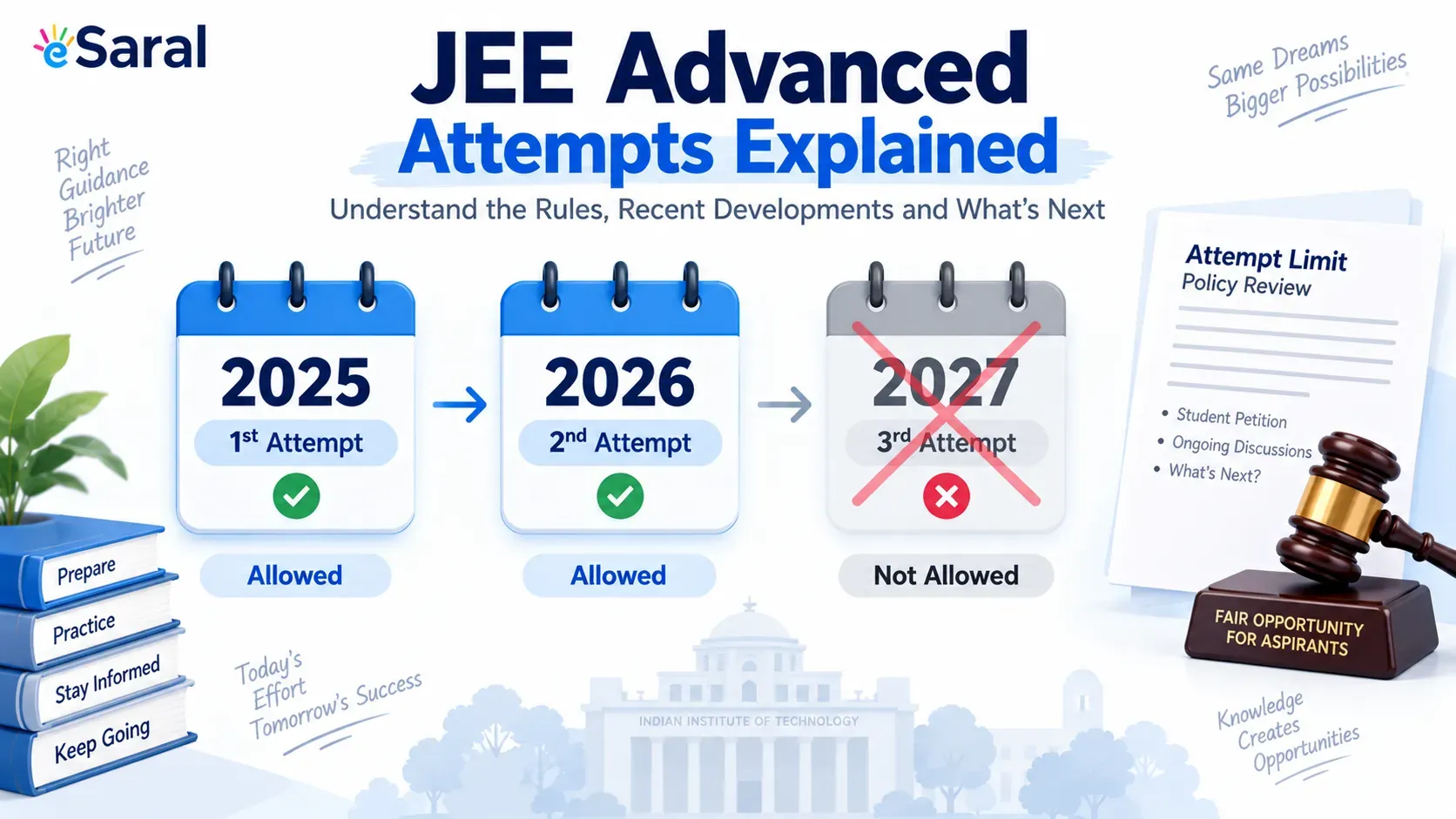
JEE Advanced Attempts: Can You Give It a Third Time? Rules Explained
JEE Advanced attempts: current rule is 2 consecutive years only: full eligibility criteria, the 2025 third-attempt controversy, and the latest 2026 petition news.

Best JEE Preparation App
Best JEE preparation app for Main & Advanced: AI mock tests, live doubt-solving, thousands of practice questions. JEE preparation app for droppers & Class 11-12.
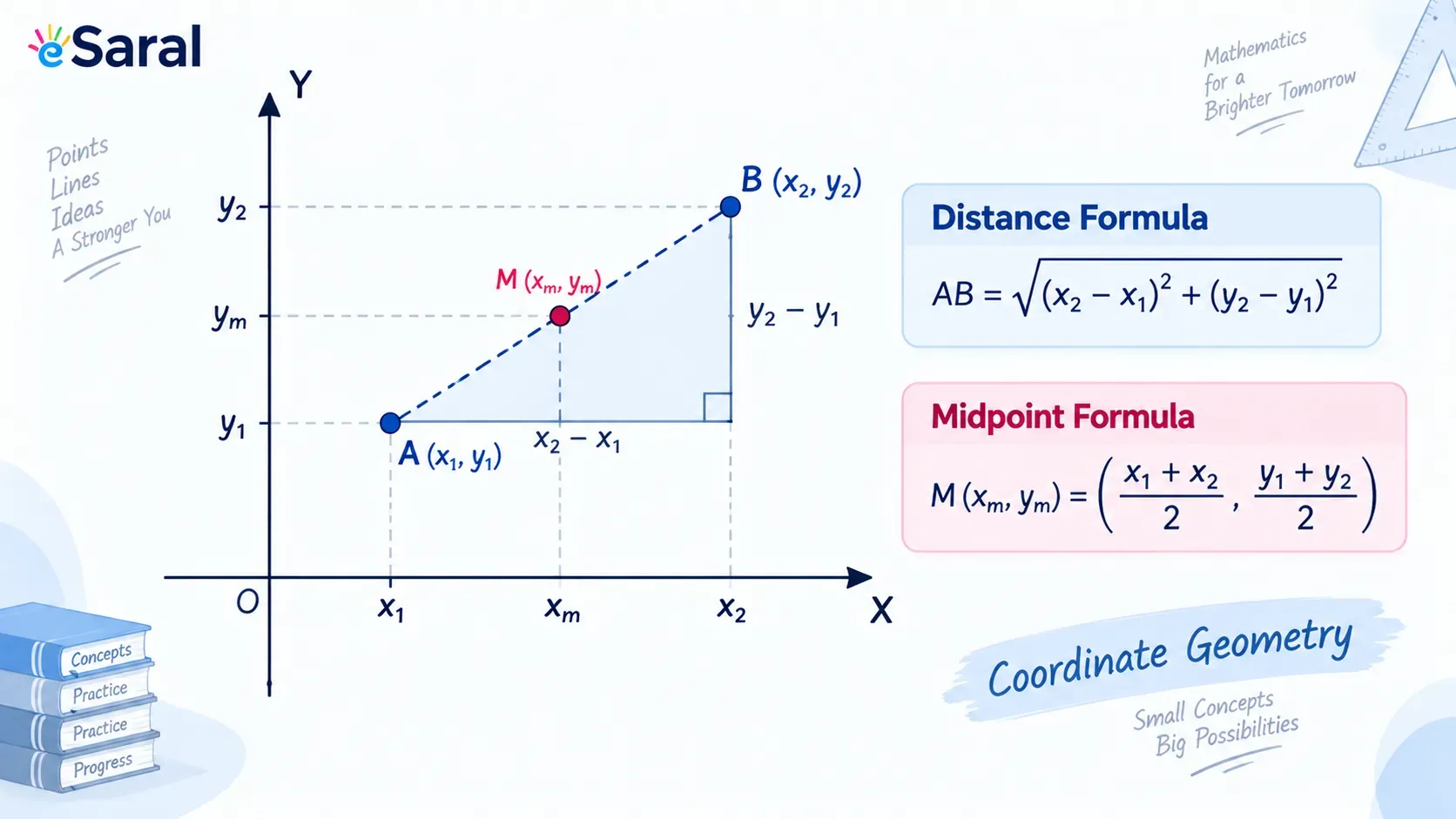
Coordinate Geometry Class 10: Formulas, Notes & Solved Examples
Coordinate geometry class 10: complete CBSE formulas — distance, section, midpoint and area of triangle — with derivation, notes and solved examples.
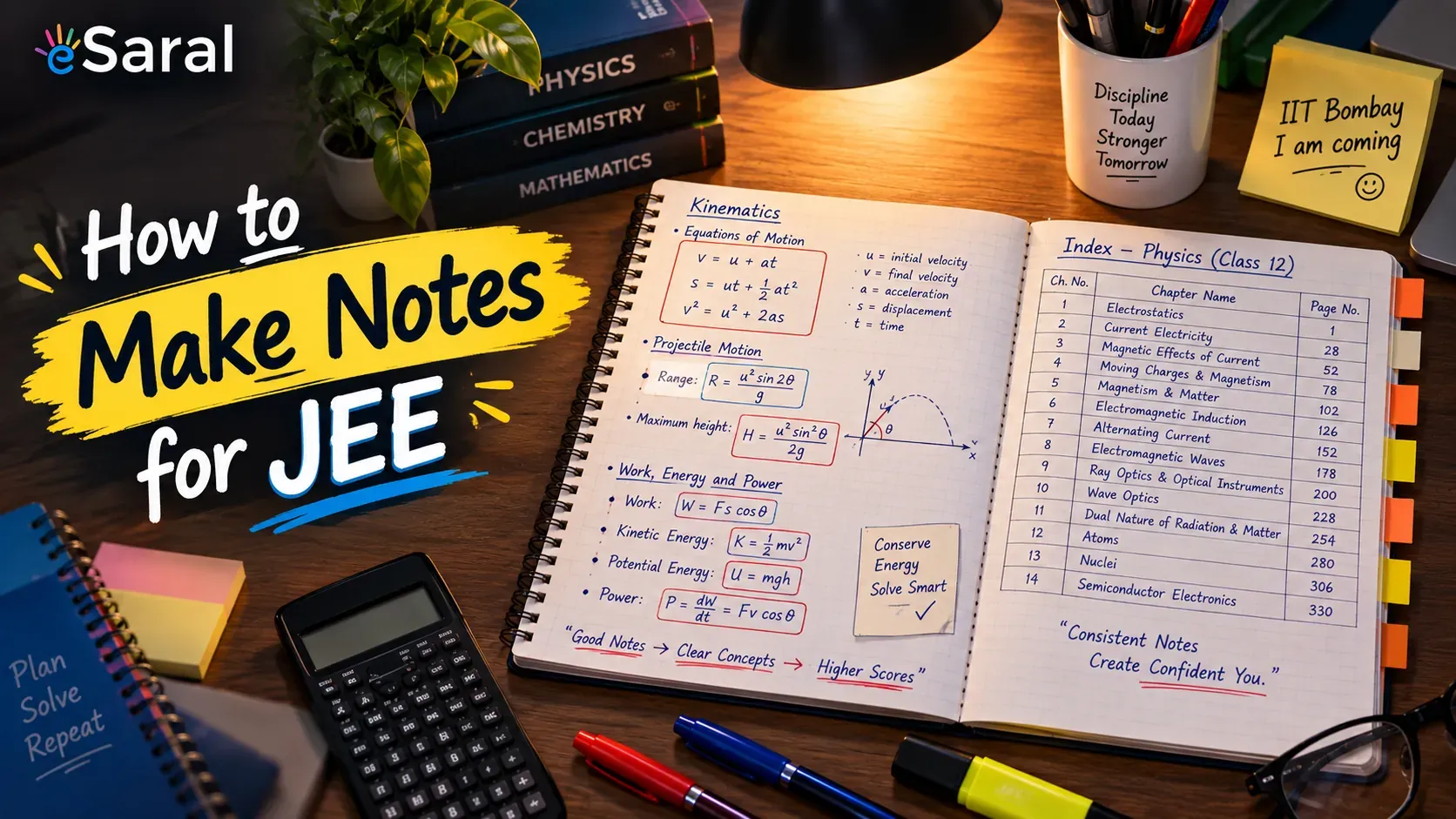
How to make Notes For JEE Smart Notes Strategy of an AIR 41
Learn how to make notes for JEE the way toppers do — indexing, shorthand, and smart short notes for JEE that cut revision time to just 5–7 days.
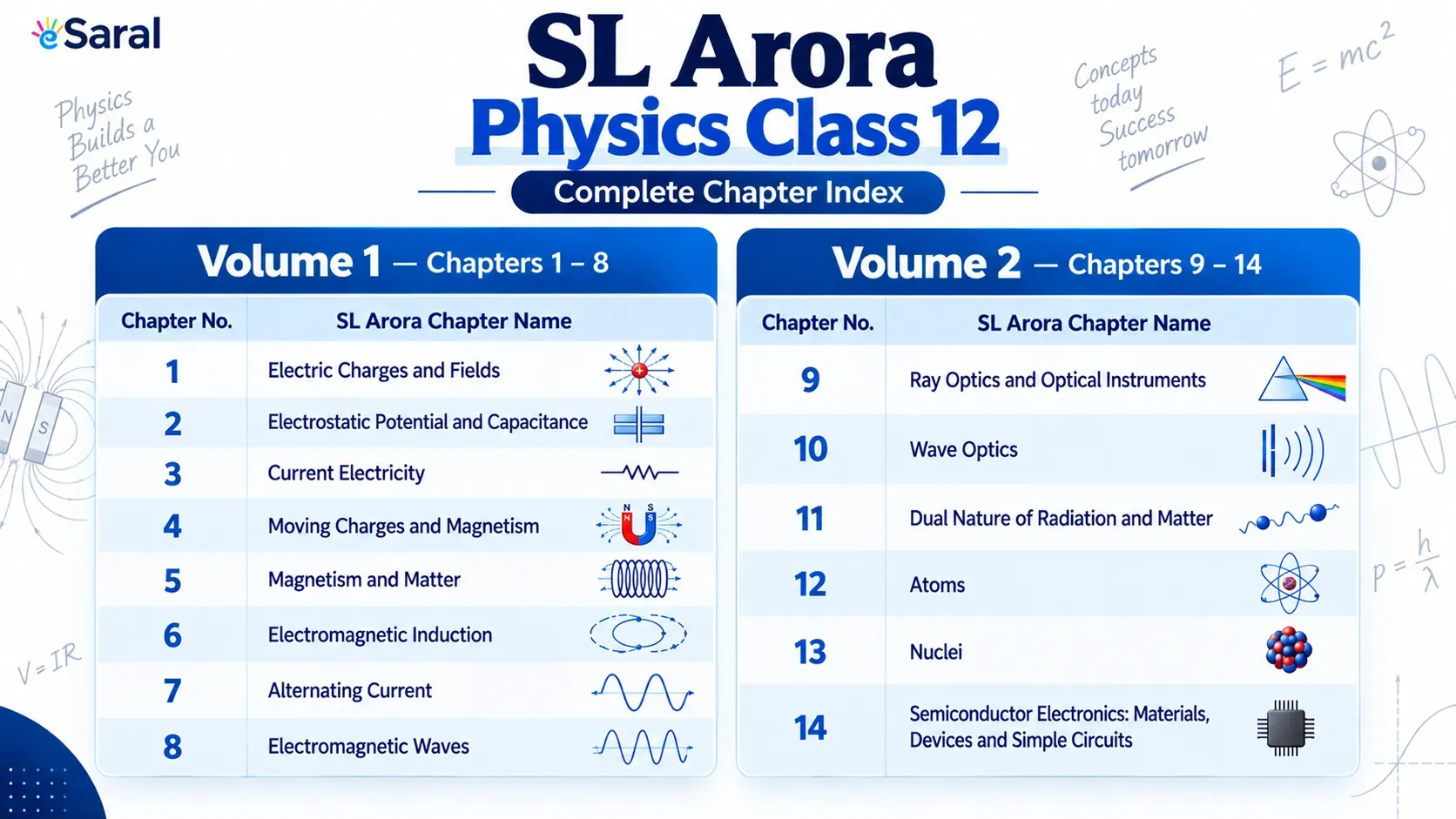
SL Arora Physics Class 12 Index – Chapter List for Volume 1 & 2
SL Arora Physics Class 12 index — complete chapter list for Volume 1 & 2, mapped to NCERT solutions for board, JEE Main, and NEET preparation.