
Sectors Of Indian Economy Class 10 Notes

eSaral Academic and Editorial Team

Welcome to this article on the sectors of the Indian economy, specifically designed for Class 10 students. In the article "Sectors Of Indian Economy Class 10 Notes" , we will cover the different sectors that make up the Indian economy, their importance, and their interdependence. Understanding the three sectors of the economy - primary, secondary and tertiary - is crucial to comprehend the economic development of India. By the end of this article, you will have a clear understanding of the contributions of each sector and how they have evolved over the years. So, let's dive in and explore the sectors of the Indian economy.
Primary sector -Sectors Of Indian Economy Class 10 Notes
When we produce goods by exploiting natural resources, it is an activity of the primary sector.
Secondary sector
Covers activities in which natural products are changed into other forms through ways of manufacturing, it is also called as industrial sector.
Tertiary sector - Sectors Of Indian Economy Class 10 Notes
The primary and secondary sectors are developed with the help of various activities that do not produce goods themselves but support the production process. For instance, goods produced in the primary sector require transportation via trucks or trains to be sold in wholesale and retail shops. Similarly, products are stored in godowns when necessary, and communication services such as talking on the telephone aid in the process. Borrowing money from banks is another activity that supports development. As these activities generate services rather than goods, they are collectively referred to as the Service sector.
Gross Domestic Product (GDP)
The total production of each sector during a particular year is determined by calculating the value of final goods and services produced in that sector. When the production values of all three sectors are added together, the result is the Gross Domestic Product (GDP) of the country. The GDP represents the total value of all final goods and services produced within the country over the course of a particular year.
Underemployment - Sectors Of Indian Economy Class 10 Notes
Disguised unemployment refers to a situation where people are working but not at their full potential. This form of underemployment is not easily noticeable, unlike someone who is completely jobless. It is termed "disguised" because individuals may appear to be employed, but their productivity is not fully utilized, resulting in inefficient use of resources.
Mahatma Gandhi National Rural Employment Guarantee Act 2005, (MNREGA 2005)
The government has guaranteed 100 days of employment in a year to all those who are capable and in need of work under NREGA 2005. In the event that the government is unable to provide employment opportunities, it will provide unemployment allowances to eligible individuals as a form of compensation.
Organised sector
It covers those enterprises or places of work where the terms of employment are regular and therefore, people have assured work.
Unorganized sector - Sectors Of Indian Economy Class 10 Notes
It is characterized by small and scattered units which are largely outside the control of the government. There are rules and regulations but these are not followed.
Public sector
In this sector government owns most of the assets and provides all the services.
Growing importance of Tertiary sector
- Several services such as hospitals, educational institutions, post and telegraph services, police stations, courts, village administrative offices, municipal corporations, defense, transport, banks, insurance companies etc. are required in any country.
- The development of agriculture and industry leads to the development of services like transport, trade, storage and the like.
- The more developed the primary and secondary sectors are, the more demand there will be for such services.
- As income levels rise, certain sections of people start demanding more services like eating out, tourism, shopping, private hospitals, and professional training, especially in big cities. -In recent years, certain new services based on information and communication technology have become essential. - Sectors Of Indian Economy Class 10 Notes
In conclusion, understanding the sectors of the Indian economy is crucial to comprehend the functioning and growth of the economy. India's economy is highly diversified, with agriculture, industry, and services playing significant roles. Each sector has its own importance and contributes differently to the overall growth of the economy. The primary sector provides raw materials, while the secondary sector converts them into finished goods, and the tertiary sector provides services that help in the smooth functioning of the economy. It is important for us to continue to develop all three sectors to ensure a sustained and inclusive economic growth. - Sectors Of Indian Economy Class 10 Notes
Download the eSaral App for complete Class 10 Video lectures, Study material, revision and much more.
Sectors Of Indian Economy Class 10 Notes
Also read,
Class 10 NCERT Science notes -All Chapters
Power Sharing Notes Class 10th
Democracy and Diversity Class 10 Notes
Popular Struggles and Movements Class 10 Notes
Team eSaral
eSaral Academic and Editorial Team
Team eSaral is the collective author profile for educational content created by eSaral’s teachers and academic contributors. The team draws on expertise from IIT graduates, doctors, experienced educators and subject specialists to develop resources for JEE, NEET and school students. Our articles aim to explain concepts clearly and help students study with confidence.
Related Posts

Plant Cell Diagram: Labelled Structure, Parts and Functions
Simple, labelled plant cell diagram with parts and functions. Covers plant cell structure for Class 6, 7, 8, 9, 10 and 11 students, CBSE-aligned.

Saransh Gupta Sir's Visit to IIT Patna: Hostel Life, Placements & Lessons for JEE Aspirants
Inside Saransh Gupta Sir's IIT Patna visit — hostel life, the library, placements, internships, and real advice for JEE aspirants from students living the IIT dream.
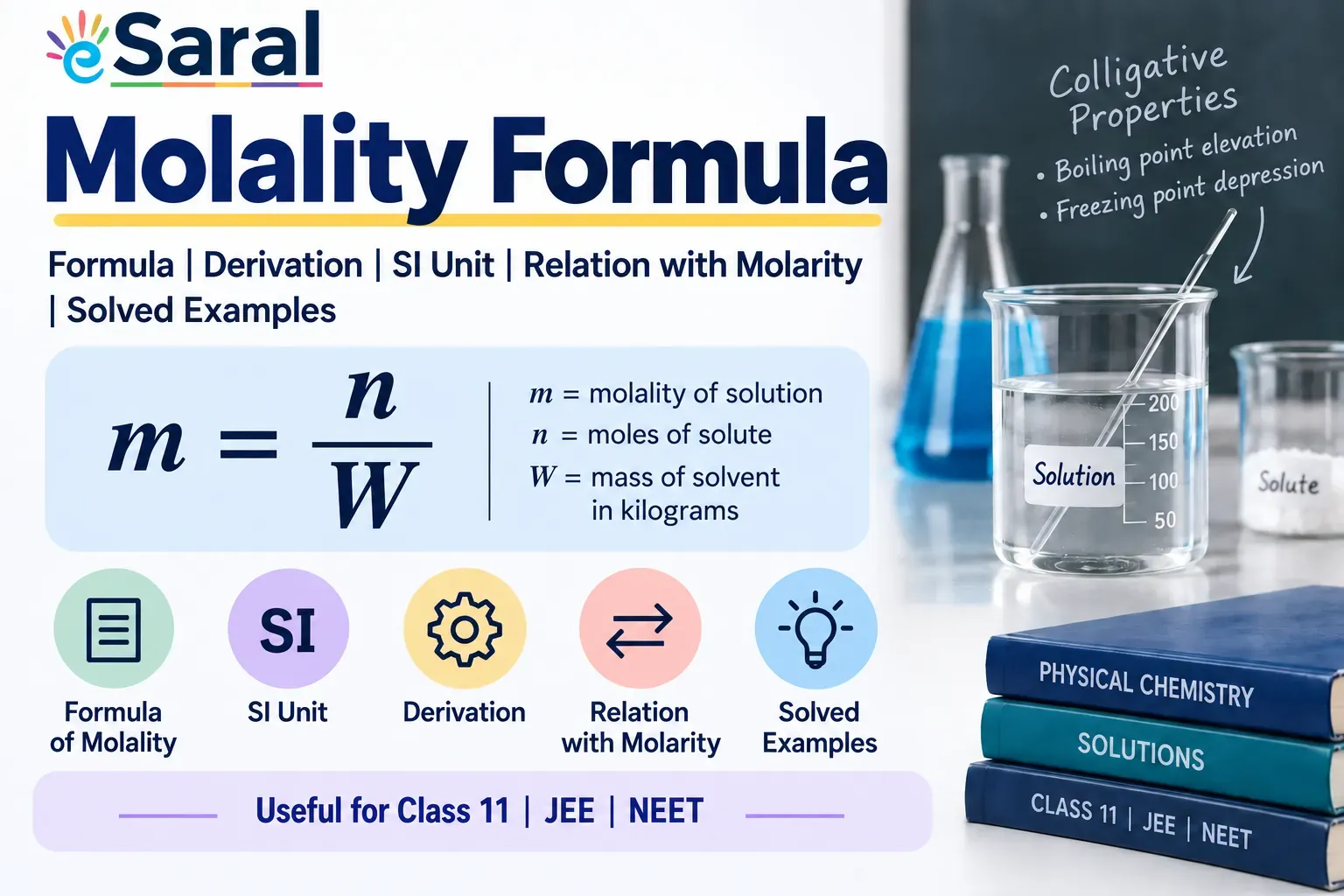
Molality Formula: Formula for Molality, Derivation & Solved Examples
Molality formula is $m = \dfrac{n}{W}$. Learn the formula of molality, its SI unit, derivation, relation with molarity, and solved examples for Class 11, JEE and NEET.

BITSAT Previous Year Question Paper PDF
Download BITSAT previous year question papers PDF. Get year-wise BITSAT PYQs, memory-based papers, exam pattern, and preparation tips to improve your BITSAT preparation.

Teachers’ Day 2026 at eSaral Gurukul: Celebrating the Bond Between Students, Teachers & Mentors
See how Teachers’ Day 2026 was celebrated at eSaral Gurukul, reflecting the bond among students, teachers, and mentors, and the role of guidance beyond academics.

JEE Advanced Attempts: Can You Give It a Third Time? Rules Explained
JEE Advanced attempts: current rule is 2 consecutive years only: full eligibility criteria, the 2025 third-attempt controversy, and the latest 2026 petition news.

Best JEE Preparation App
Best JEE preparation app for Main & Advanced: AI mock tests, live doubt-solving, thousands of practice questions. JEE preparation app for droppers & Class 11-12.
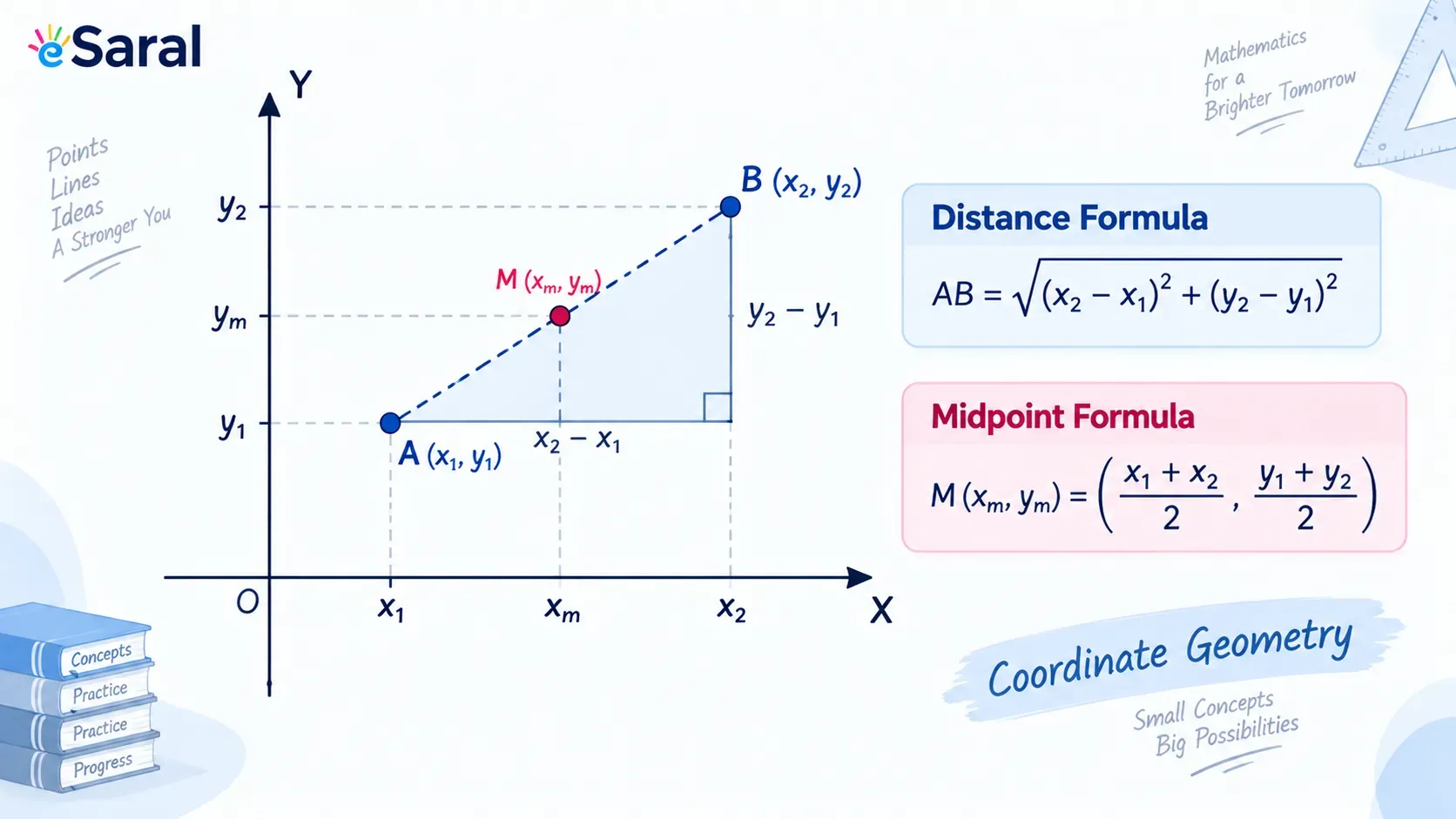
Coordinate Geometry Class 10: Formulas, Notes & Solved Examples
Coordinate geometry class 10: complete CBSE formulas — distance, section, midpoint and area of triangle — with derivation, notes and solved examples.

How to make Notes For JEE Smart Notes Strategy of an AIR 41
Learn how to make notes for JEE the way toppers do — indexing, shorthand, and smart short notes for JEE that cut revision time to just 5–7 days.
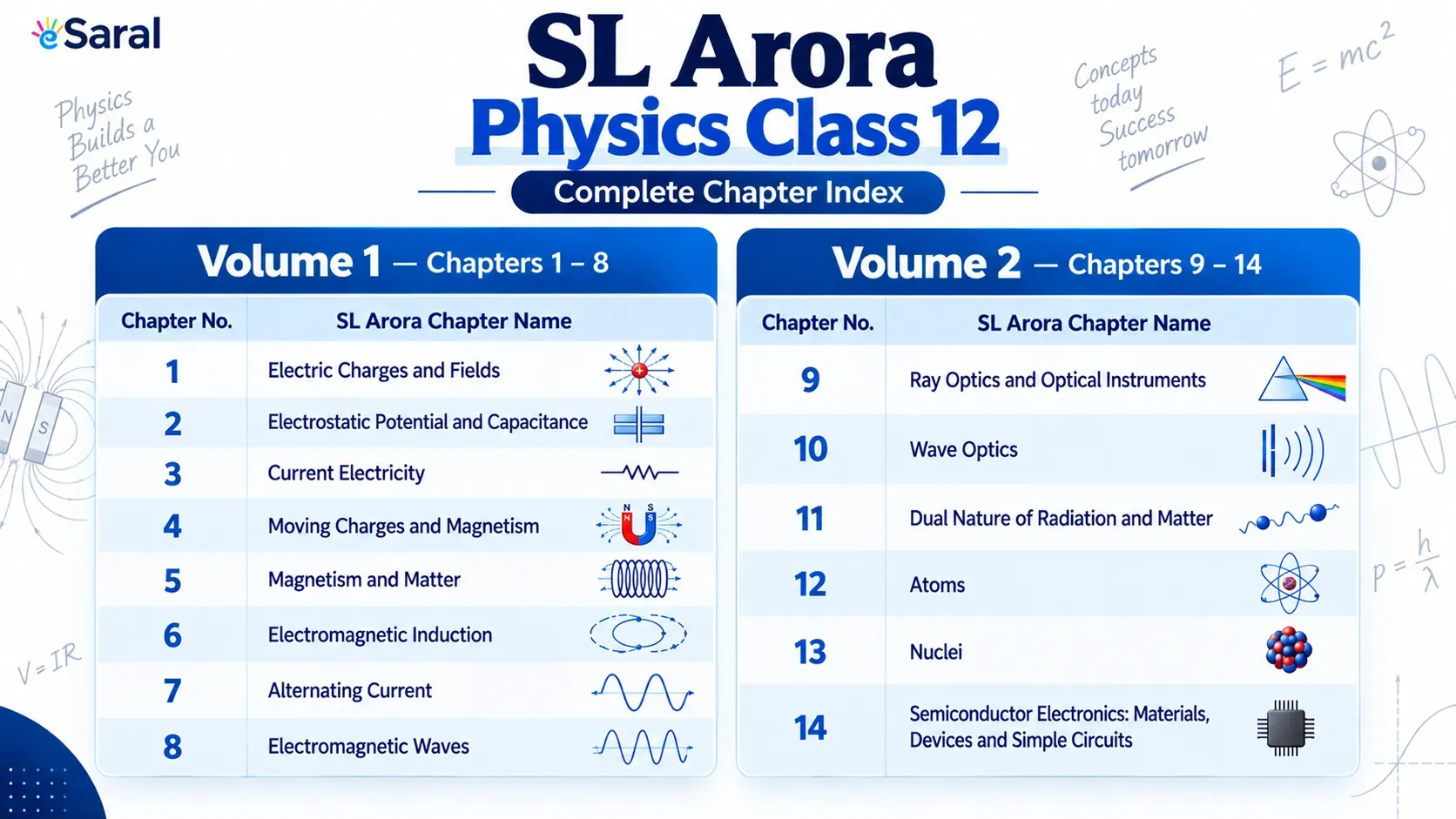
SL Arora Physics Class 12 Index – Chapter List for Volume 1 & 2
SL Arora Physics Class 12 index — complete chapter list for Volume 1 & 2, mapped to NCERT solutions for board, JEE Main, and NEET preparation.