
Globalisation and the Indian Economy Class 10 Notes

eSaral Academic and Editorial Team

Globalization has been a buzzword for a few decades now, and it refers to the process of interlinking different countries, economies and cultures through trade, investment and technology. India has been a major player in this globalized world, with its fast-growing economy and large population providing immense opportunities for global businesses. In article "Globalisation and the Indian Economy Class 10 Notes", we will explore the impact of globalization on the Indian economy, its benefits and drawbacks, and the various policies and measures taken by the Indian government to integrate into the globalized world.
Globalisation refers to the integration of the domestic economy with the economies of the world.
An MNC is a company that owns and controls production in more than one nation.
Foreign Investment is investment made by MNCs.
Advantages of Foreign Trade - Globalisation and the Indian Economy Class 10 Notes
- Foreign trade enables the transportation of goods across different markets.
- Buyers are provided with a wide range of goods to choose from.
- Producers from different countries compete in various markets.
- The prices of similar goods in different markets of various countries become nearly equal.
The Central and State Governments are setting up SEZs or Special Economic Zones in different parts of the country. These industrial zones will have world-class facilities such as electricity, water, roads, transport, storage, and recreational and educational facilities. Companies that establish production units in SEZs are exempt from taxes for an initial period of five years. This helps to attract foreign companies to invest in India.
Reasons to put barriers to foreign trade
- After India gained independence, the government imposed restrictions on foreign trade and investment to protect domestic producers from foreign competition.
- The focus was on developing industries in the 1950s and 1960s, and competition from imports was not allowed at that stage.
- Only essential items like machinery, fertilizers, and petroleum were allowed to be imported.
- The goal was to prevent foreign infiltration in industries that could harm the country's economic growth and catch up with the main industries in the world market.
- Incentives were given to rapidly growing industries through fiscal tariff and other means.
- In 1991, the Indian government decided to change its policies and allowed Indian producers to compete with foreign producers to improve their performance and quality.
Liberalization - Globalisation and the Indian Economy Class 10 Notes
The government of India adopted the policy of liberalization around 1991, which involves the removal of barriers and restrictions set by the government on foreign trade. Trade barriers are used by governments to regulate foreign trade and protect domestic industries from foreign competition. For instance, taxes on imports are used to increase or decrease foreign trade.
World Trade Organization (WTO) was started at the initiative of the developed countries. Its main objective is to liberalize international trade.
Privatization means transfer of ownership of property from public sector to private sector.
Business Process Outsourcing (BPO) is the contracting of non primary business activities and functions to a third party service provider.
Economic Reforms or New Economic Policy is policy adopted by the Government of India since July 1991. Its key features are Liberalization, Privatisation and Globalisation (LPG).
MNCs set up production in various countries based on the following factors-
- MNCs such as Cargill Foods, set up their offices and factories in regions where they can get cheap labor and other resources, for instance, countries like China, Bangladesh, and India.
- Some MNCs prefer to set up production jointly with local companies around the world, providing them with additional investments for faster production and the latest technology for enhancing and improving production.
- MNCs sometimes buy local companies to expand production. For example, Cargill Foods, an American MNC, has acquired small Indian company Parakh Foods.
- MNCs control production by placing orders for production with small producers in developing nations for products such as garments, footwear, and sports items, which they then sell under their own brand name to customers.
Factors which have helped in globalization - Globalisation and the Indian Economy Class 10 Notes
- Technology has greatly contributed towards globalization through its rapid improvement.
- The development of information and communication technology has played a significant role. The use of telecommunication facilities such as telegraph, telephone (including mobile phones), and fax allows for quick communication across the world. Teleconferences also save time and expenses for travel.
- Information technology has enabled the spread of service production across countries. Orders can be placed online, designing can be done on computers, and payments for designing and printing can be arranged through the internet.
In conclusion, globalization has had a significant impact on the Indian economy, both positive and negative. It has opened up new opportunities for growth and development, but at the same time, it has also led to increased inequality and environmental degradation. The Indian government has taken various measures to deal with the challenges posed by globalization and ensure that its benefits are shared by all. As India continues to integrate with the global economy, it is essential to strike a balance between economic growth and social development, keeping in mind the interests of all stakeholders.-Globalisation and the Indian Economy Class 10 Notes
Download the eSaral App for complete Class 10 Video lectures, Study material, revision and much more.
Globalisation and the Indian Economy Class 10 Notes
Also read,
Class 10 NCERT Science notes -All Chapters
Power Sharing Notes Class 10th
Democracy and Diversity Class 10 Notes
Popular Struggles and Movements Class 10 Notes
Team eSaral
eSaral Academic and Editorial Team
Team eSaral is the collective author profile for educational content created by eSaral’s teachers and academic contributors. The team draws on expertise from IIT graduates, doctors, experienced educators and subject specialists to develop resources for JEE, NEET and school students. Our articles aim to explain concepts clearly and help students study with confidence.
Related Posts

Plant Cell Diagram: Labelled Structure, Parts and Functions
Simple, labelled plant cell diagram with parts and functions. Covers plant cell structure for Class 6, 7, 8, 9, 10 and 11 students, CBSE-aligned.

Saransh Gupta Sir's Visit to IIT Patna: Hostel Life, Placements & Lessons for JEE Aspirants
Inside Saransh Gupta Sir's IIT Patna visit — hostel life, the library, placements, internships, and real advice for JEE aspirants from students living the IIT dream.
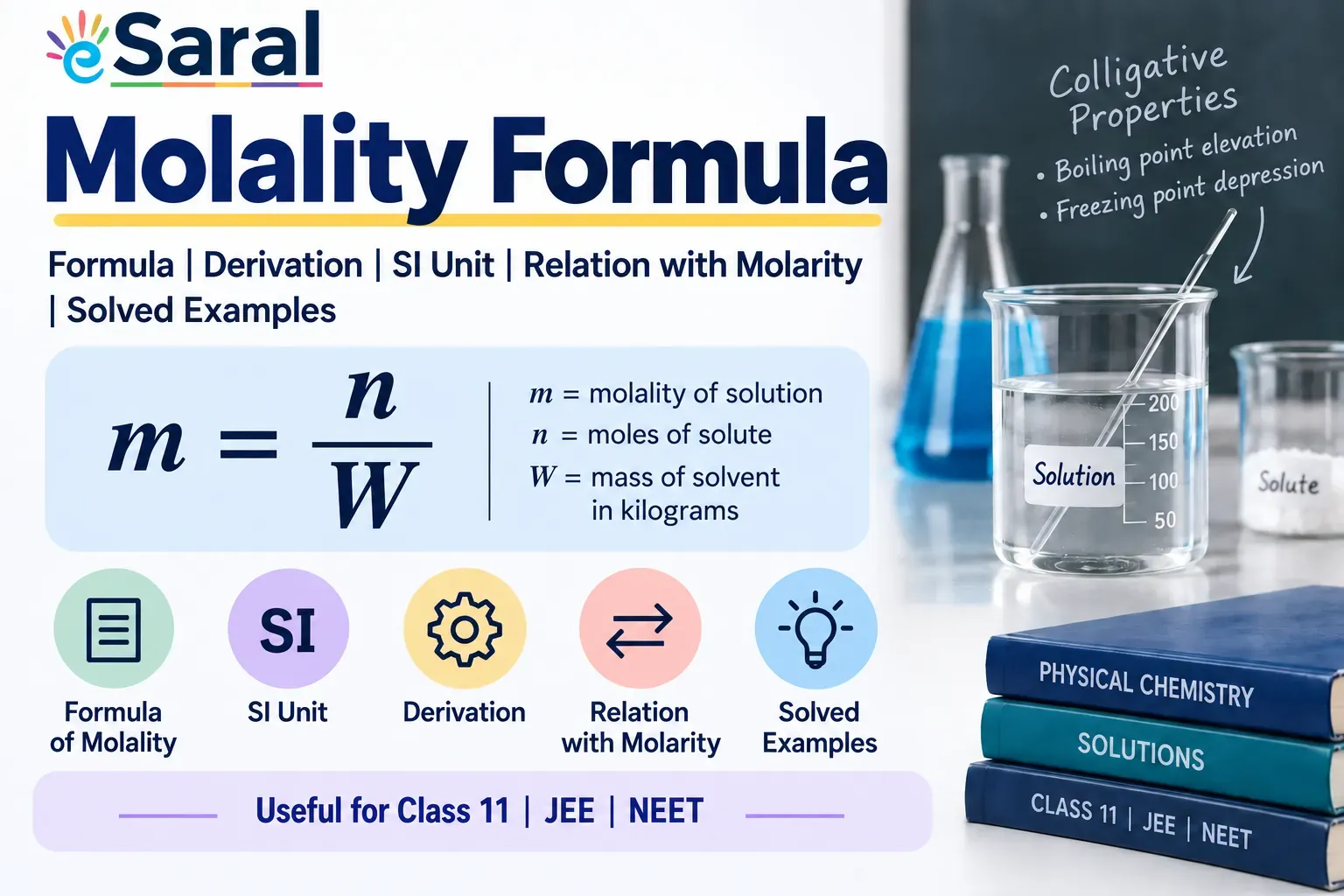
Molality Formula: Formula for Molality, Derivation & Solved Examples
Molality formula is $m = \dfrac{n}{W}$. Learn the formula of molality, its SI unit, derivation, relation with molarity, and solved examples for Class 11, JEE and NEET.

BITSAT Previous Year Question Paper PDF
Download BITSAT previous year question papers PDF. Get year-wise BITSAT PYQs, memory-based papers, exam pattern, and preparation tips to improve your BITSAT preparation.

Teachers’ Day 2026 at eSaral Gurukul: Celebrating the Bond Between Students, Teachers & Mentors
See how Teachers’ Day 2026 was celebrated at eSaral Gurukul, reflecting the bond among students, teachers, and mentors, and the role of guidance beyond academics.
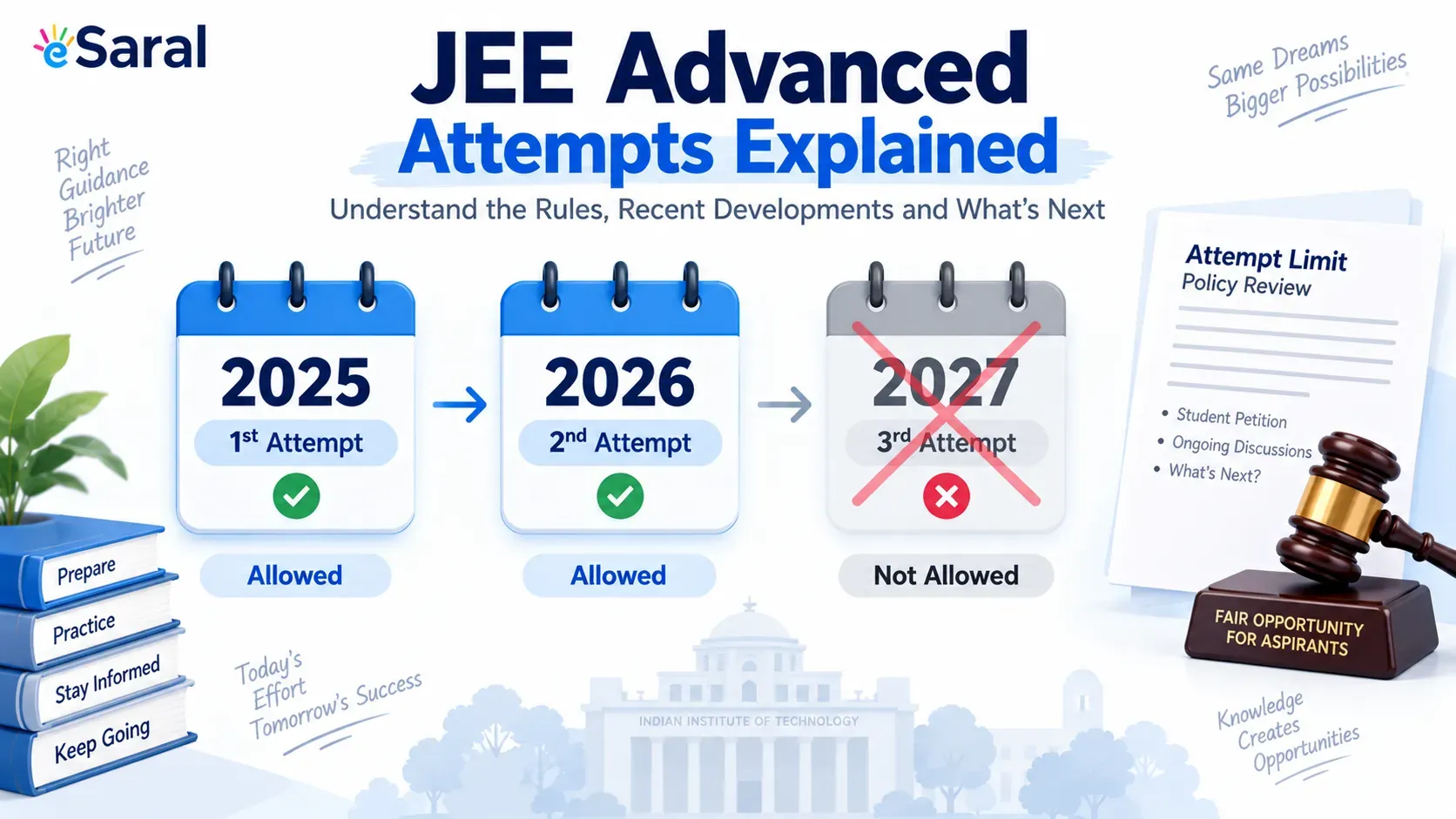
JEE Advanced Attempts: Can You Give It a Third Time? Rules Explained
JEE Advanced attempts: current rule is 2 consecutive years only: full eligibility criteria, the 2025 third-attempt controversy, and the latest 2026 petition news.

Best JEE Preparation App
Best JEE preparation app for Main & Advanced: AI mock tests, live doubt-solving, thousands of practice questions. JEE preparation app for droppers & Class 11-12.
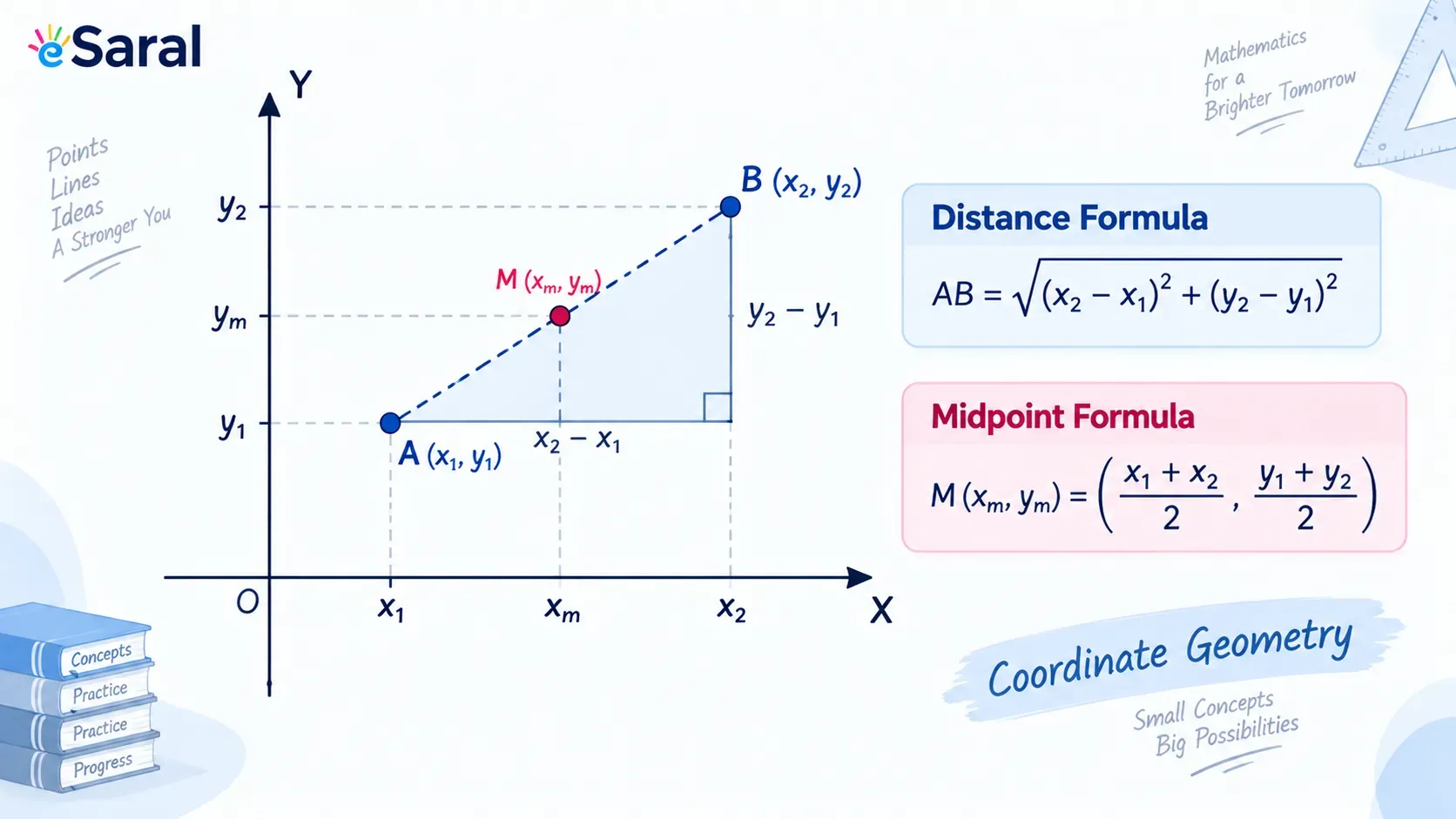
Coordinate Geometry Class 10: Formulas, Notes & Solved Examples
Coordinate geometry class 10: complete CBSE formulas — distance, section, midpoint and area of triangle — with derivation, notes and solved examples.
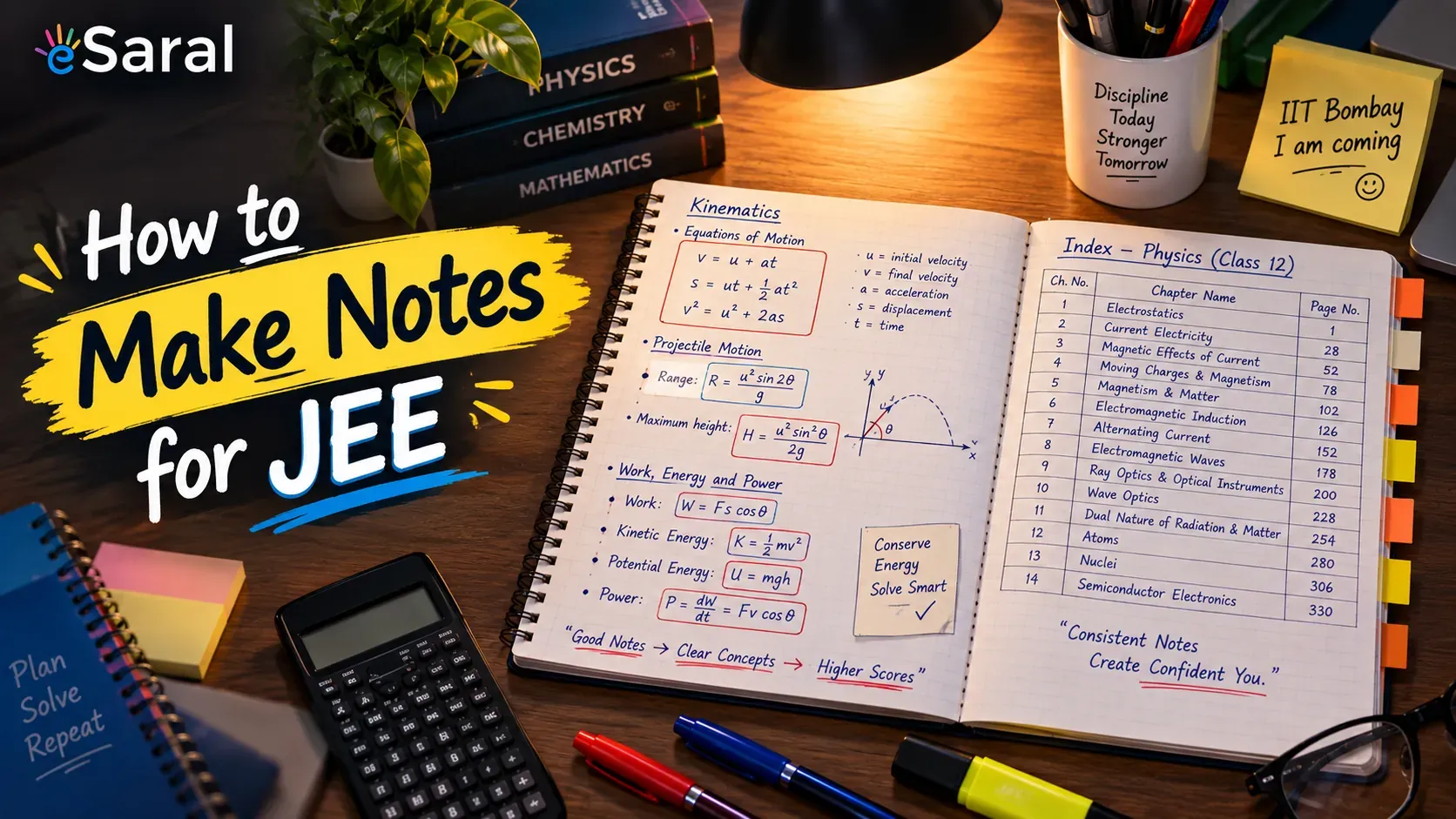
How to make Notes For JEE Smart Notes Strategy of an AIR 41
Learn how to make notes for JEE the way toppers do — indexing, shorthand, and smart short notes for JEE that cut revision time to just 5–7 days.
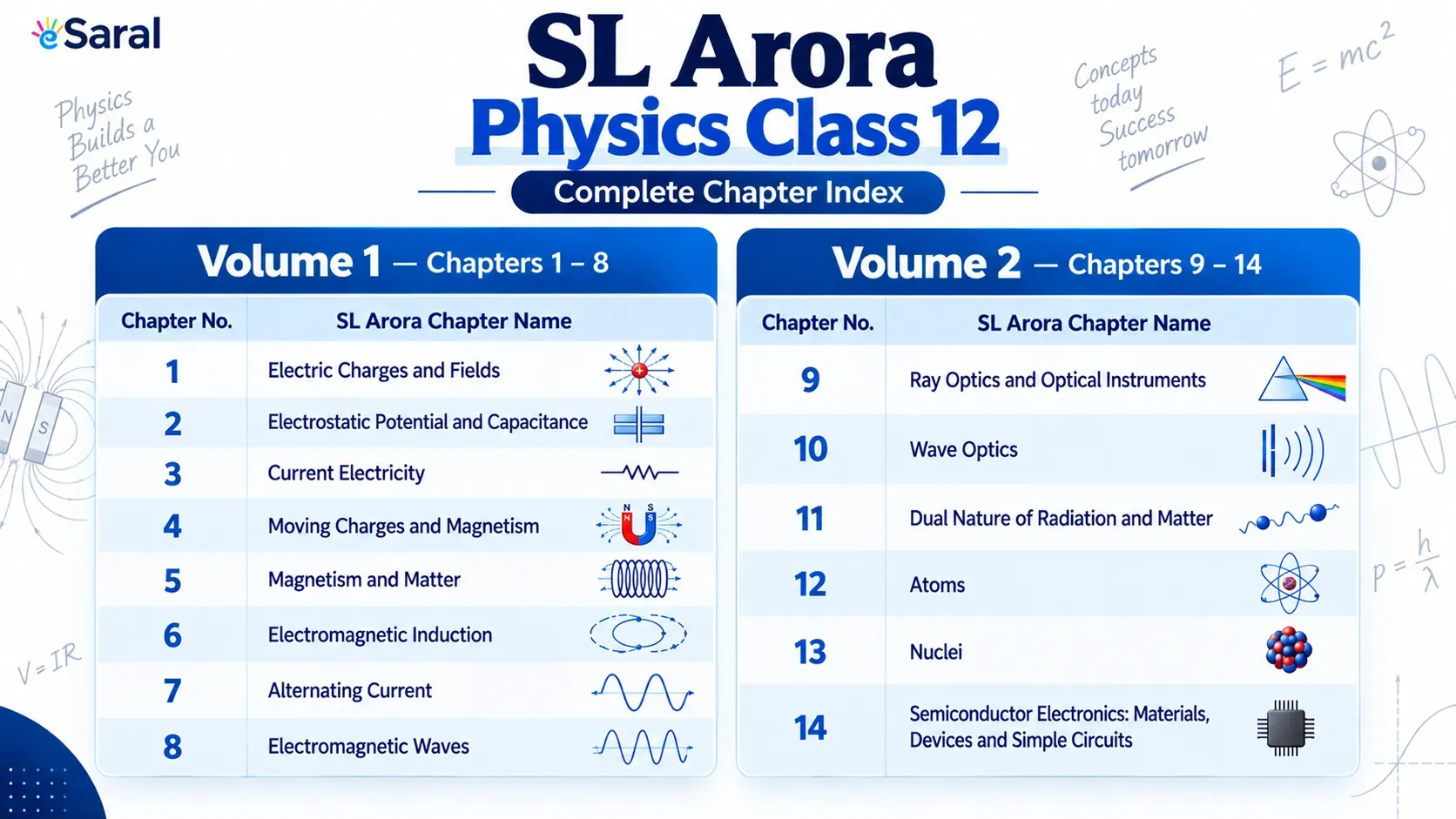
SL Arora Physics Class 12 Index – Chapter List for Volume 1 & 2
SL Arora Physics Class 12 index — complete chapter list for Volume 1 & 2, mapped to NCERT solutions for board, JEE Main, and NEET preparation.