
Haloalkane and Haloarenes - NEET Previous Year Questions with Complete Solutions

eSaral Academic and Editorial Team
Summary
Haloalkane and Haloarenes (Class 12 Chemistry Chapter 10) contributes 1–3 questions in NEET-UG every year, primarily testing SN1/SN2 mechanisms, optical activity, elimination reactions, and the reactivity order of halides. Solving NEET previous year questions from 2010–2024 is the fastest way to master this chapter's exam pattern.

eSaral › NEET › Chemistry › Haloalkane and Haloarenes NEET Previous Year Questions with Complete Solutions
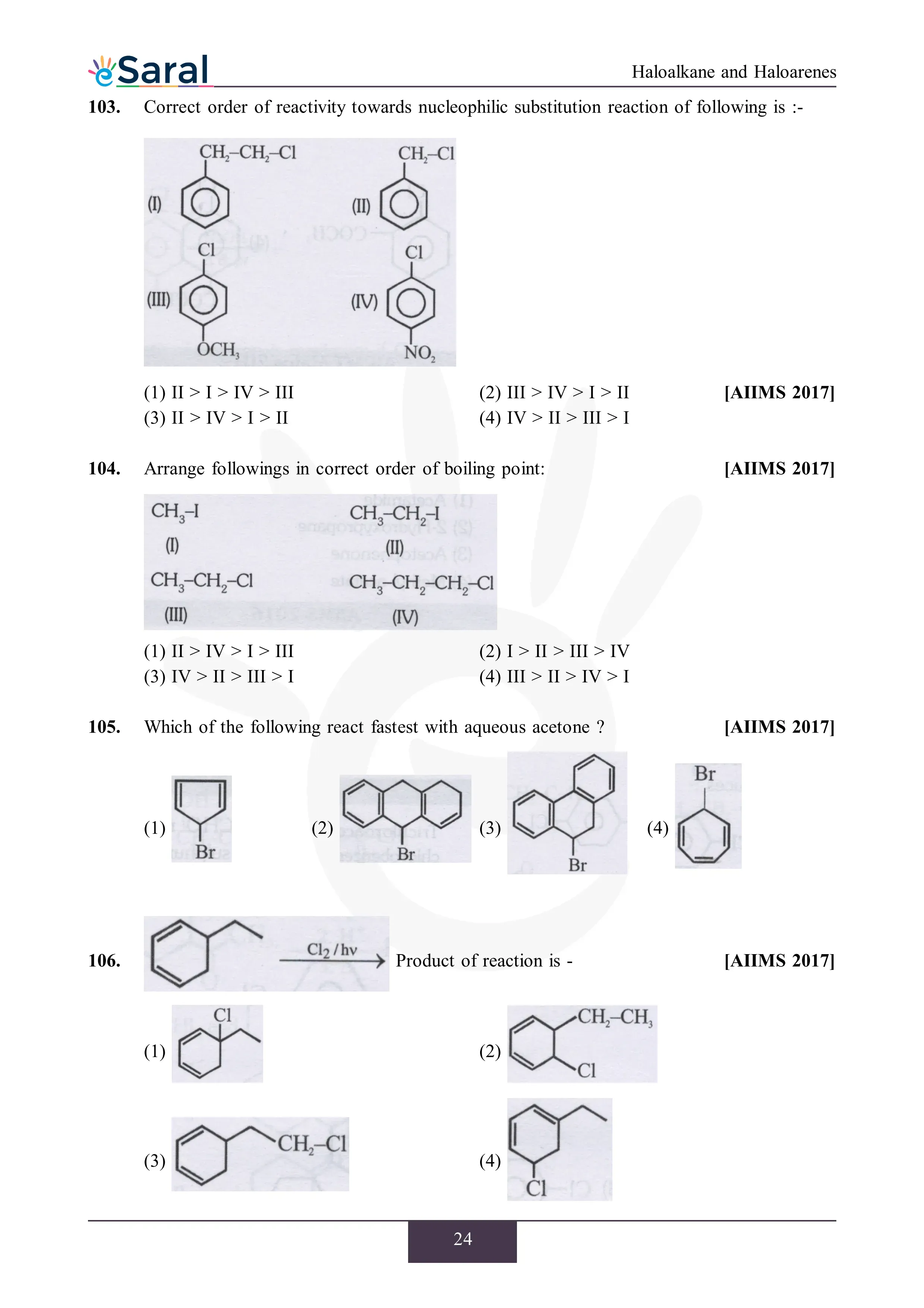
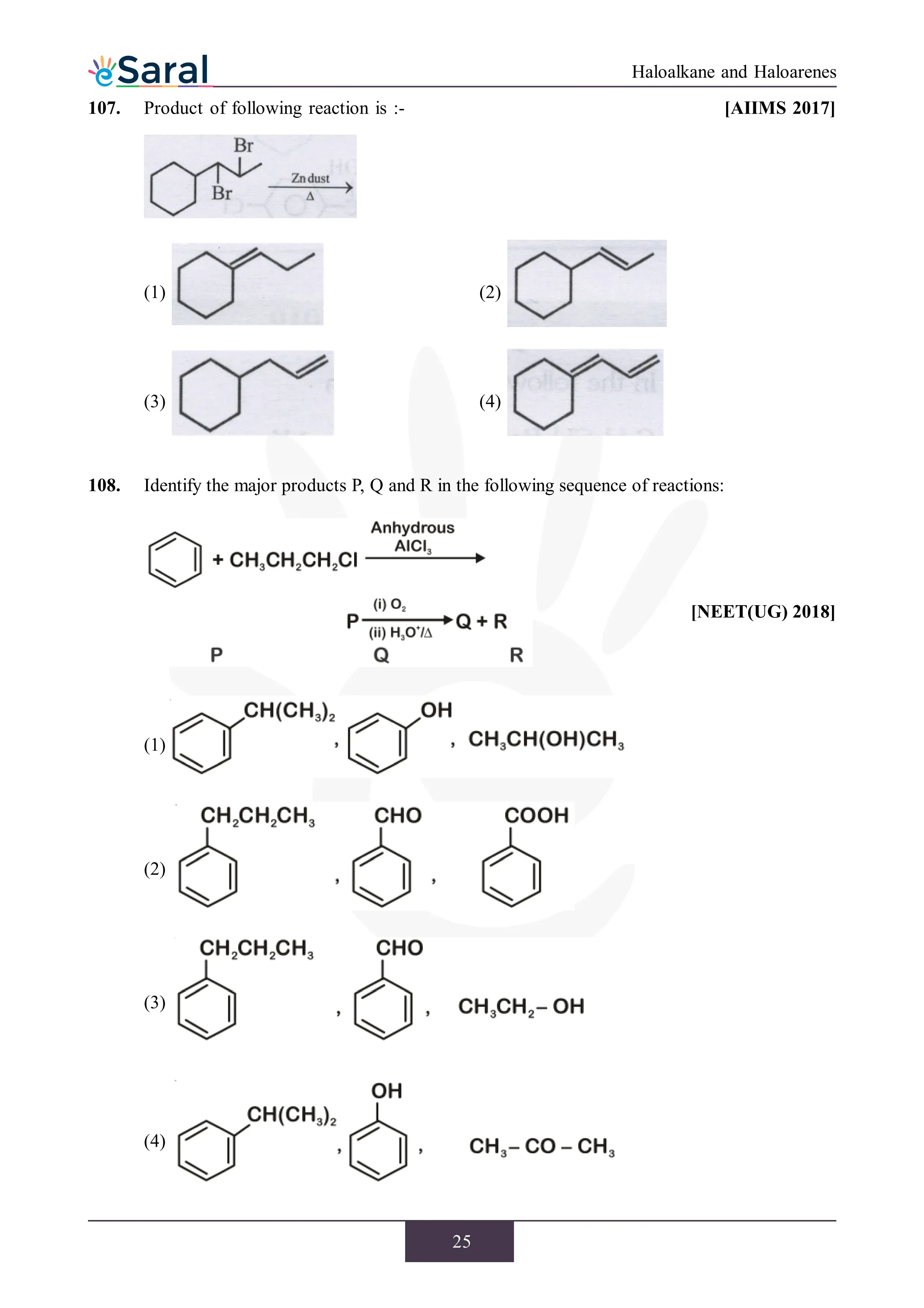
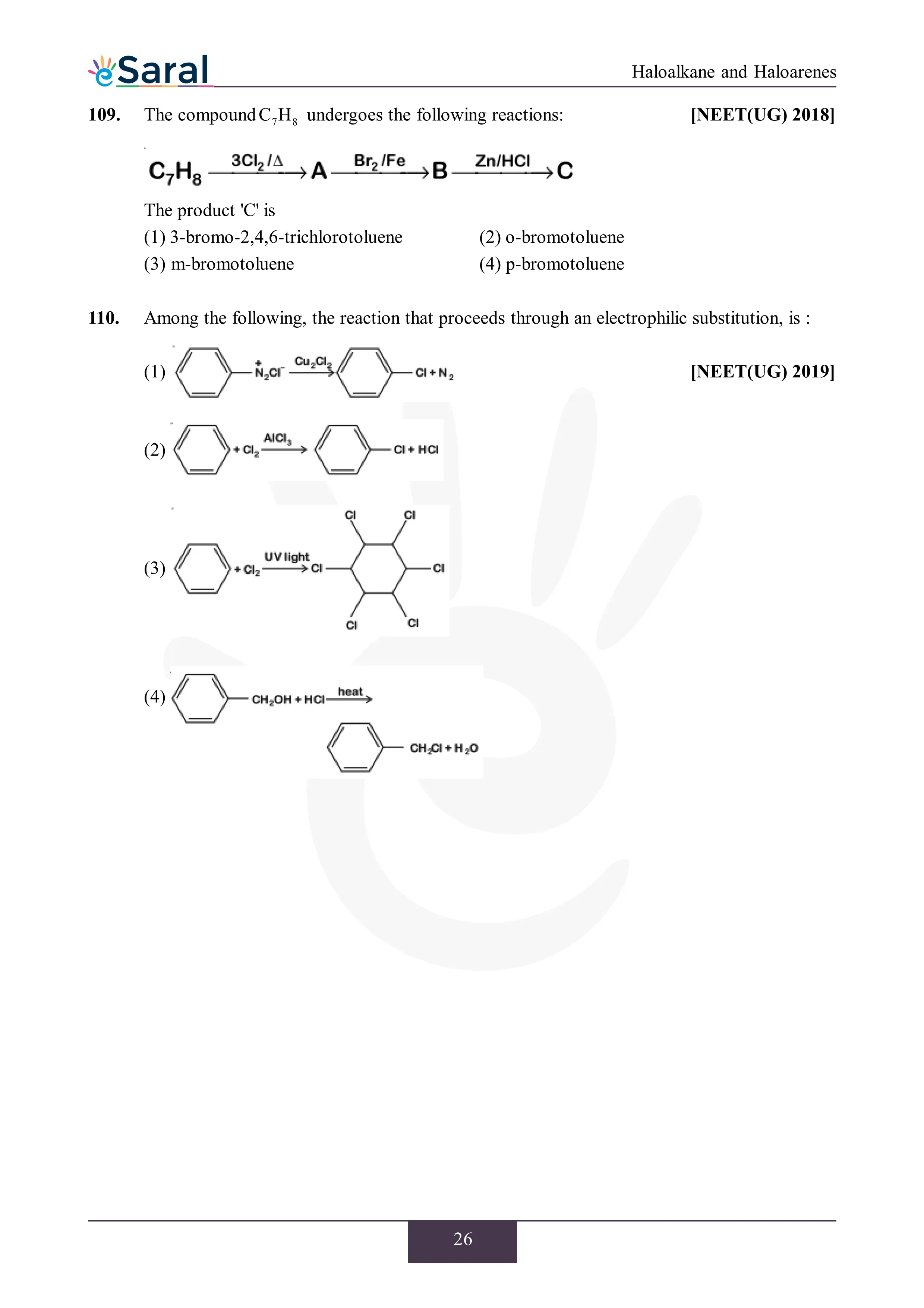
Here you will get Complete Haloalkane and Haloarenes NEET Previous Year Questions with complete and detailed solutions.
Get complete NEET previous year questions for Physics, Chemistry, and Biology.
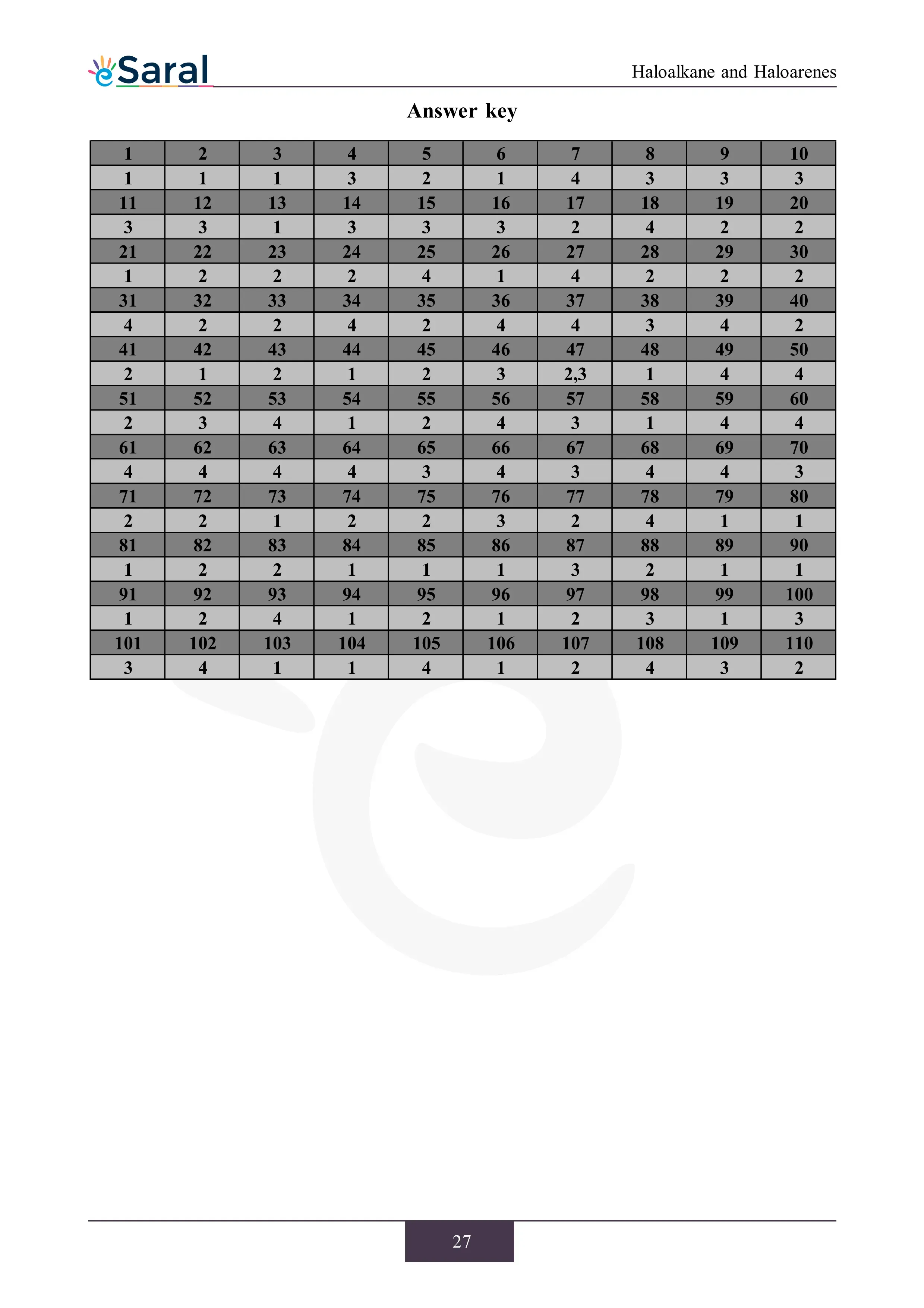
You will find all the solutions at the end of this page:
What Is the NEET Weightage of Haloalkanes and Haloarenes?
Haloalkanes and Haloarenes are one of the most concept-dense chapters in Class 12 Organic Chemistry as per the NTA NEET-UG syllabus. Based on official NEET papers analysed from 2017 to 2024, this chapter consistently delivers 1 to 3 questions per exam, making it a reliable scoring zone if you practise the right question types.
Key Topics That Appear Most in NEET
High-Frequency Subtopics (Must-Do)
Not all parts of this chapter carry equal weight in NEET. Based on previous year question analysis, these subtopics appear most frequently:
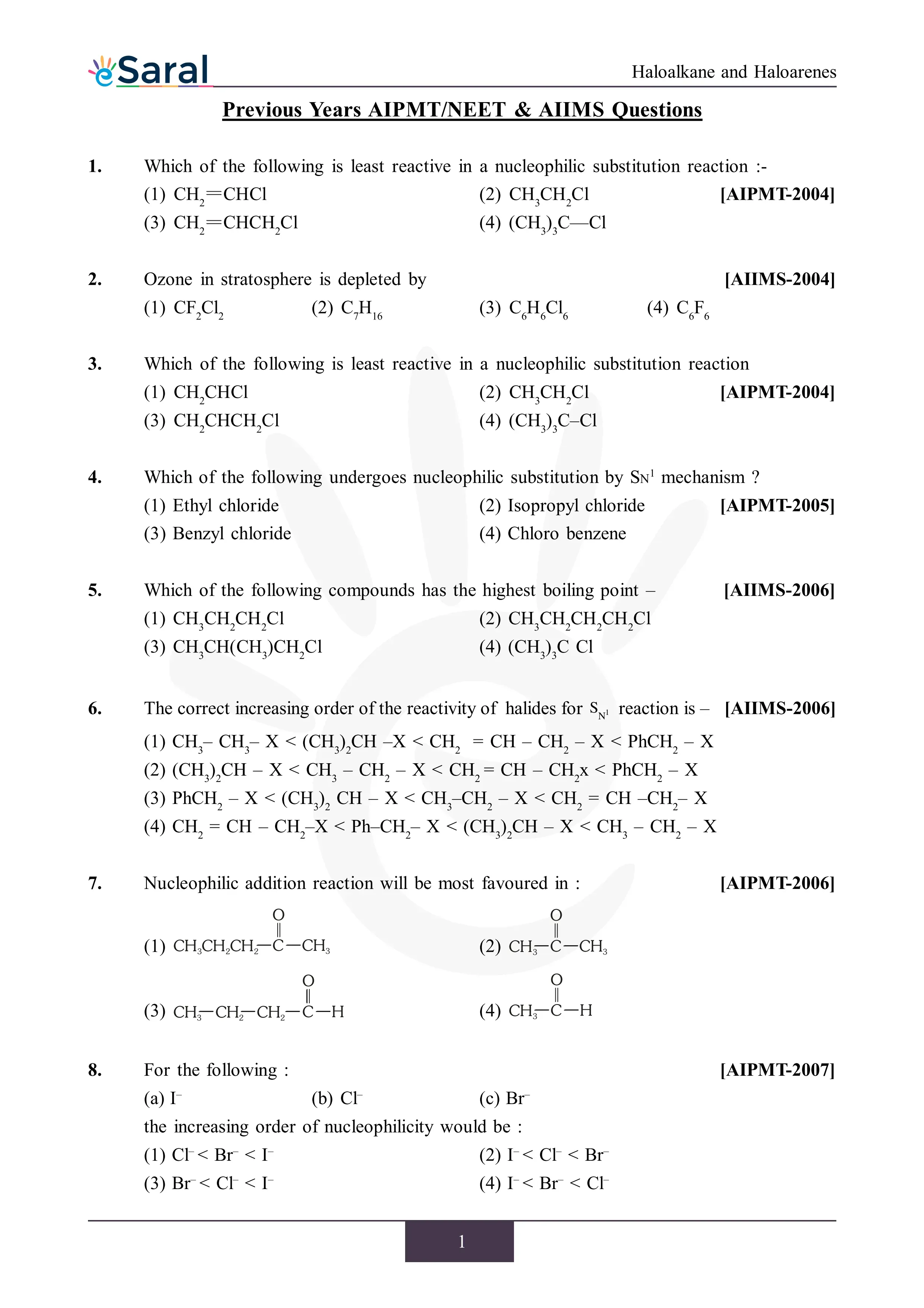
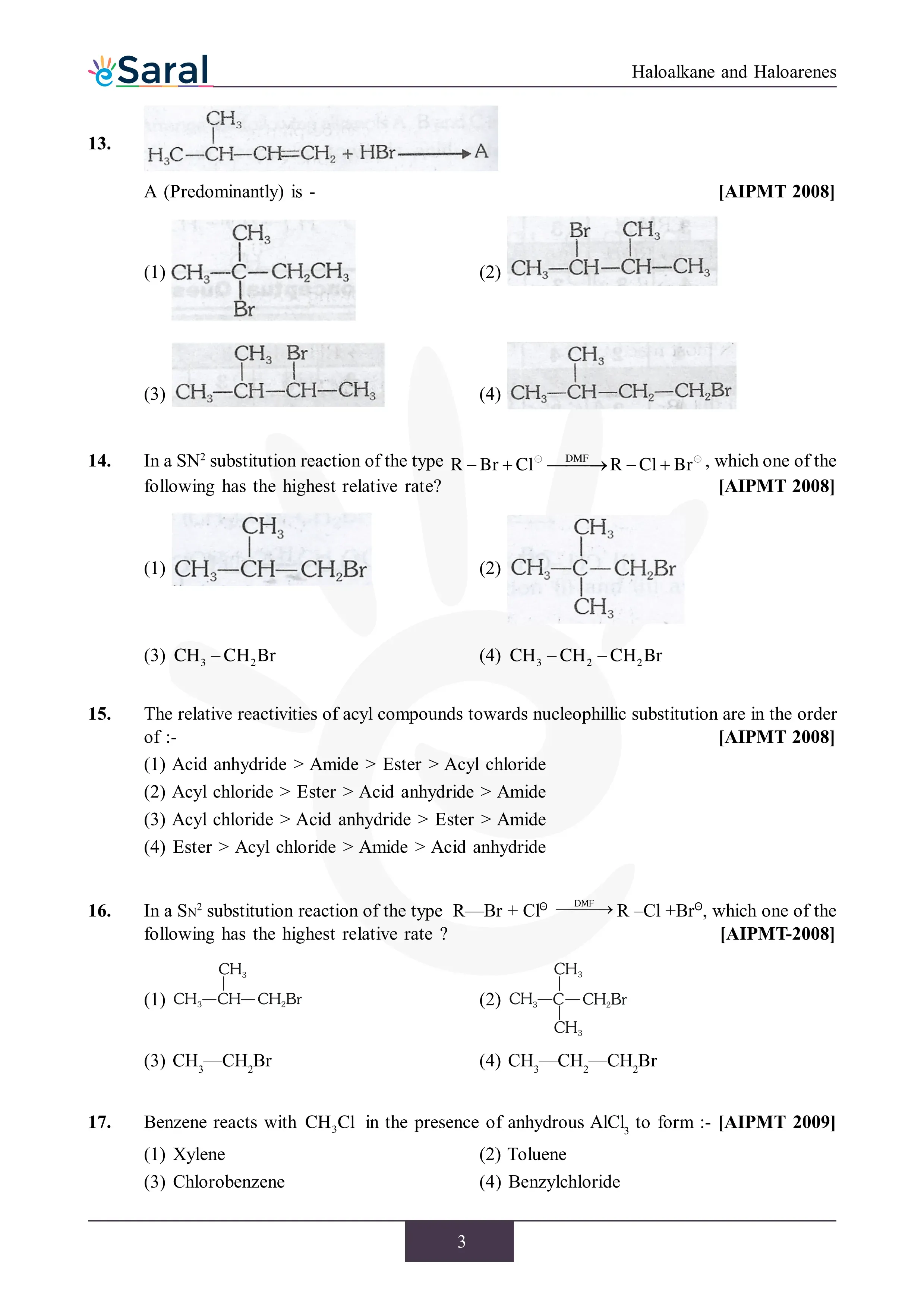
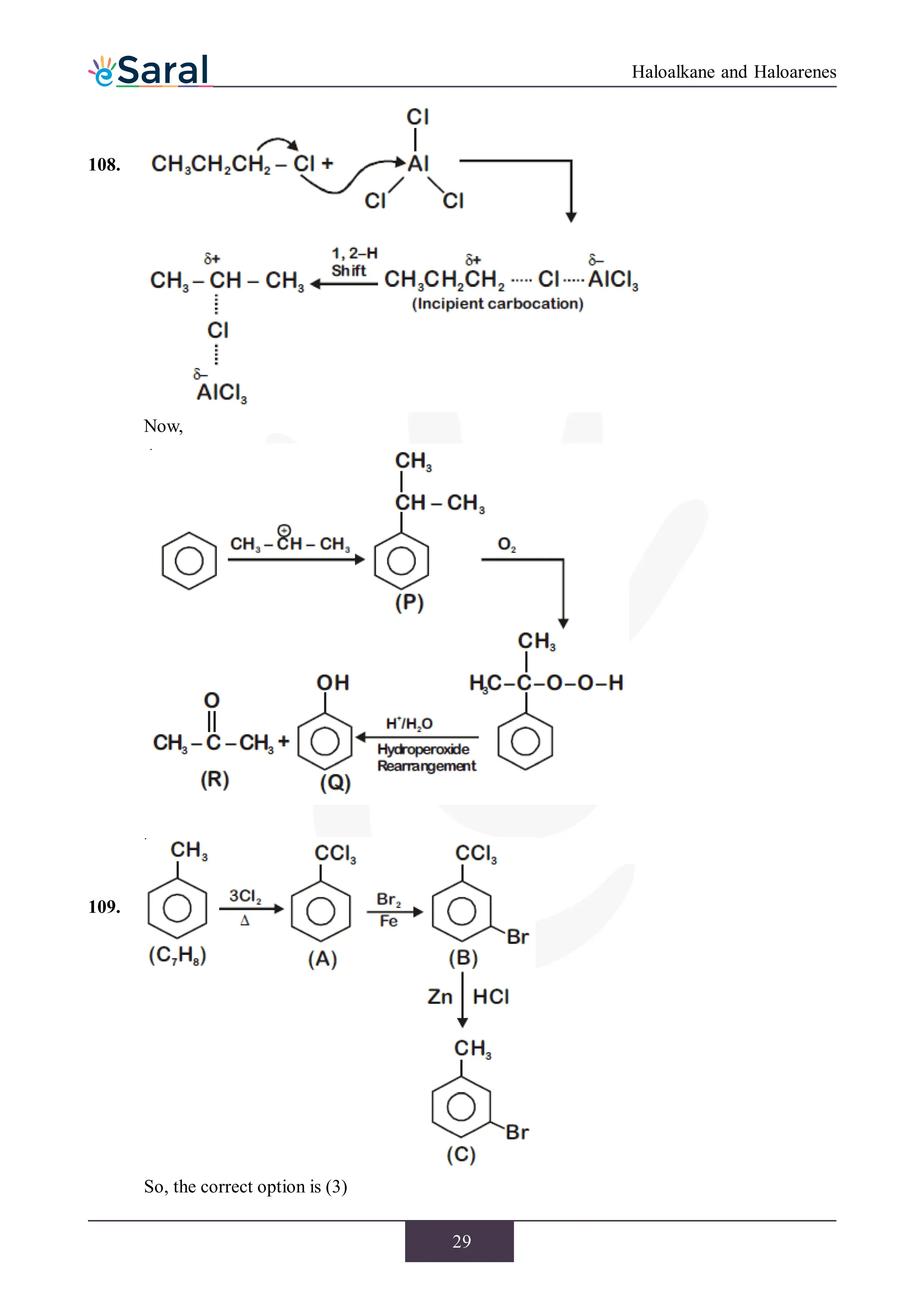
- SN1 and SN2 mechanisms — stereochemistry, rate, solvent effects
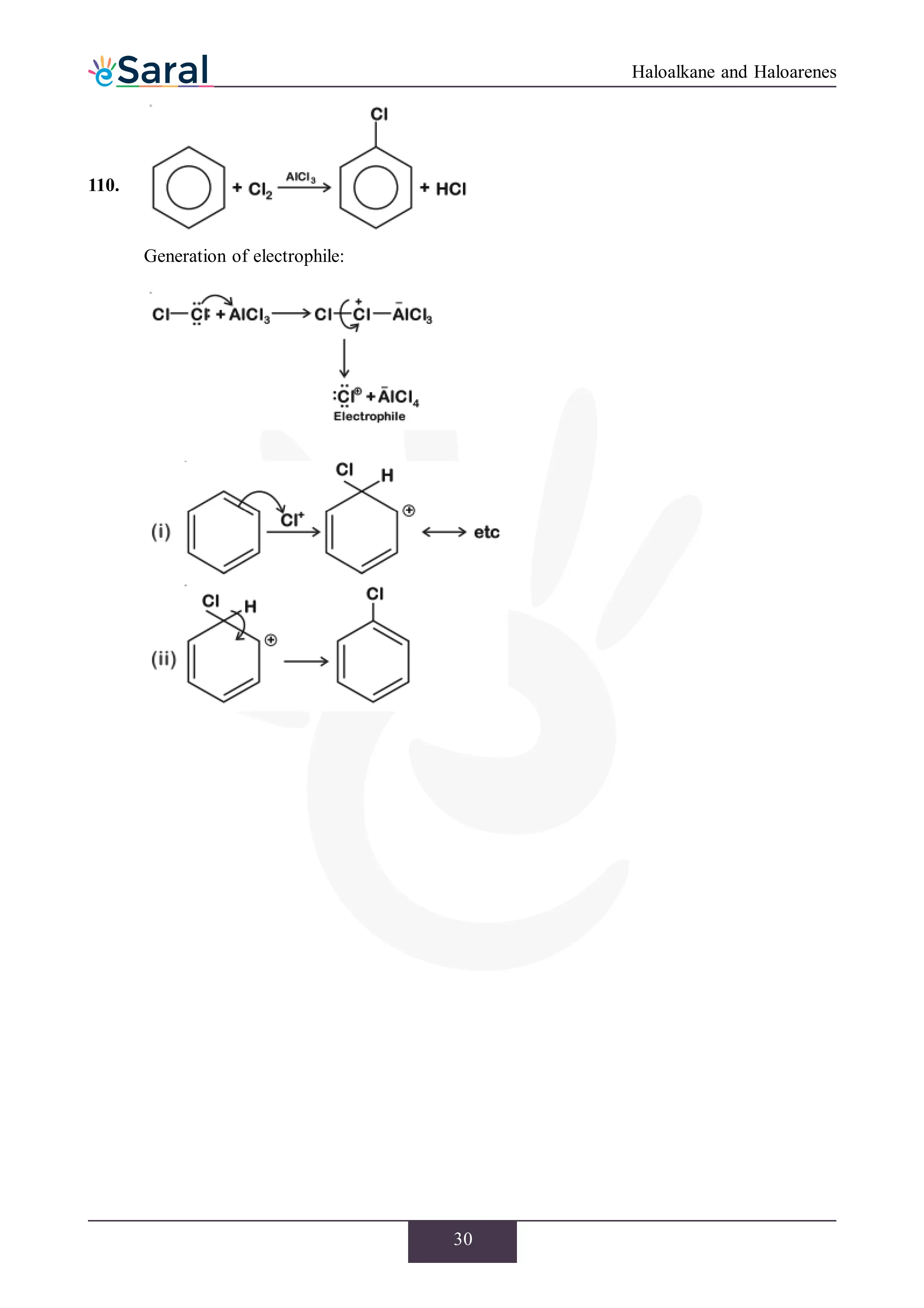
- Reactivity order of alkyl halides and haloarenes
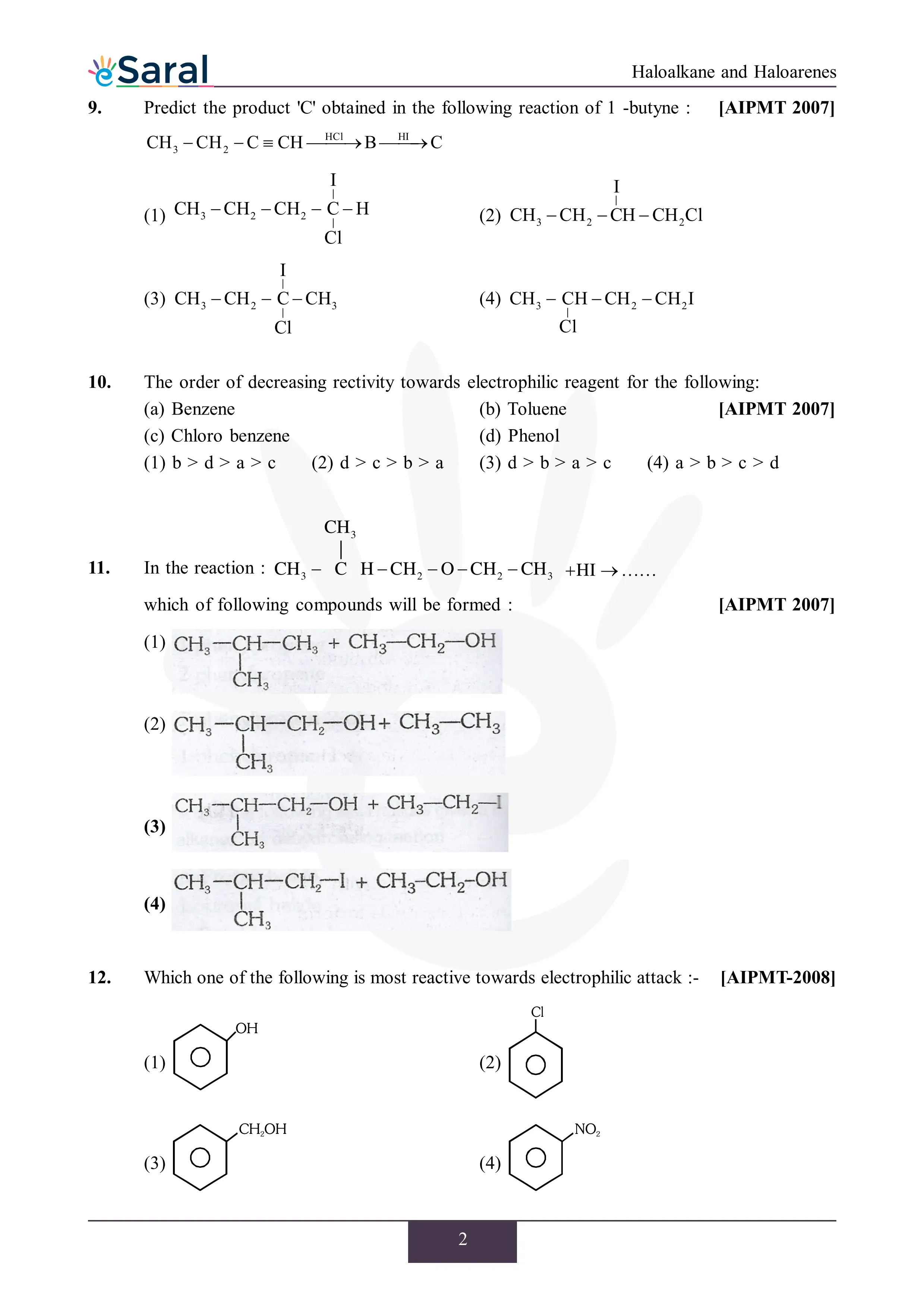
- Elimination reactions — E1, E2, Saytzeff's rule, Hofmann's rule
- Optical activity — chirality, enantiomers, racemic mixtures
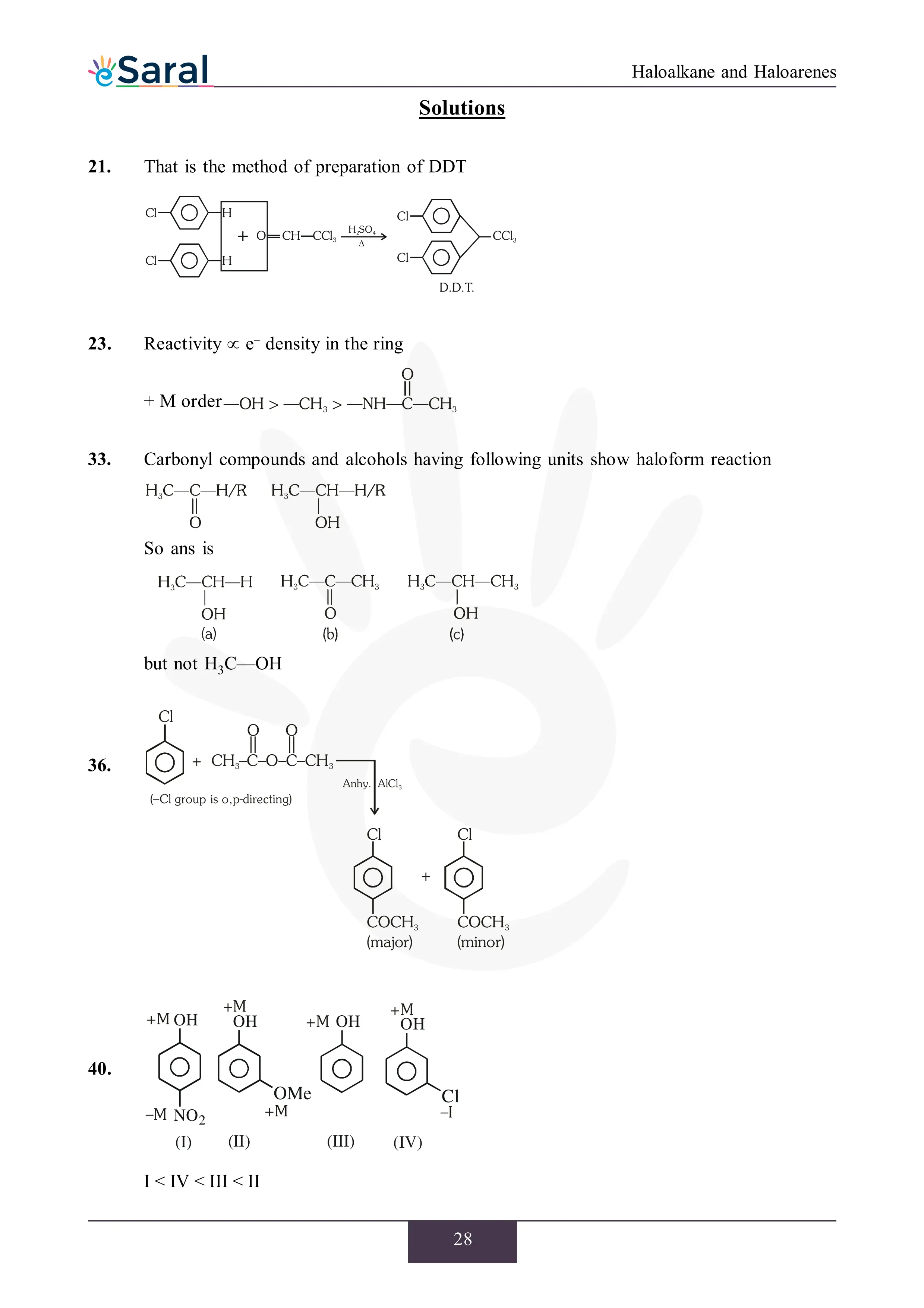
- Named reactions — Wurtz, Wurtz-Fittig, Fittig, Sandmeyer, Finkelstein, Swarts
- Uses of important halogen compounds — DDT, chloroform, iodoform test
- Nucleophilicity vs. basicity in polar aprotic and protic solvents
Subtopics with Lower Frequency (Cover Once)
Subtopic | Average NEET Frequency |
|---|---|
Free radical halogenation | Once every 3–4 years |
Benzyl vs. allyl halide reactivity | Once every 2–3 years |
Polyhalogen compounds (CHCl₃, CCl₄) | Once every 2–3 years |
Grignard reagent formation | Once every 3 years |
Students often confuse nucleophilicity order in protic vs. aprotic solvents. In polar protic solvents (e.g., water, alcohol), nucleophilicity is I⁻ > Br⁻ > Cl⁻ > F⁻ (opposite of electronegativity). In polar aprotic solvents (e.g., DMSO, acetone), it follows basicity: F⁻ > Cl⁻ > Br⁻ > I⁻. NEET has tested this exact reversal at least twice in recent years
For step-by-step NCERT-based explanations of all reaction mechanisms, refer to the NCERT Solutions for Class 12 Chemistry on eSaral — prepared by IIT Bombay faculty, including AIR-41 rankers.
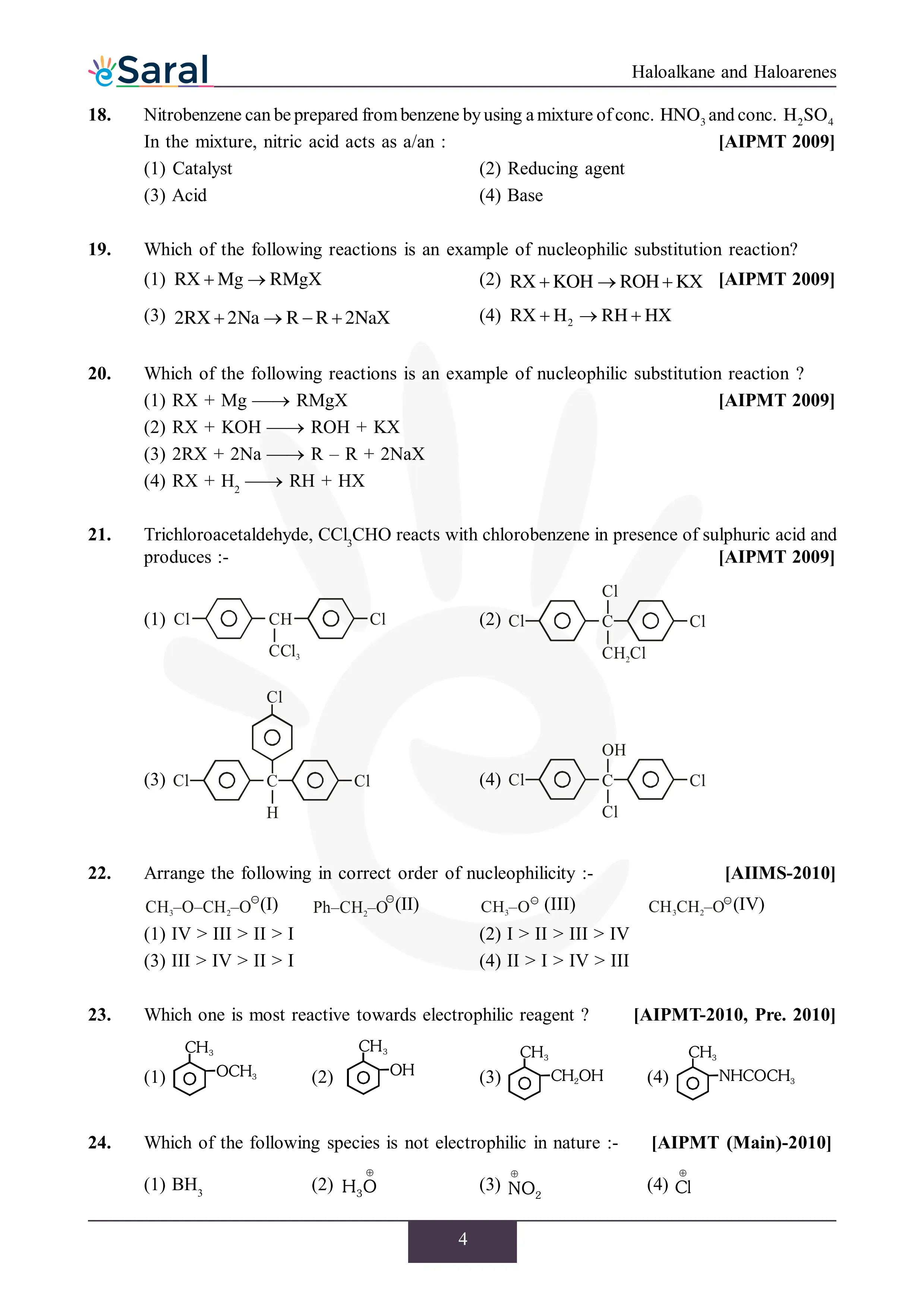
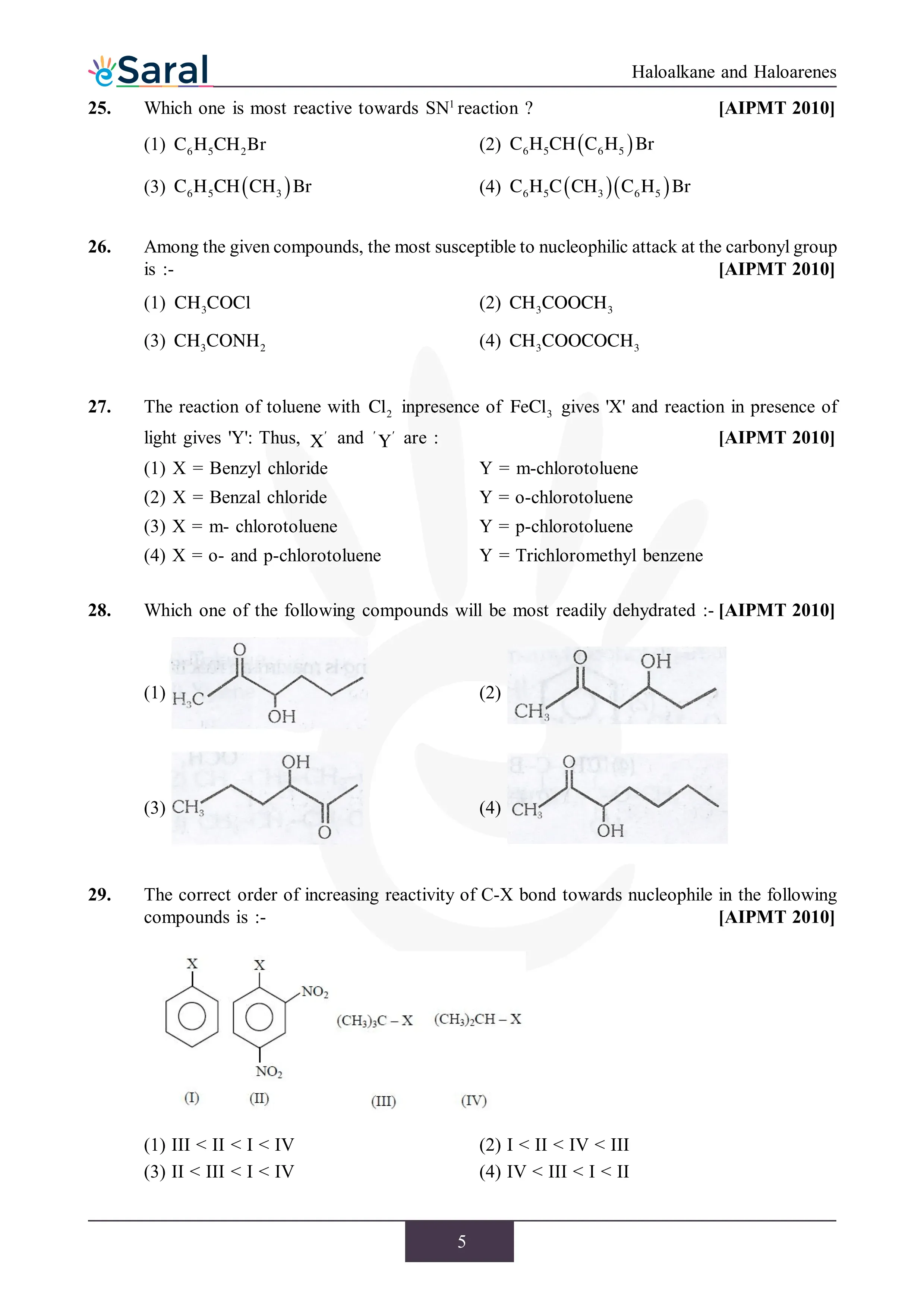
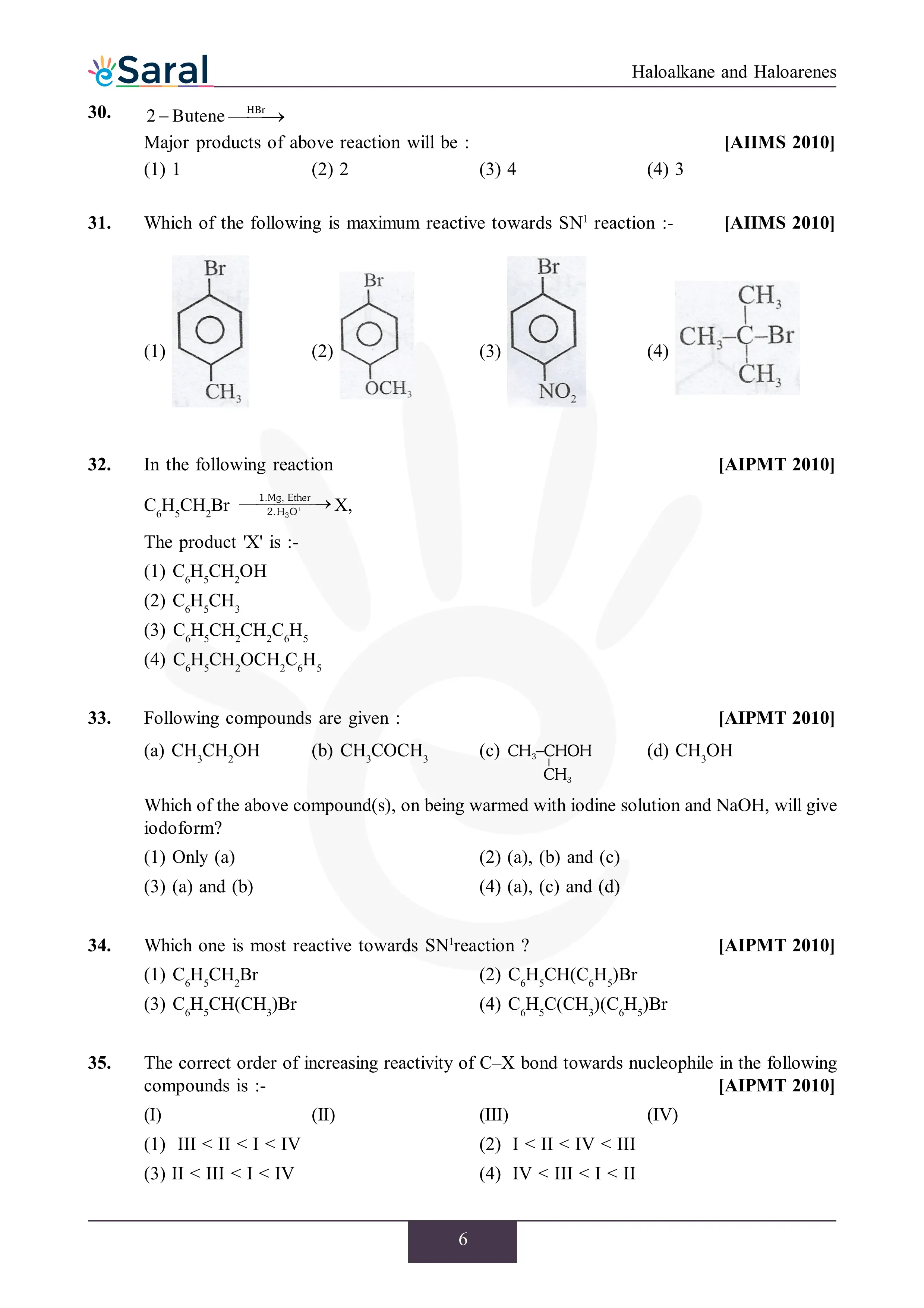
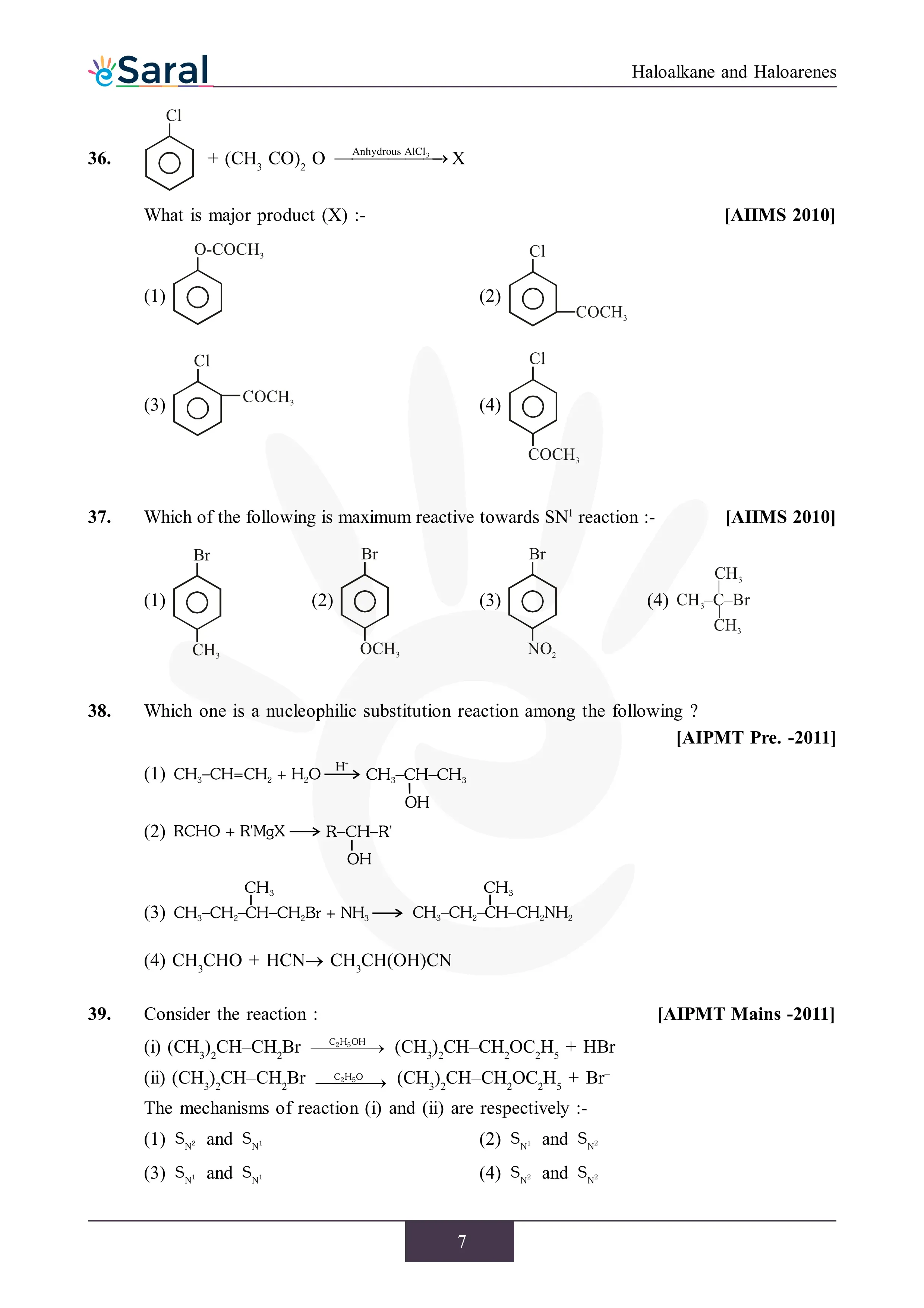
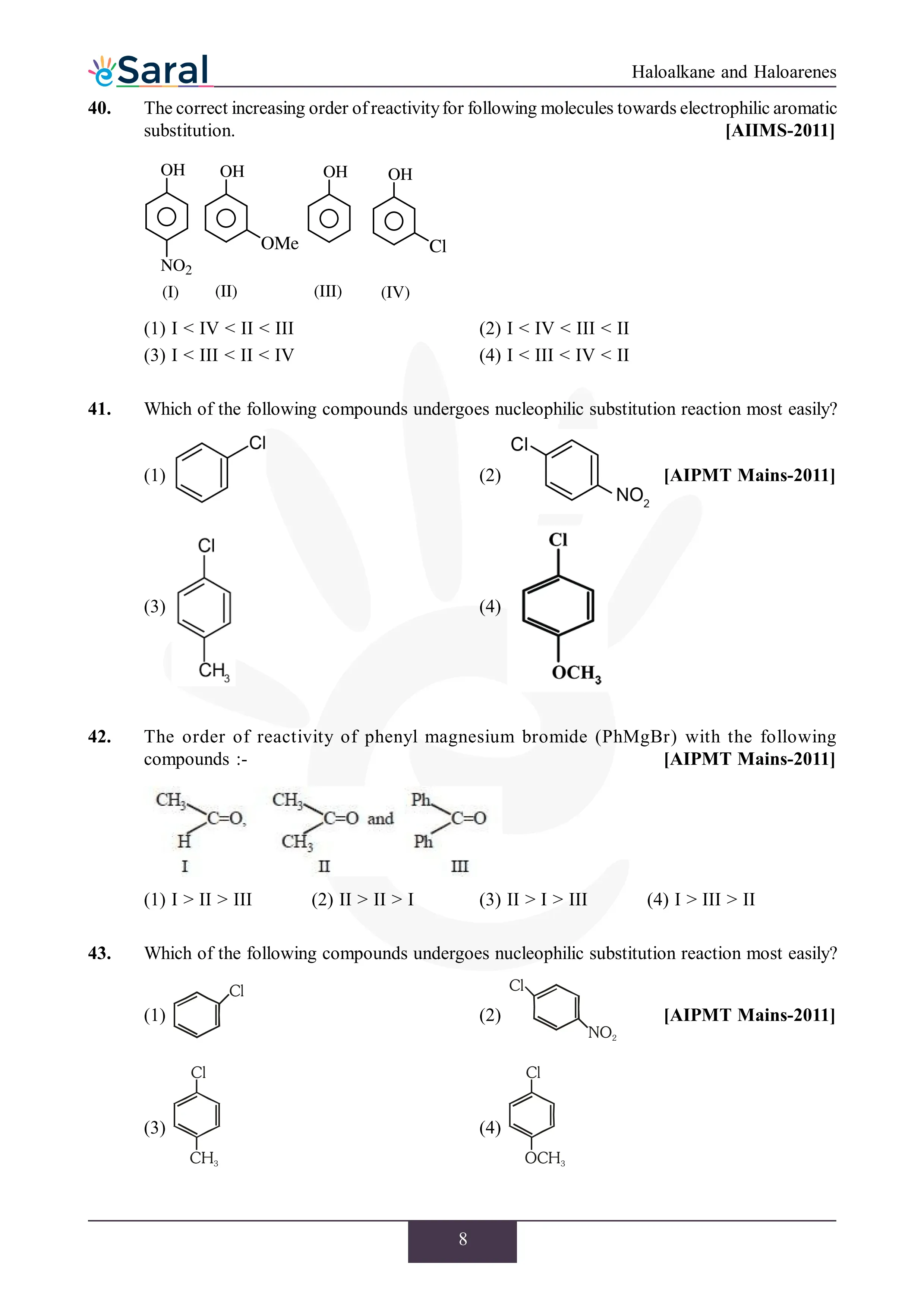
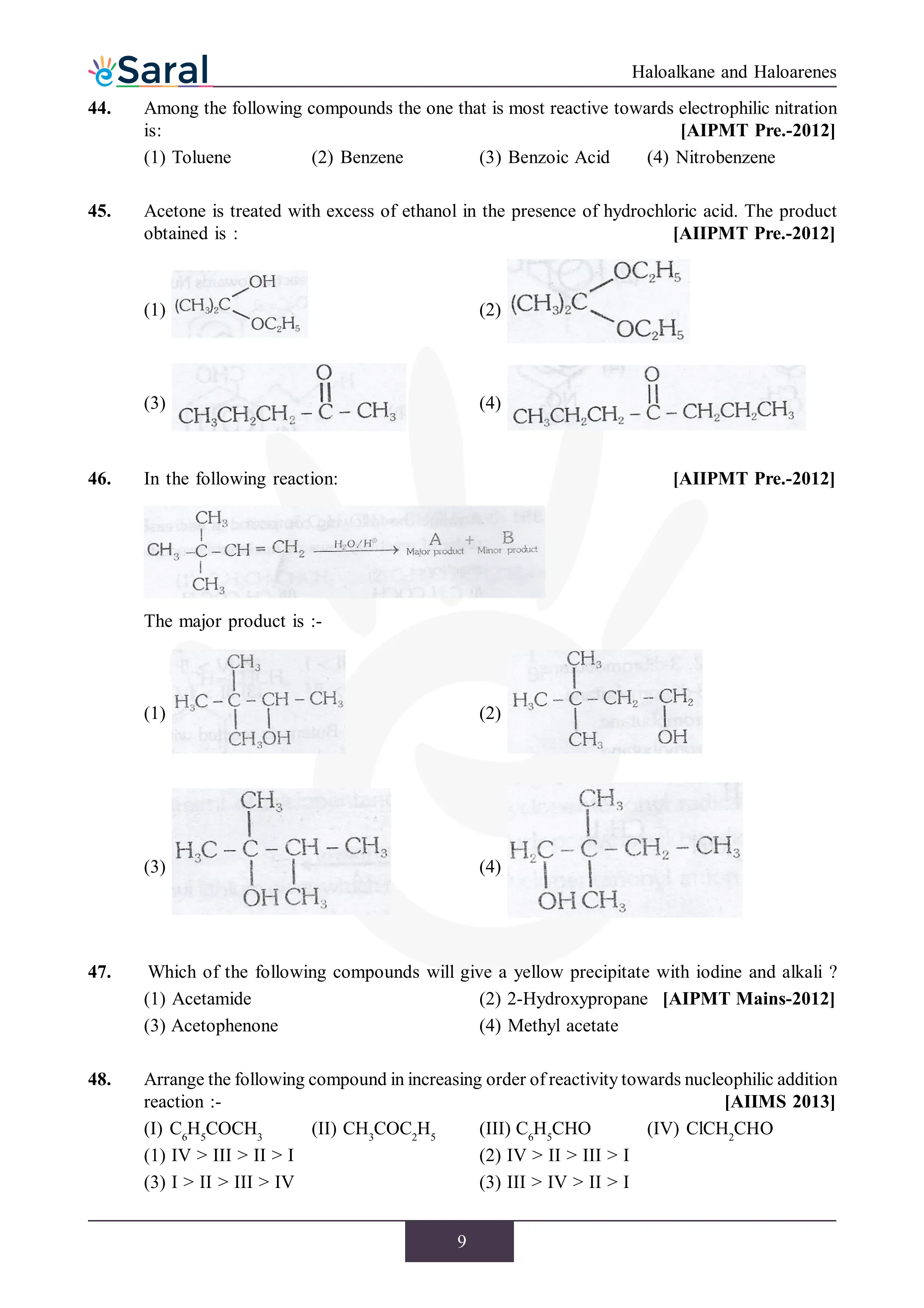
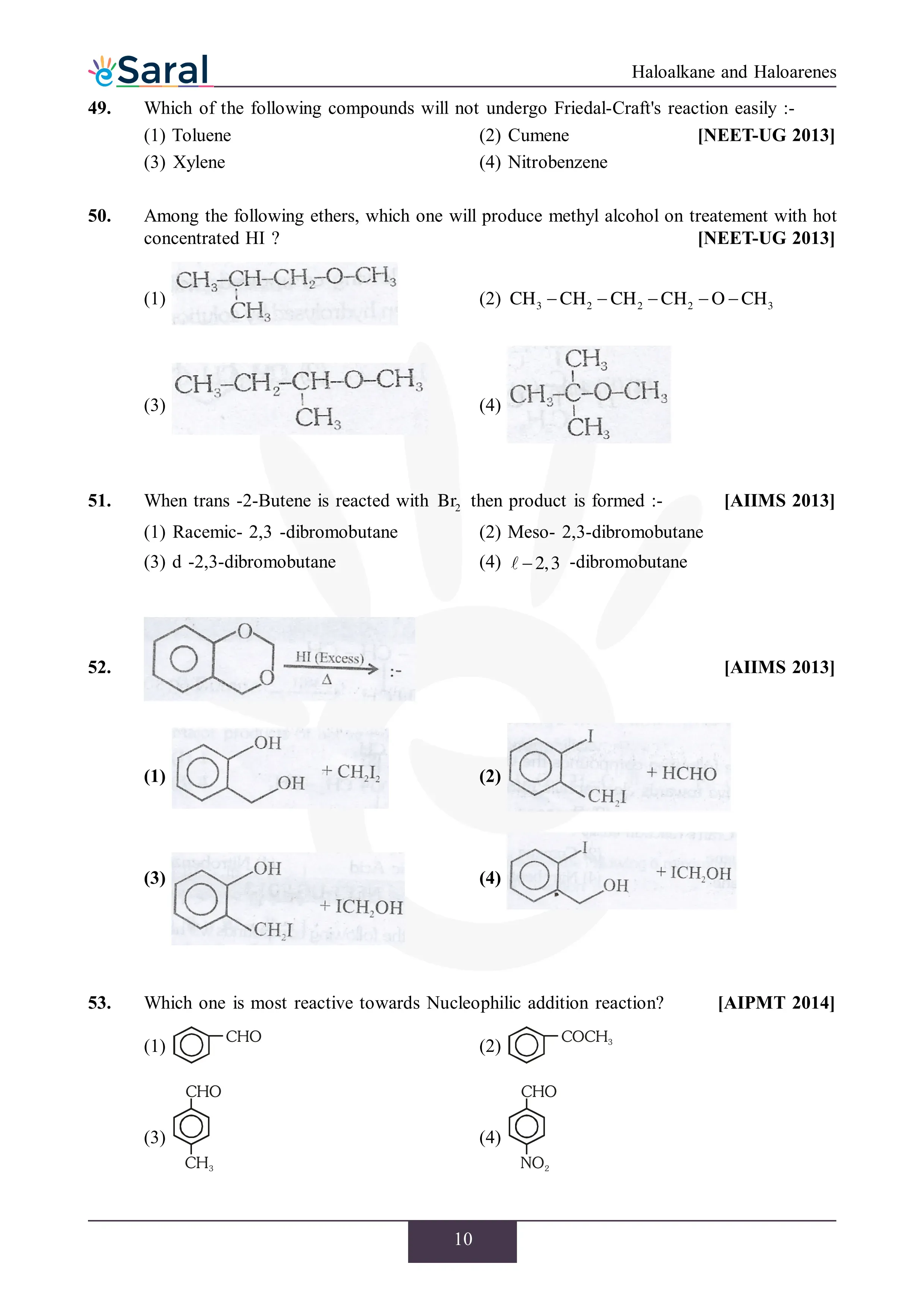
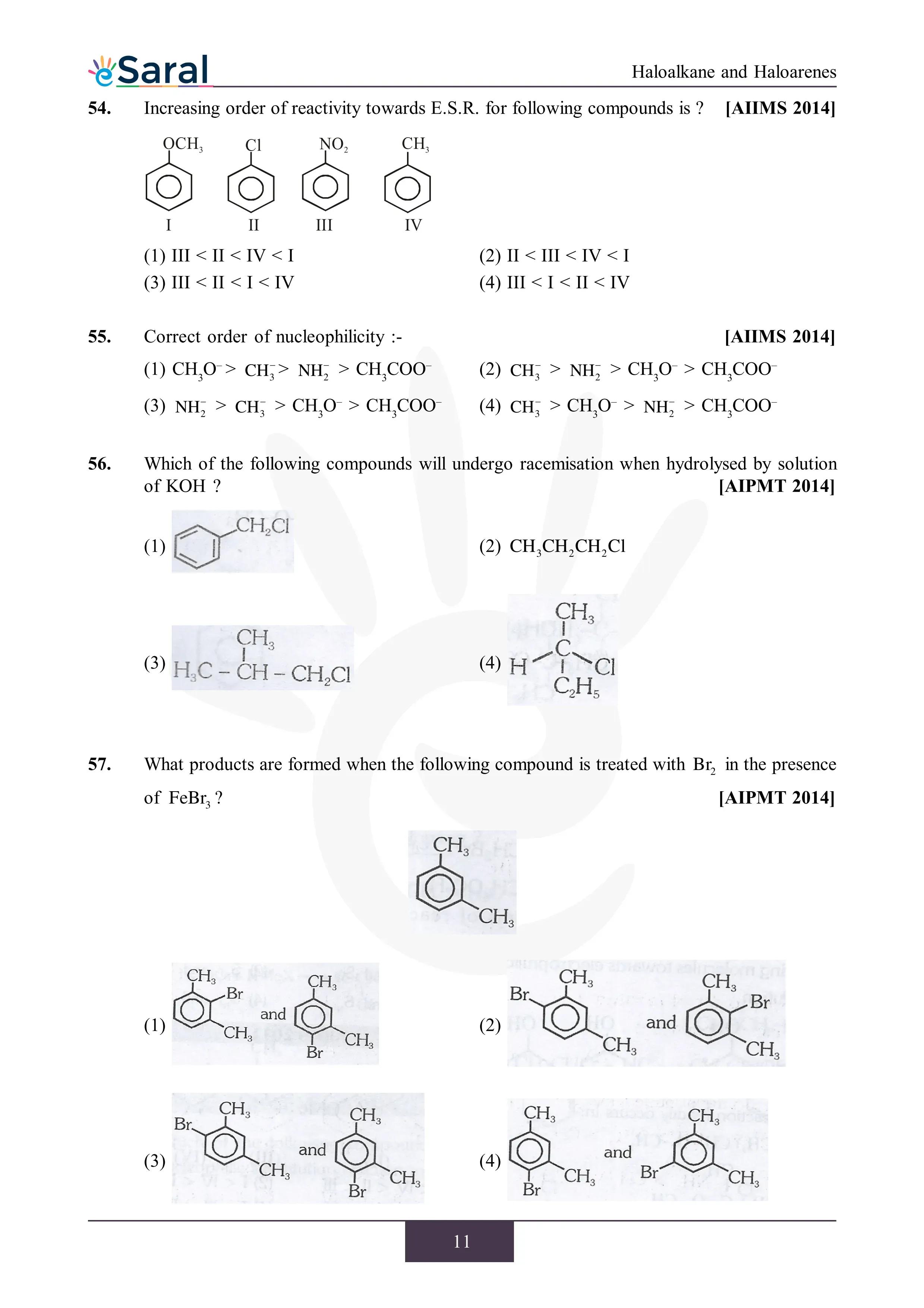
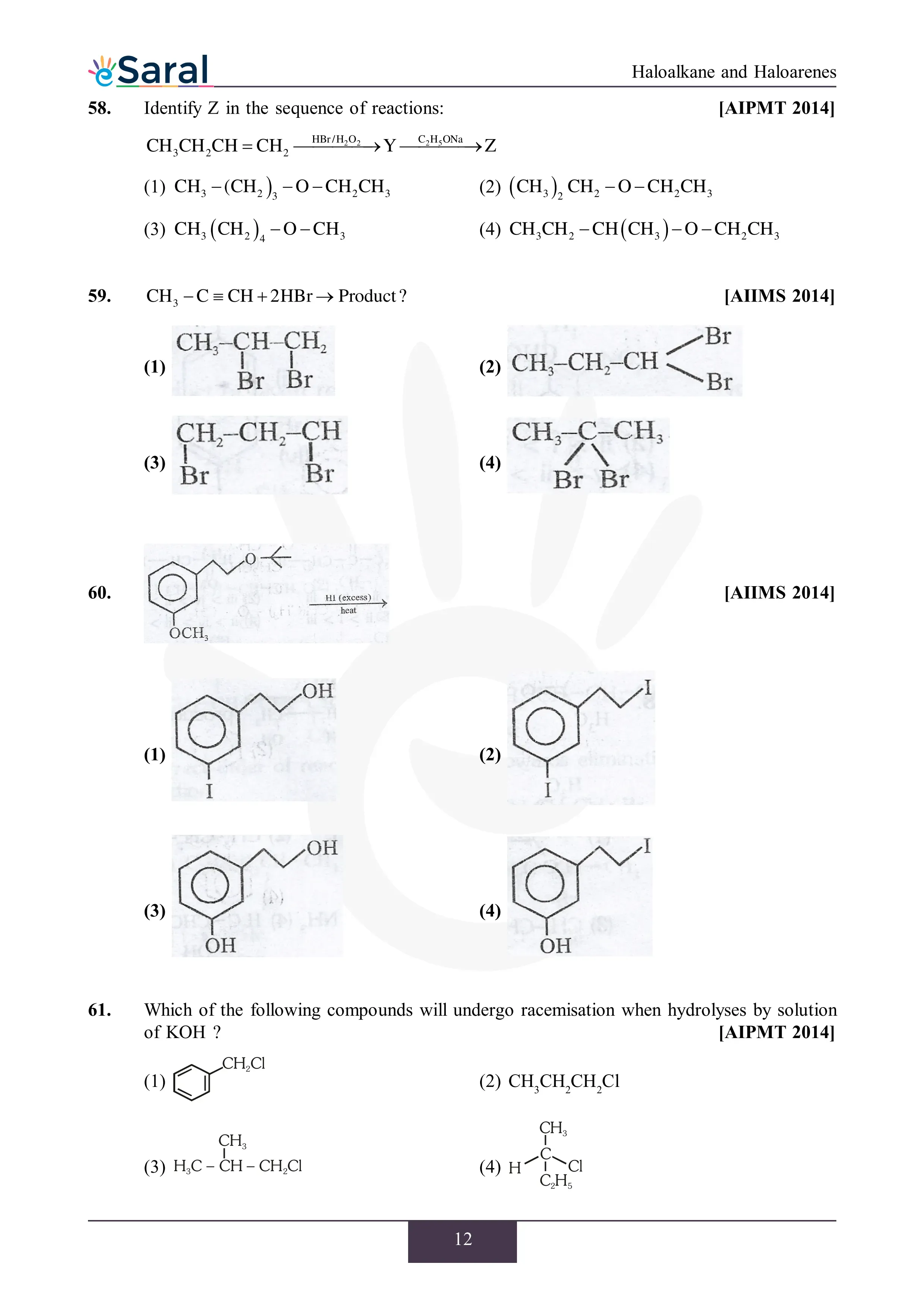
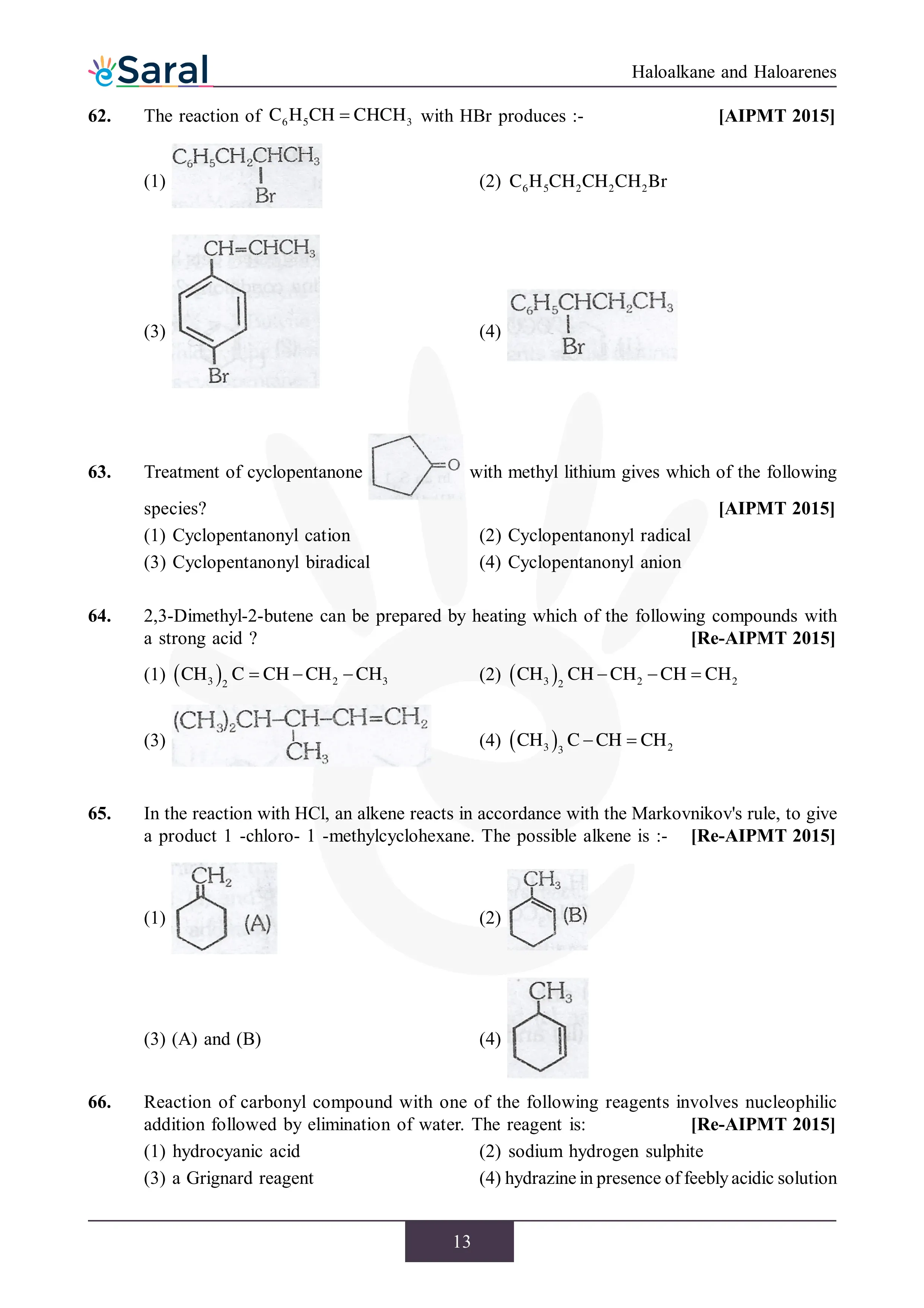
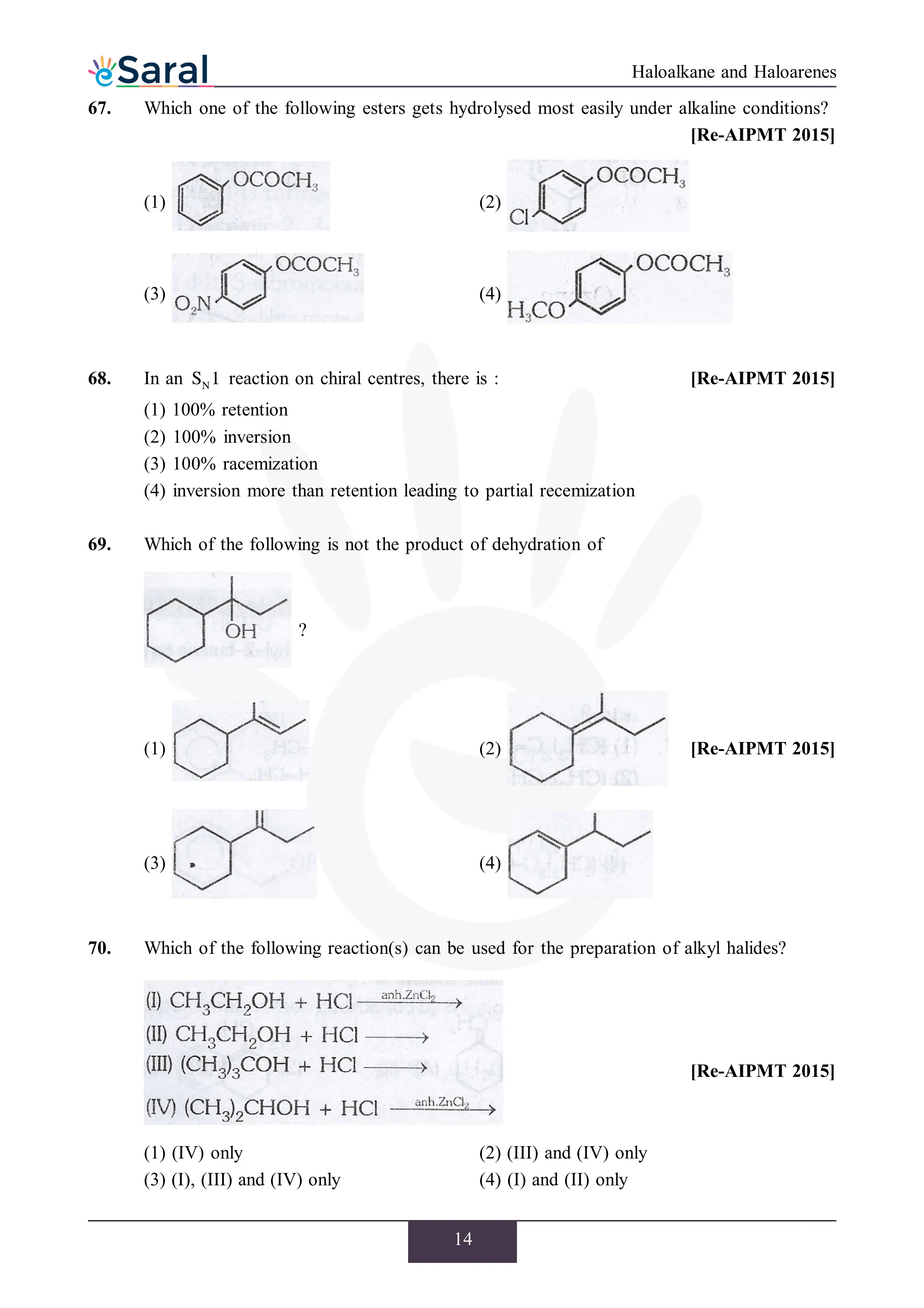
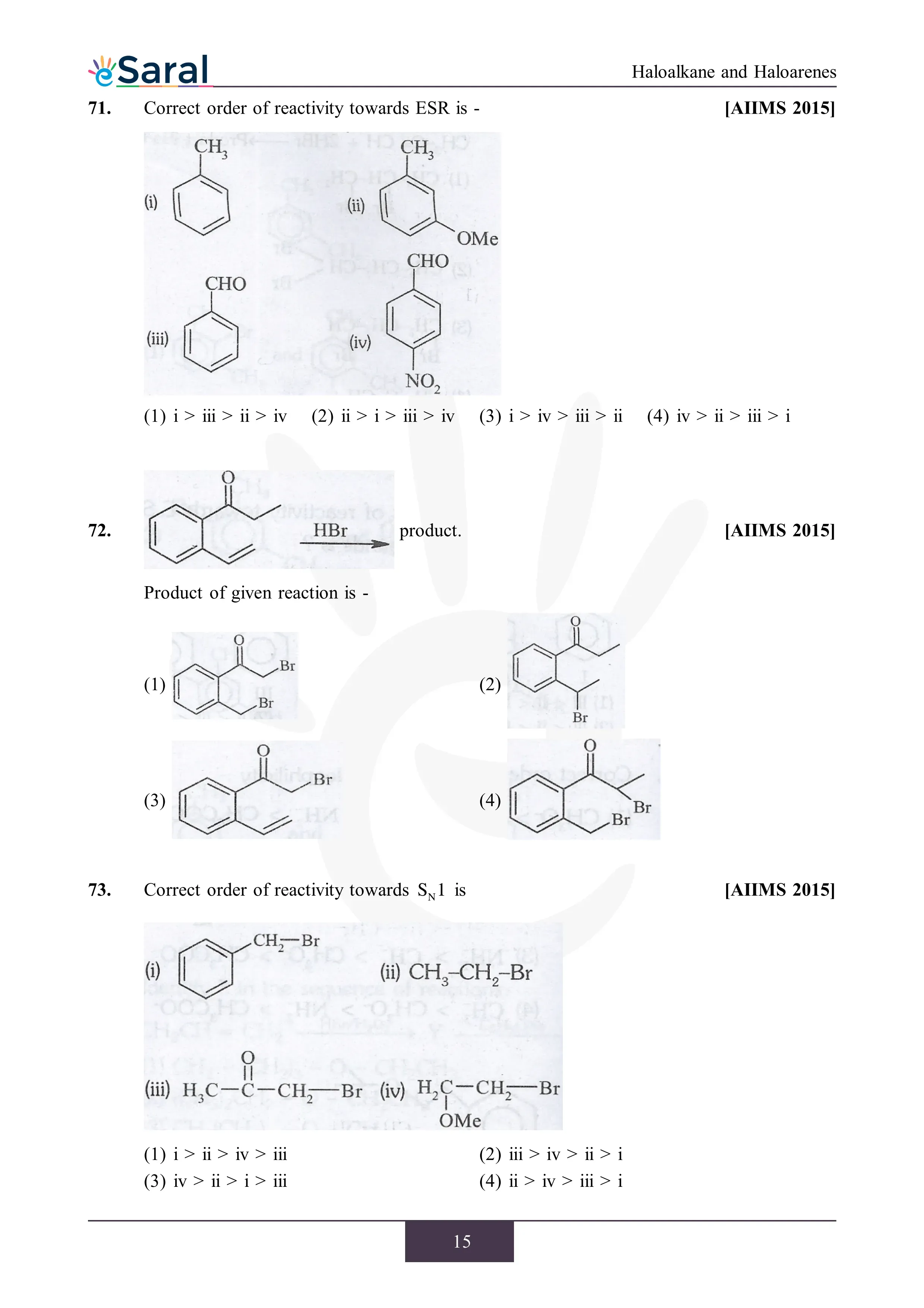
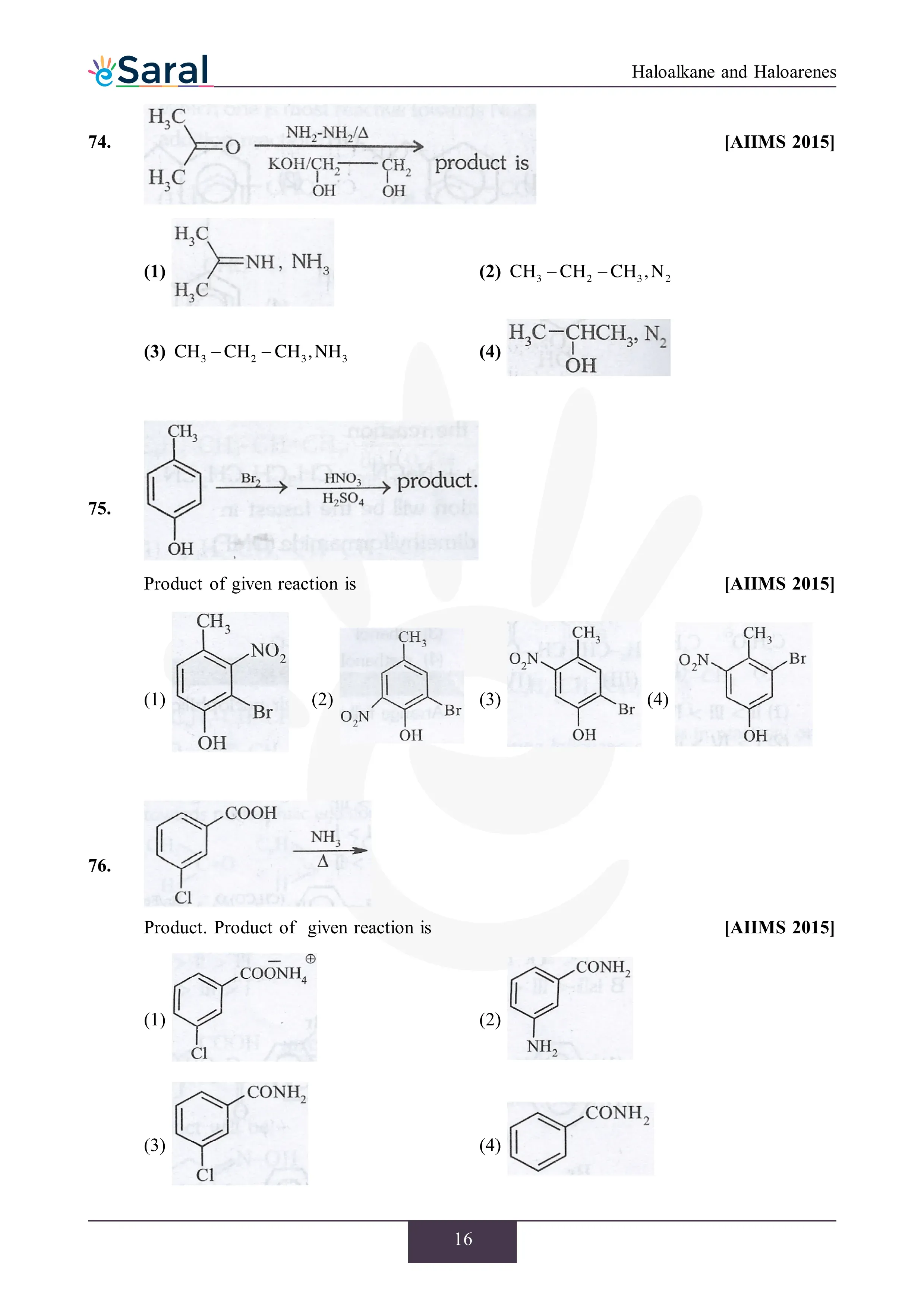
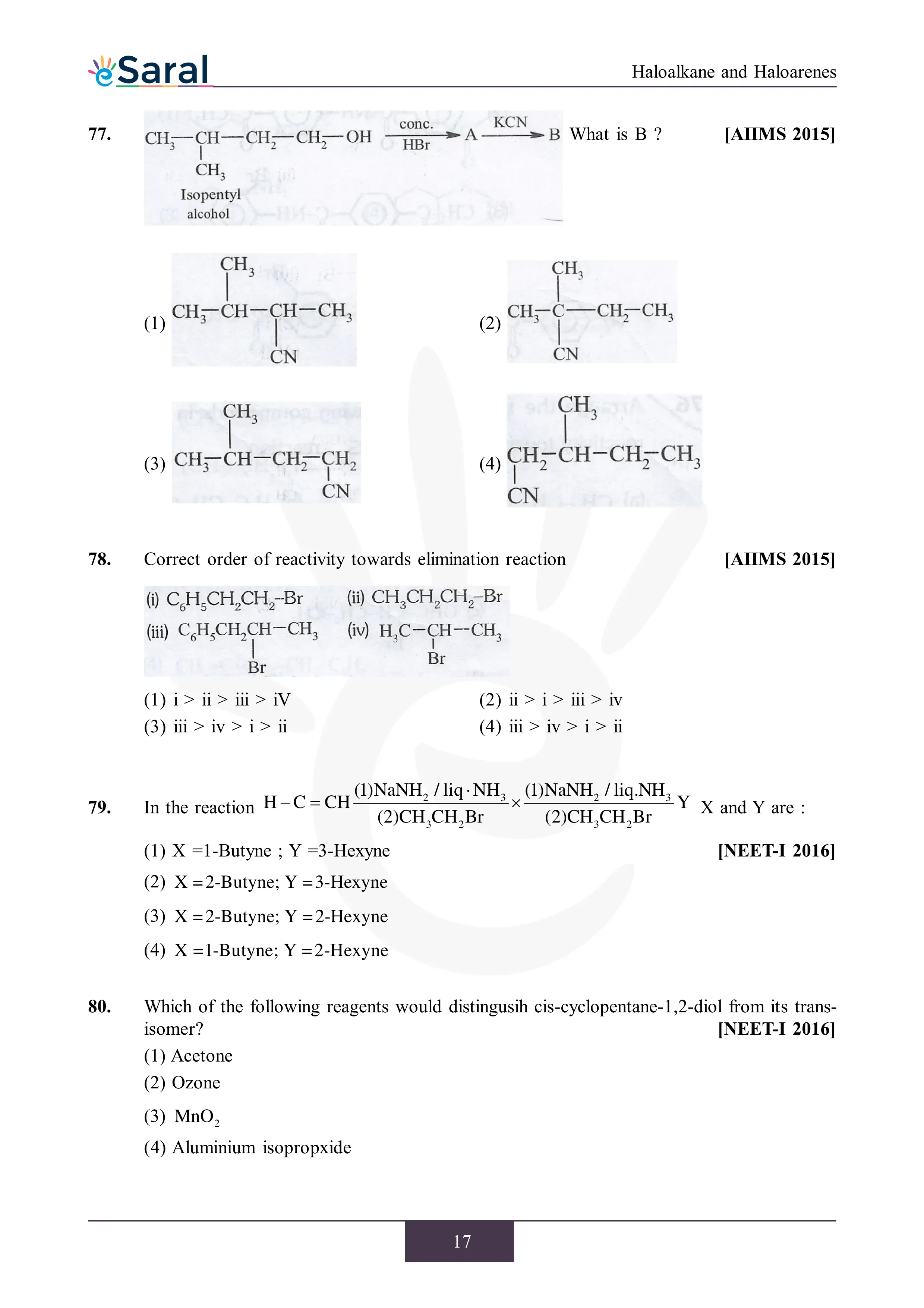
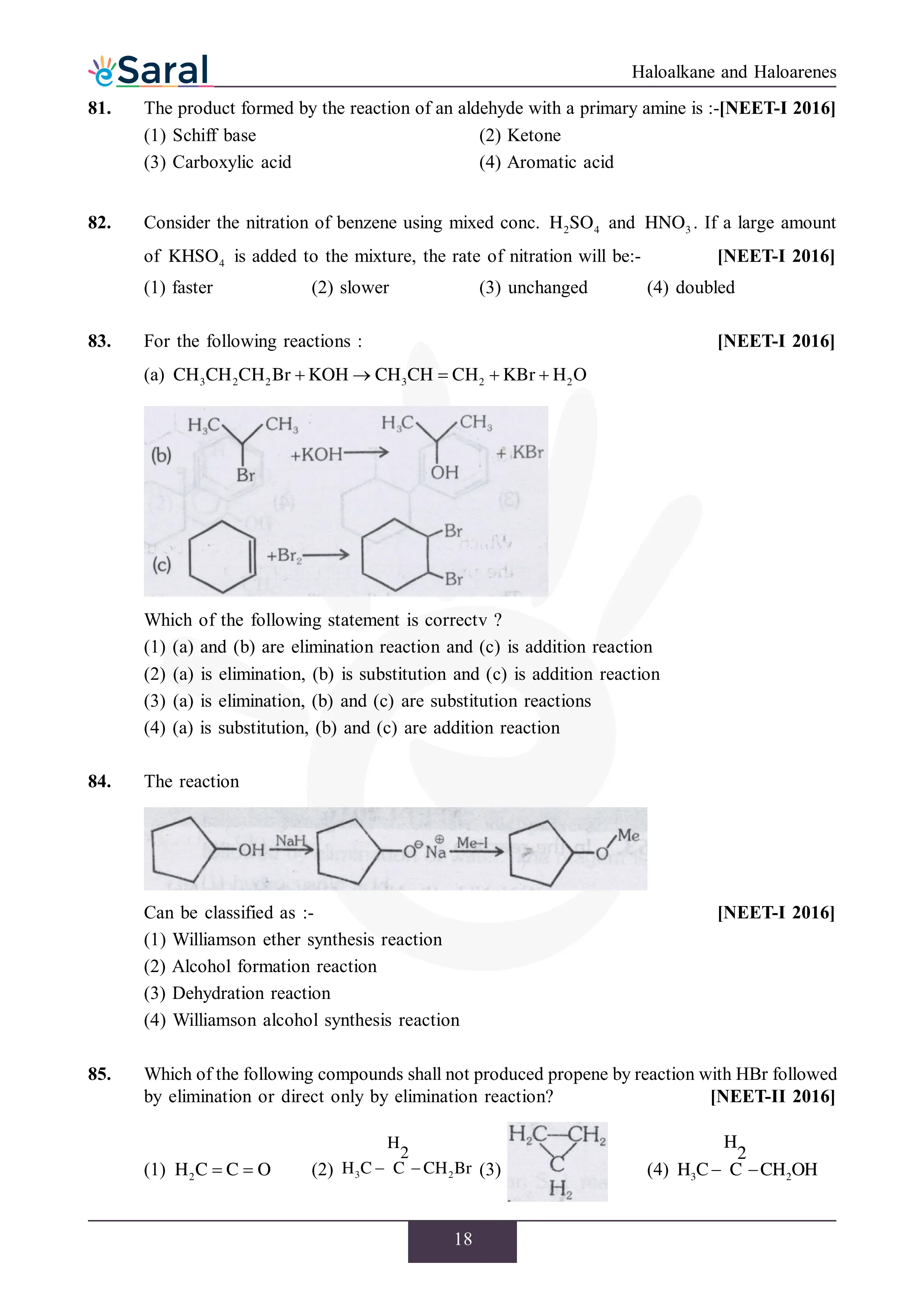
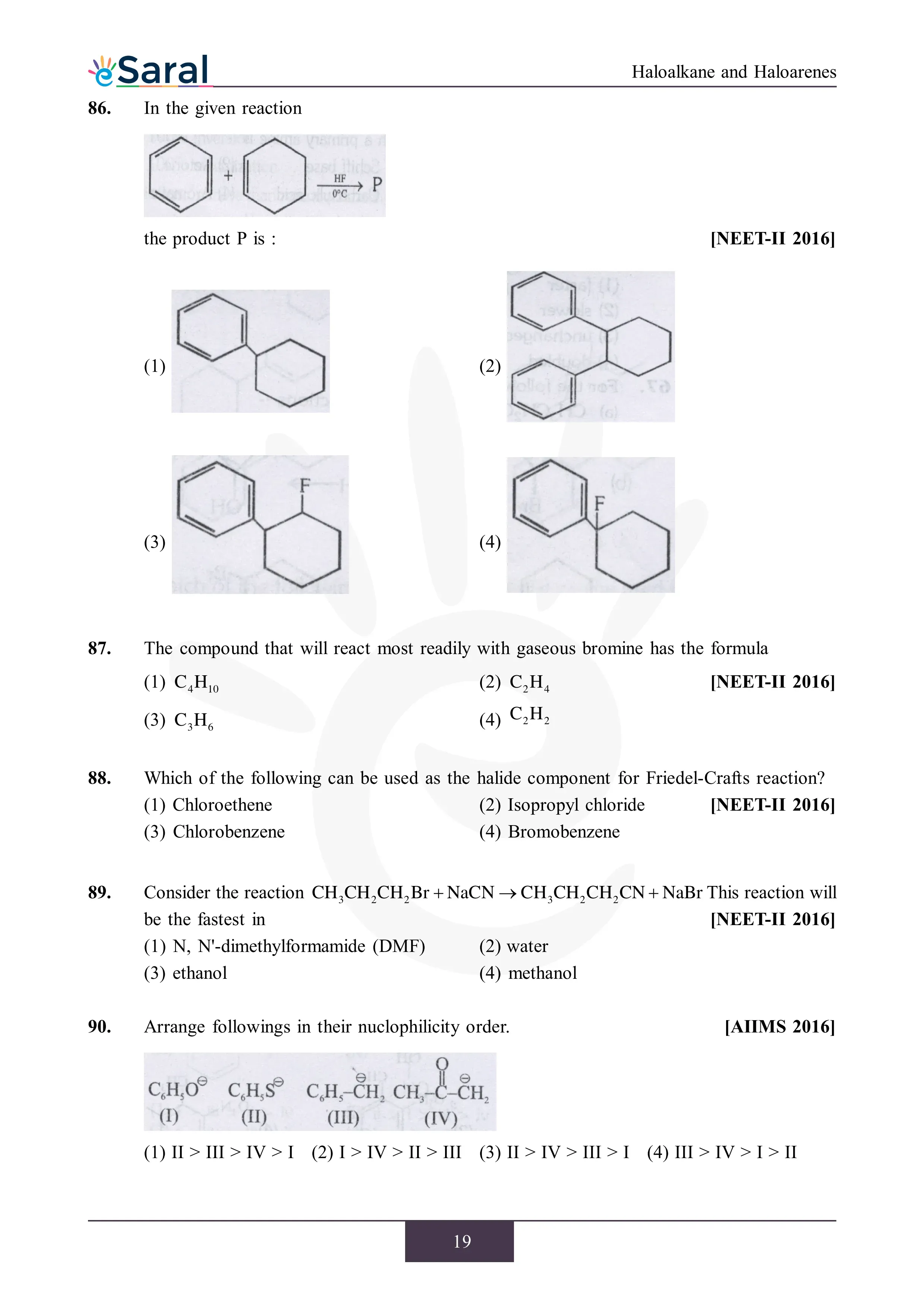
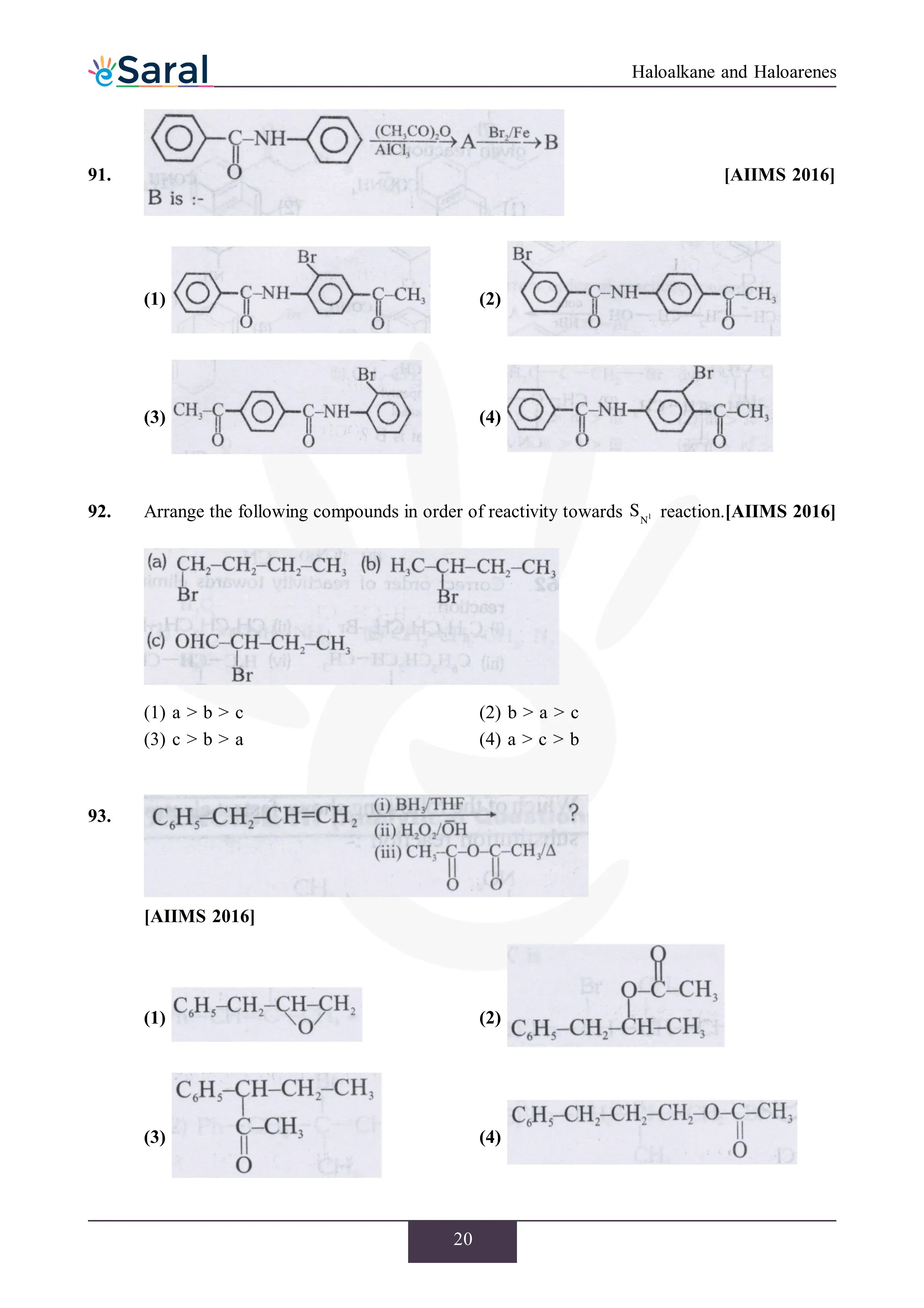
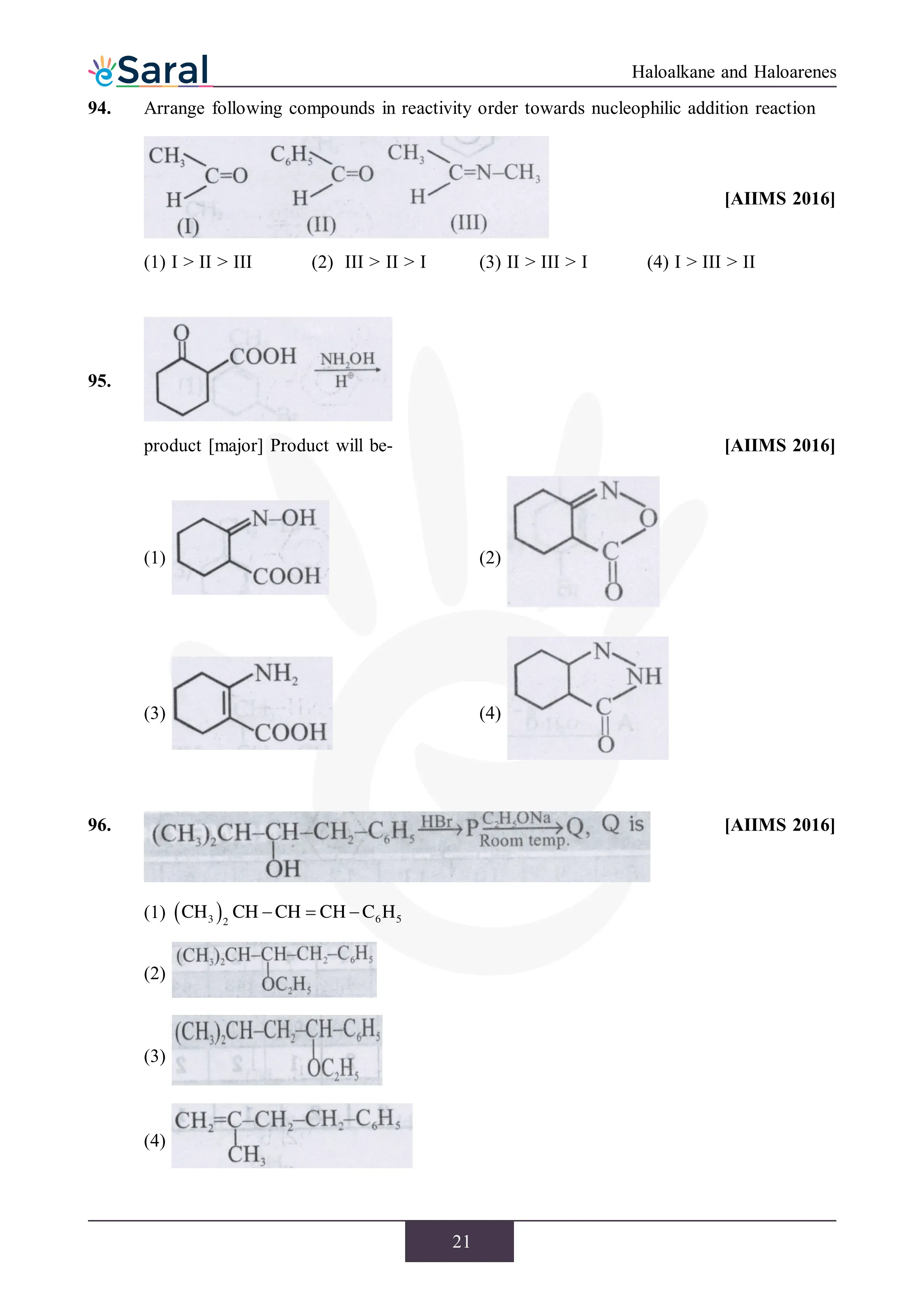
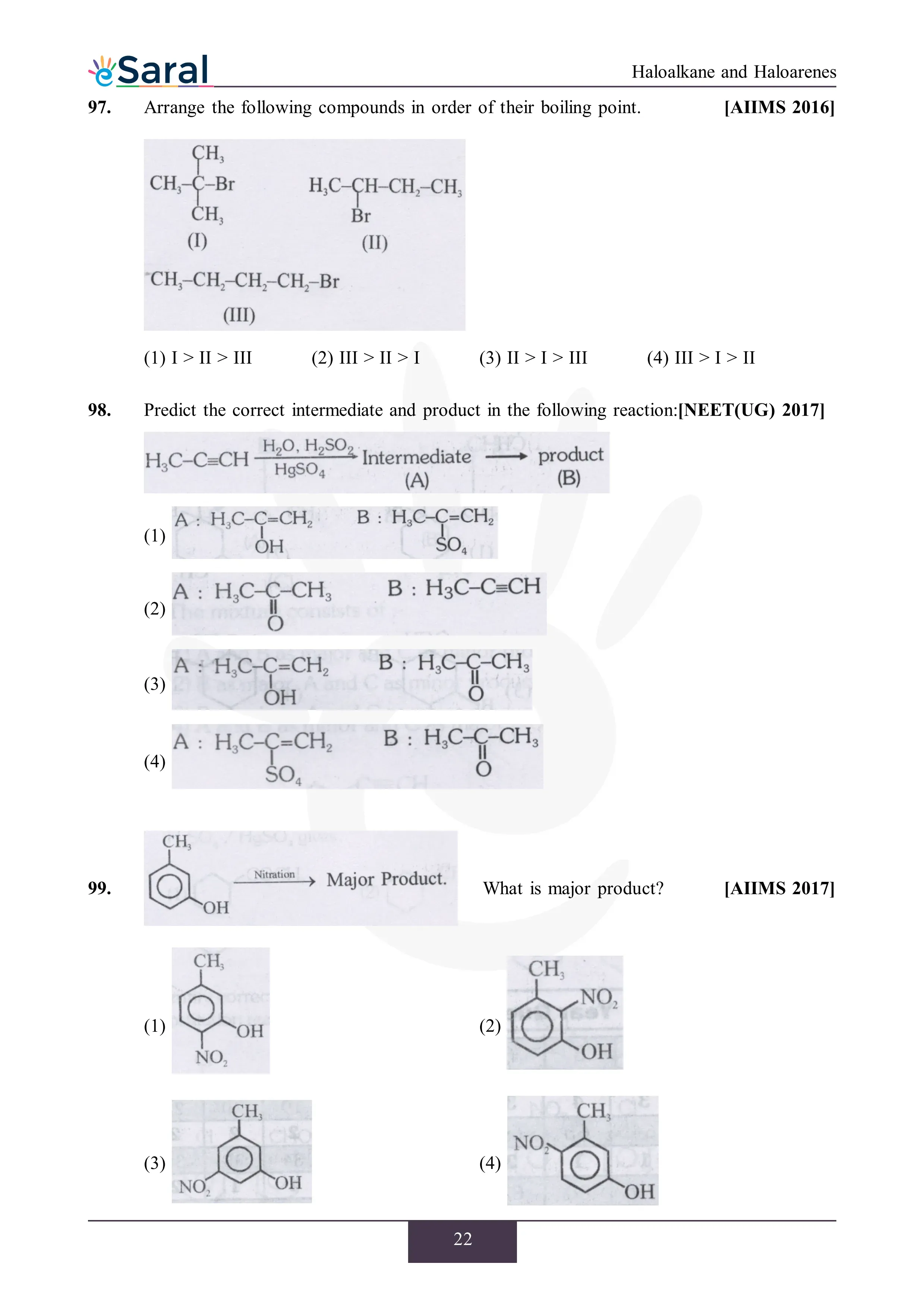
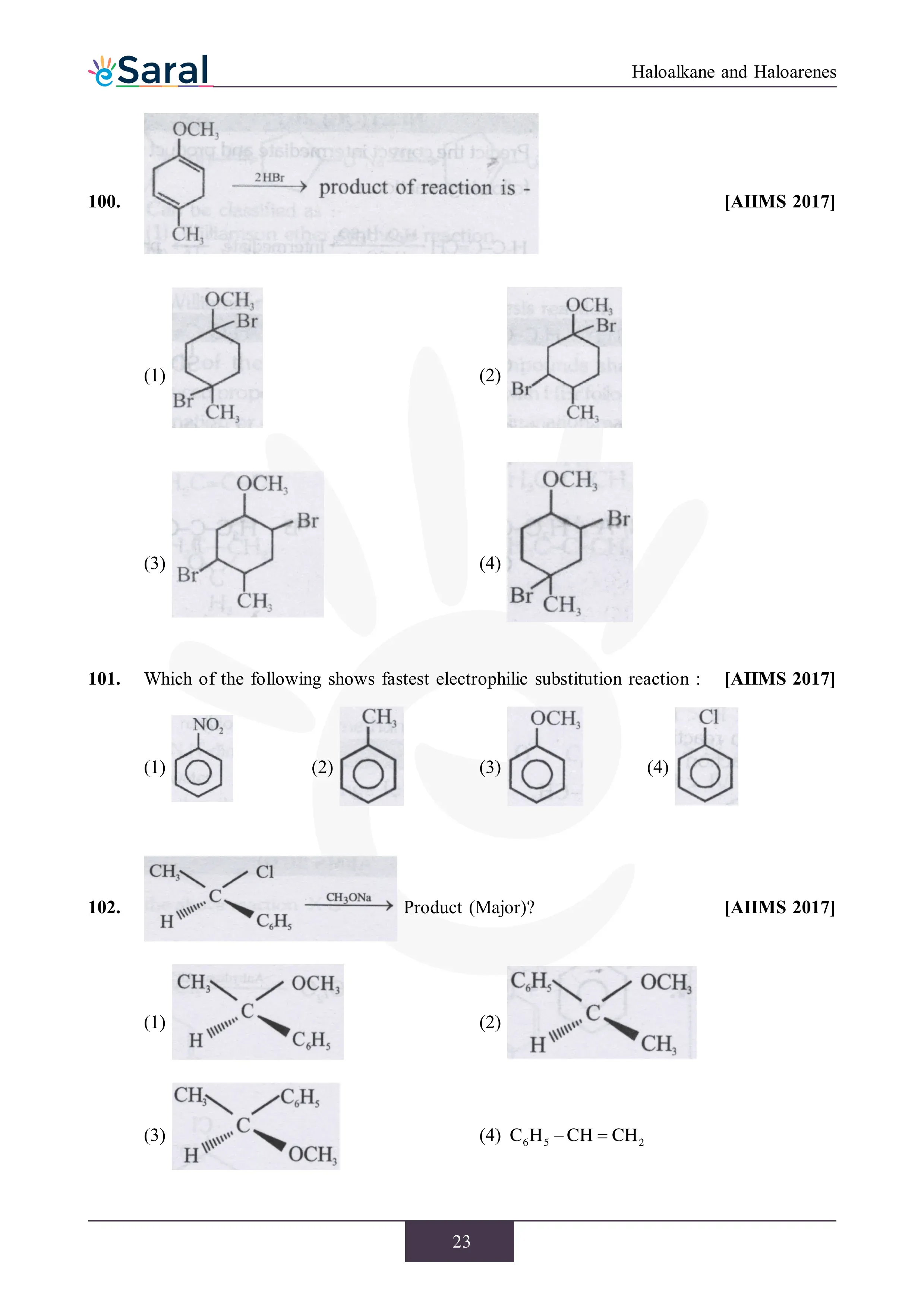
Want to take your NEET Chemistry preparation further? eSaral's NEET course — taught by IIT Bombay faculty, including AIR-41 rankers — delivers Kota-quality teaching online at a fraction of the cost. Our students have consistently cracked NEET with 700+ scores using the same systematic approach outlined above.
📌 Bookmark this page and return after every chapter revision to re-test yourself on the PYQs.
🔗 Explore more: NCERT Solutions for Class 12 Chemistry | NCERT Books for Class 12 | All NCERT Solutions
Frequently Asked Questions
Is NCERT enough for Haloalkane and Haloarenes in NEET?
Yes, NCERT Class 12 Chemistry Chapter 10 is the primary and sufficient source for NEET. Around 90% of NEET questions from this chapter are directly traceable to NCERT concepts, reactions, and examples. Read the chapter thoroughly, memorise all named reactions and reagents, and then reinforce with NEET PYQs for complete preparation
Which is the most important topic in Haloalkane and Haloarenes for NEET?
SN1 and SN2 reaction mechanisms are the single most tested area, appearing in some form in nearly every NEET paper. Closely following are reactivity orders of alkyl halides, elimination reactions with Saytzeff's rule, optical activity/stereochemistry, and named reactions like Wurtz and Sandmeyer. Mastering these five areas covers roughly 80% of all NEET questions from this chapter
How many questions come from Haloalkane and Haloarenes in NEET every year?
NEET-UG typically includes 1 to 3 questions from Haloalkane and Haloarenes each year. Based on NTA data from 2017 to 2024, the average is approximately 1.75 questions per exam. The chapter is consistent enough to be worth full preparation, and its concepts also reinforce General Organic Chemistry questions.
Why does SN2 not occur with tertiary alkyl halides?
Tertiary alkyl halides have three bulky alkyl groups surrounding the carbon bearing the leaving group. This creates severe steric hindrance that physically blocks the nucleophile from attacking the rear face of the carbon in the single-step SN2 mechanism. As a result, tertiary halides favour either SN1 (via stable 3° carbocation) or E2 elimination when treated with a strong base.
What is the difference between haloalkanes and haloarenes in NEET questions?
Haloalkanes are alkyl halides (halogen attached to sp³ carbon) that undergo SN1, SN2, and elimination reactions readily. Haloarenes are aryl halides (halogen attached to sp² aromatic carbon) that are far less reactive toward nucleophilic substitution due to resonance. NEET often tests this contrast in reactivity directly, especially why ArX does not undergo SN2 under normal conditions.
How can I download the Haloalkane and Haloarenes NEET PYQ PDF?
The questions and solutions are available directly on this page in interactive format. To save them as a PDF, you can use your browser's "Print to PDF" option. Alternatively, download the eSaral app to access all chapter-wise NEET PYQs with solutions offline, along with video explanations by IIT Bombay faculty.
Team eSaral
eSaral Academic and Editorial Team
Team eSaral is the collective author profile for educational content created by eSaral’s teachers and academic contributors. The team draws on expertise from IIT graduates, doctors, experienced educators and subject specialists to develop resources for JEE, NEET and school students. Our articles aim to explain concepts clearly and help students study with confidence.
Related Posts
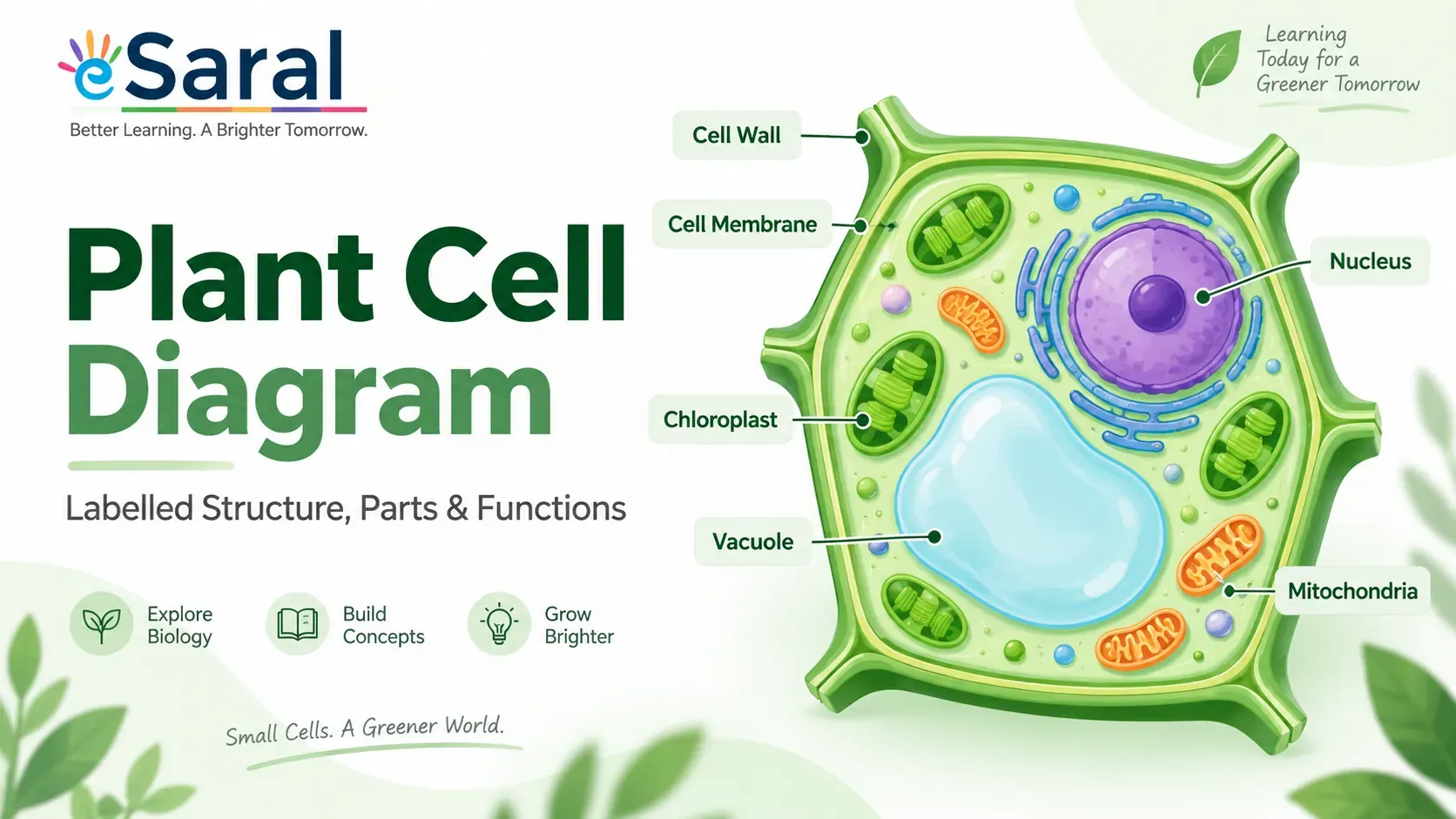
Plant Cell Diagram: Labelled Structure, Parts and Functions
Simple, labelled plant cell diagram with parts and functions. Covers plant cell structure for Class 6, 7, 8, 9, 10 and 11 students, CBSE-aligned.
Saransh Gupta Sir's Visit to IIT Patna: Hostel Life, Placements & Lessons for JEE Aspirants
Inside Saransh Gupta Sir's IIT Patna visit — hostel life, the library, placements, internships, and real advice for JEE aspirants from students living the IIT dream.
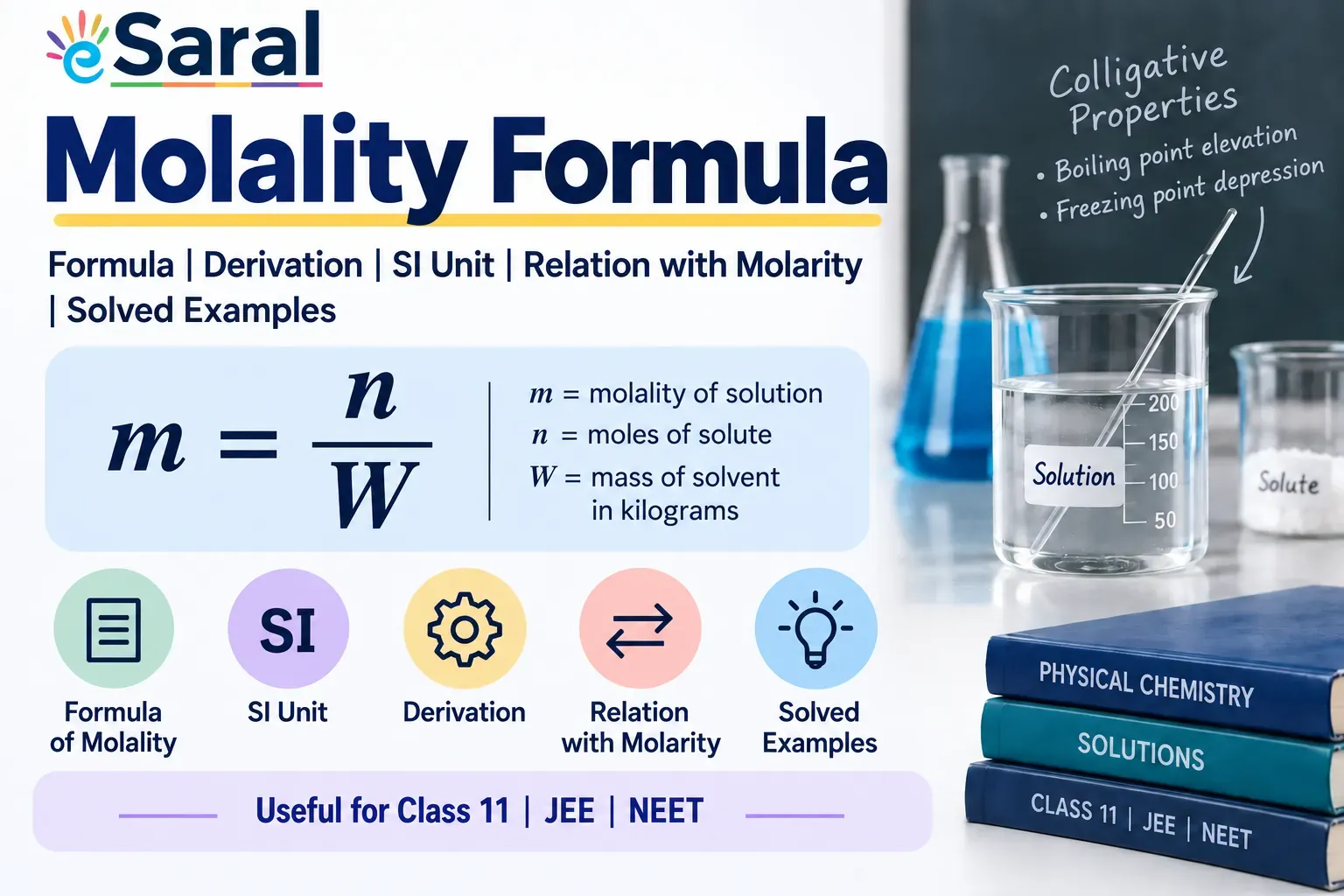
Molality Formula: Formula for Molality, Derivation & Solved Examples
Molality formula is $m = \dfrac{n}{W}$. Learn the formula of molality, its SI unit, derivation, relation with molarity, and solved examples for Class 11, JEE and NEET.
BITSAT Previous Year Question Paper PDF
Download BITSAT previous year question papers PDF. Get year-wise BITSAT PYQs, memory-based papers, exam pattern, and preparation tips to improve your BITSAT preparation.

Teachers’ Day 2026 at eSaral Gurukul: Celebrating the Bond Between Students, Teachers & Mentors
See how Teachers’ Day 2026 was celebrated at eSaral Gurukul, reflecting the bond among students, teachers, and mentors, and the role of guidance beyond academics.
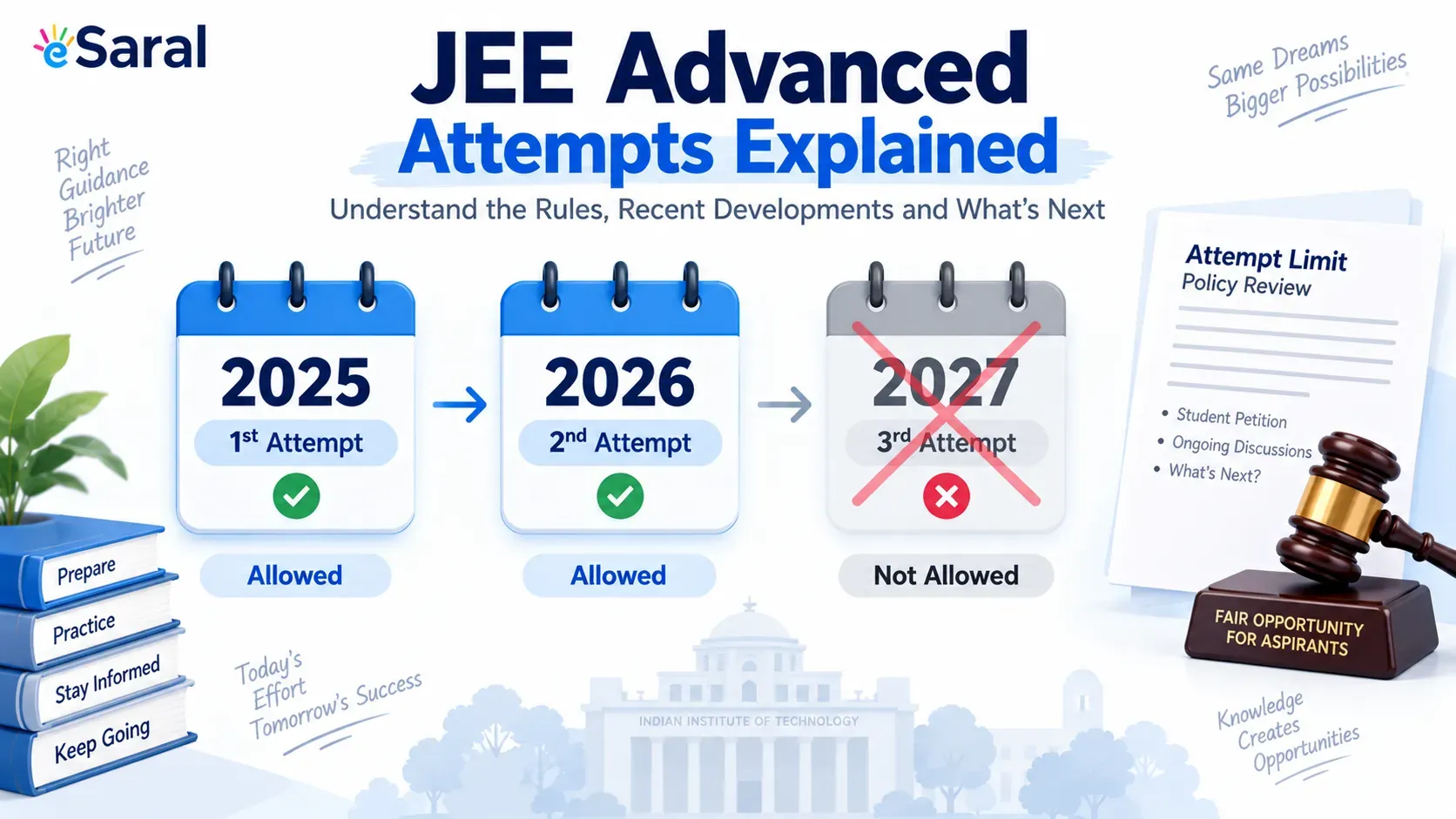
JEE Advanced Attempts: Can You Give It a Third Time? Rules Explained
JEE Advanced attempts: current rule is 2 consecutive years only: full eligibility criteria, the 2025 third-attempt controversy, and the latest 2026 petition news.

Best JEE Preparation App
Best JEE preparation app for Main & Advanced: AI mock tests, live doubt-solving, thousands of practice questions. JEE preparation app for droppers & Class 11-12.
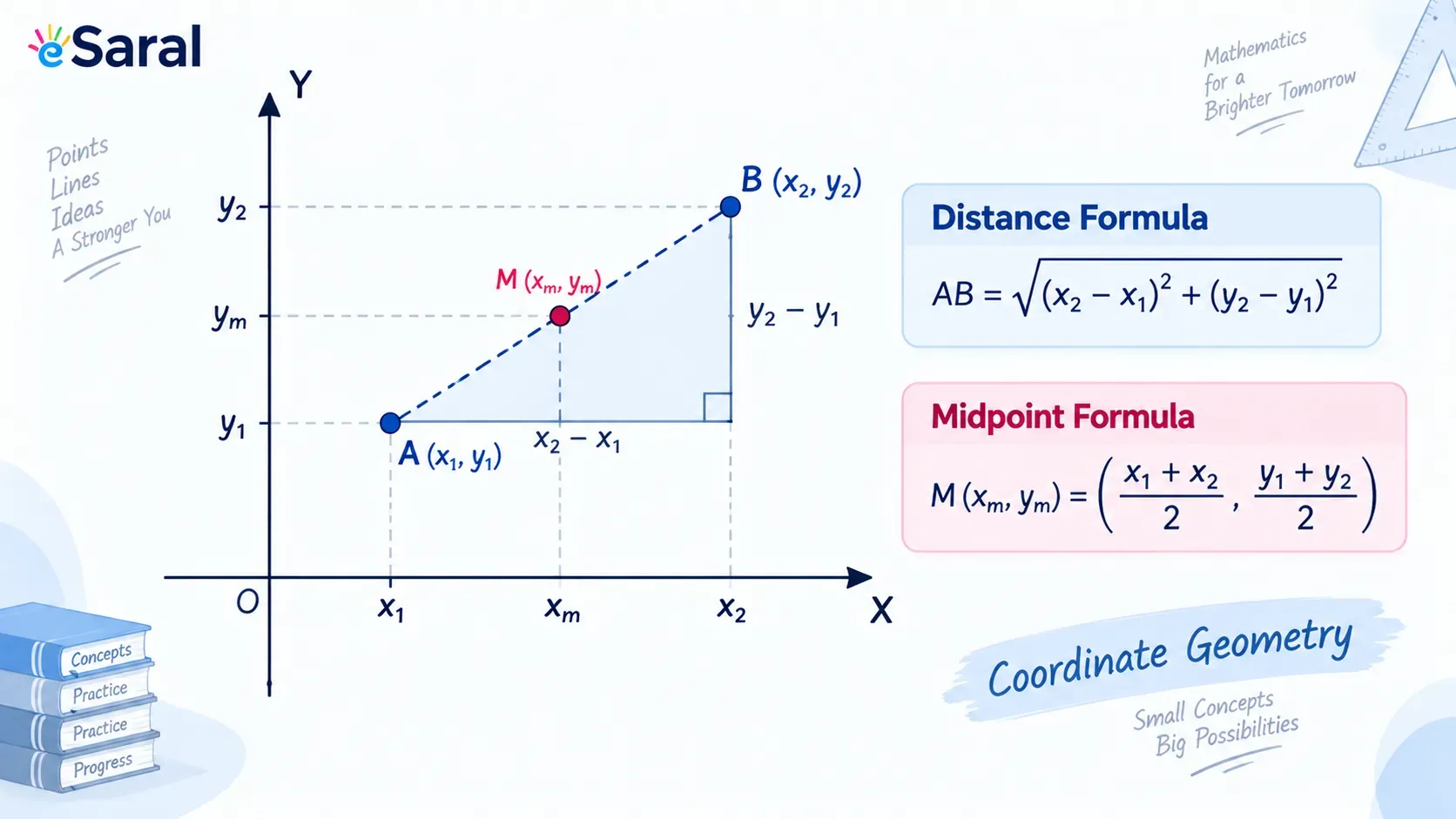
Coordinate Geometry Class 10: Formulas, Notes & Solved Examples
Coordinate geometry class 10: complete CBSE formulas — distance, section, midpoint and area of triangle — with derivation, notes and solved examples.
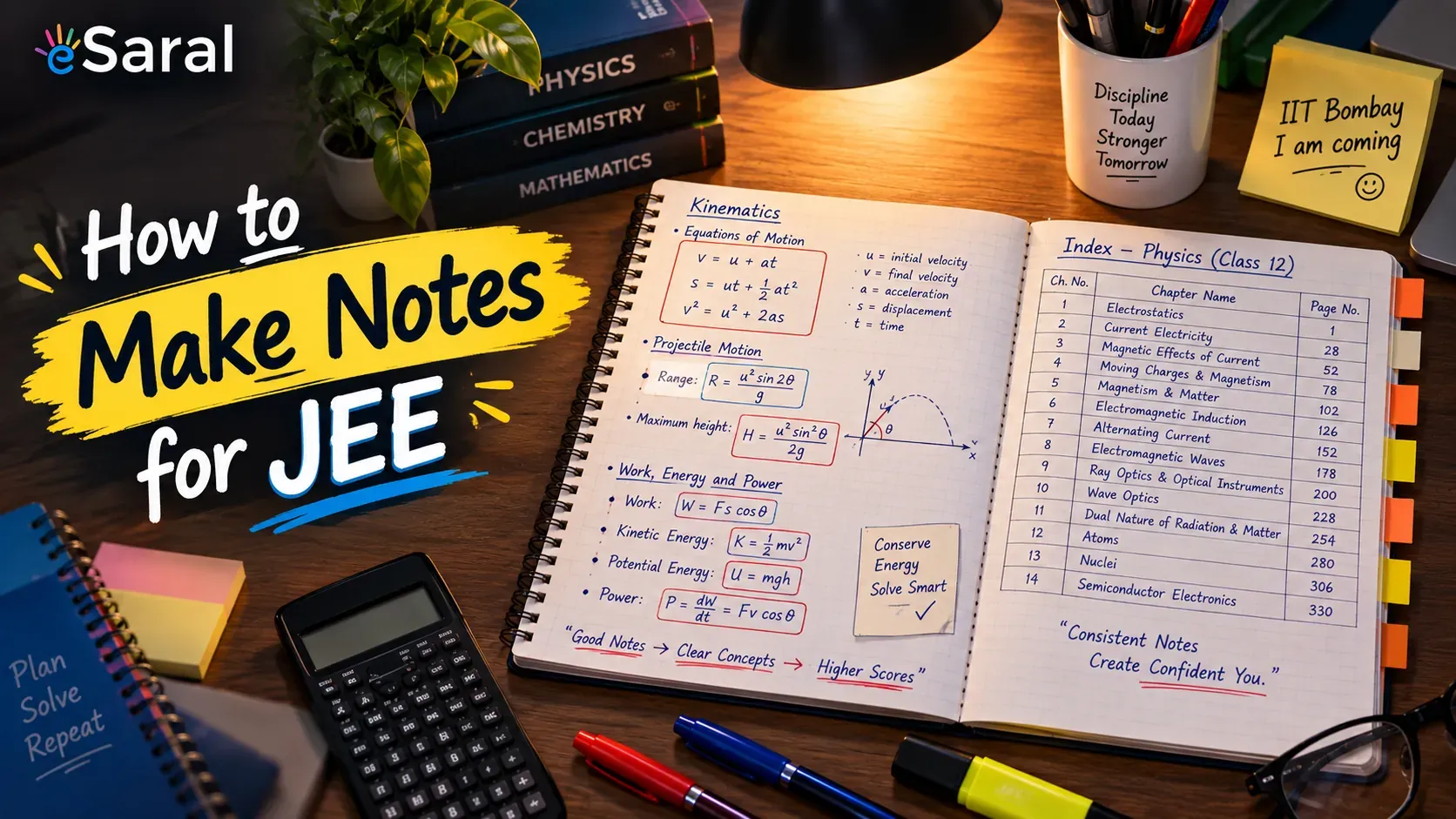
How to make Notes For JEE Smart Notes Strategy of an AIR 41
Learn how to make notes for JEE the way toppers do — indexing, shorthand, and smart short notes for JEE that cut revision time to just 5–7 days.
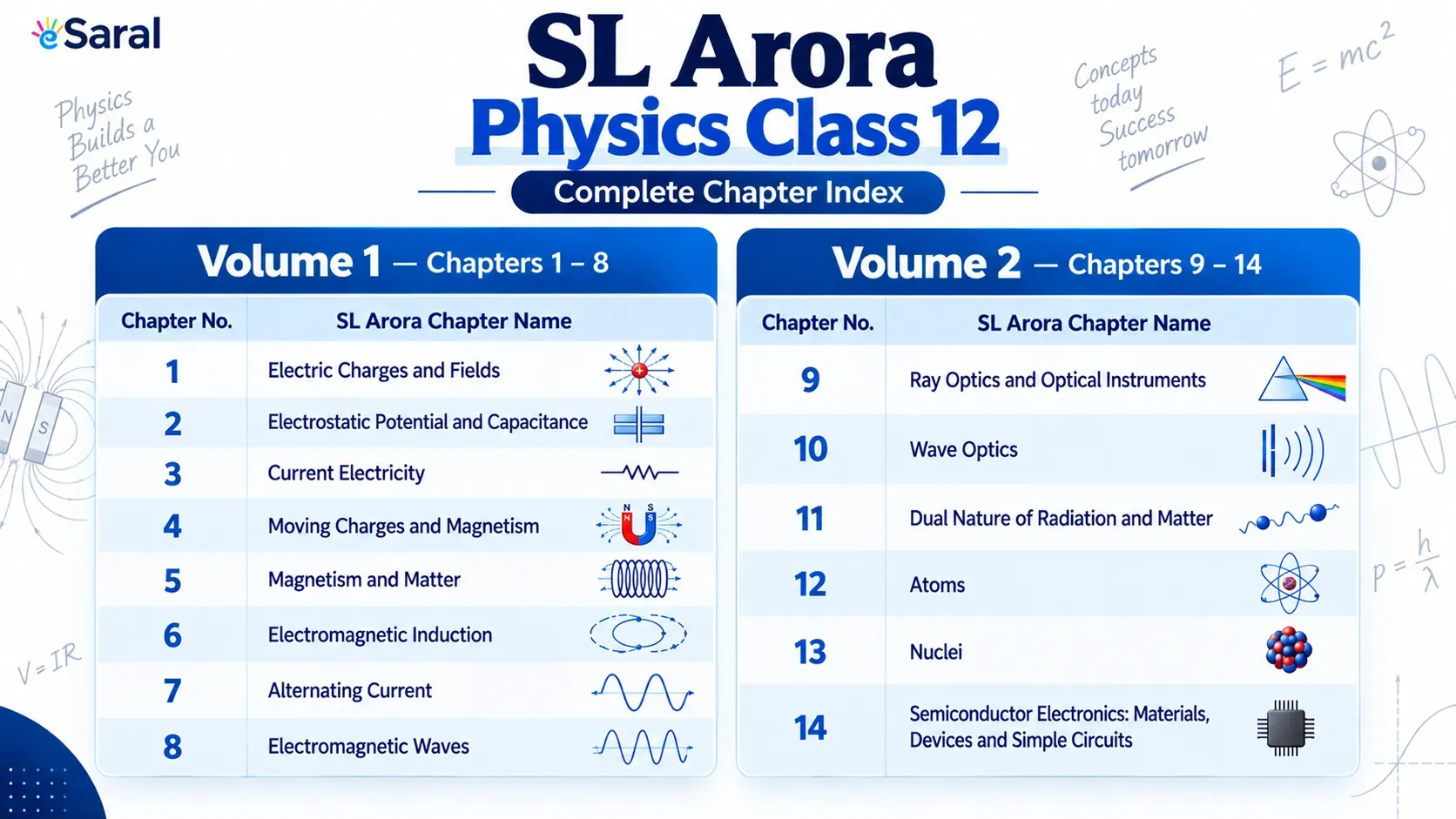
SL Arora Physics Class 12 Index – Chapter List for Volume 1 & 2
SL Arora Physics Class 12 index — complete chapter list for Volume 1 & 2, mapped to NCERT solutions for board, JEE Main, and NEET preparation.