
Organic Chemistry Revision Series for JEE, NEET, Class 11 and 12

eSaral Academic and Editorial Team
Summary
Organic chemistry revision for JEE Main, JEE Advanced, and NEET covers 19 core topics — from General Organic Chemistry and reaction mechanisms to Biomolecules and Polymers. This series provides topic-wise revision videos and downloadable mind maps for every chapter in the Class 11 and Class 12 organic chemistry syllabus, taught by IIT Bombay faculty.
eSaral › Organic Chemistry › Organic Chemistry Revision Series for JEE, NEET, Class 11 and 12

Why Does Organic Chemistry Revision Decide Your JEE and NEET Rank?
Organic chemistry carries significant weight in both JEE Main and NEET. According to NTA's official syllabus, organic chemistry topics span across Class 11 and Class 12 and together account for roughly 28–33% of the Chemistry section in JEE Main and up to 40% in NEET Biology-adjacent papers.
Most students understand concepts during their first learning cycle. The problem is retention. Reaction mechanisms, name reactions, and stereochemistry rules are forgotten within weeks if not revised systematically. A structured revision series — one that covers every chapter in sequence, highlights the most exam-tested reactions, and presents information visually through mind maps — is what separates students who score 150+ in chemistry from those stuck at 90.
This revision series, created by Prateek Gupta Sir (IIT Bombay), is designed specifically to close that gap. Each session focuses on high-yield concepts, common MCQ traps, and time-saving tricks for solving multiple-choice questions in JEE and NEET under exam conditions.
You can pair these revision sessions with detailed NCERT explanations — the NCERT Solutions for Class 12 Chemistry on eSaral are mapped chapter-by-chapter to match the topics below.
What Does the JEE/NEET Organic Chemistry Syllabus Actually Cover?
The syllabus spans two years. Class 11 builds the foundation (GOC, hydrocarbons, isomerism), while Class 12 focuses on functional group chemistry (haloalkanes, alcohols, aldehydes, amines) and applied chemistry (biomolecules, polymers, everyday chemistry). Skipping either year during revision is one of the most common — and costly — mistakes students make.
Complete Topic-Wise Organic Chemistry Revision Series: Videos + Mind Maps
The table below covers every chapter in the series. Each row links to a revision video and a downloadable mind map. Topics are tagged by class and exam relevance so you can prioritise based on time available.
Class 11 and Class 12 Organic Chemistry — Full Coverage Table
TOPIC | Revision Videos | Mind Maps |
|---|---|---|
General Organic Chemistry | ||
Acidic and Basic Strength | ||
Hydrocarbons | ||
Optical Isomerism | ||
Haloalkane & Haloarenes | ||
Alcohol, Phenol, and Ethers | ||
Carbonyl Compounds | ||
Aldol, Cannizzaro, and Haloform Reaction | ||
Name Reaction | ||
Oxidation Reaction | ||
Reduction Reaction | ||
Carboxylic Acid | ||
Nitrogen-Containing Compounds | ||
Bio-molecules | ||
Polymers | ||
Chemistry in Everyday Life | ||
Atomic Structure | ||
Chemical Bonding | Revise | |
Periodic Table | Revise |
Start your revision with General Organic Chemistry, then Carbonyl Compounds and Name Reactions — these three topics together cover the logic behind almost every other reaction in organic chemistry. If your GOC foundation is strong, everything else clicks faster.
Which Topics Are Most Frequently Asked in JEE Main?
Based on question frequency analysis across JEE Main papers from 2019–2024:
- Carbonyl Compounds — highest question density (2–3 questions per paper)
- Haloalkanes & Haloarenes — SN1/SN2 mechanisms appear almost every year
- Name Reactions — Aldol, Cannizzaro, Hofmann, and Sandmeyer reactions are perennial favourites
- Nitrogen-Containing Compounds — Gabriel synthesis, diazonium reactions, basicity comparisons
- Optical Isomerism — R/S configuration and meso compounds feature in JEE Advanced papers regularly
How to Use This Revision Series Effectively
Step 1 — Audit Your Weak Topics First
Before starting, quickly scan your previous test papers and mark the organic chemistry topics where you lost the most marks. Begin with those chapters rather than following the table top-to-bottom. This targeted approach can recover 10–15 marks in 2 weeks of focused revision.
Step 2 — Watch the Video, Then Study the Mind Map
Each revision video in this series is designed to trigger memory, not teach from scratch. Watch the video at 1.25x speed with a pen in hand, noting only what you did not remember. Then open the mind map and verify that everything on it makes sense to you. Circle what still feels unclear.
Step 3 — Solve 15–20 MCQs Per Topic Immediately After
Revision without practice is incomplete. After each session, solve a short set of topic-wise MCQs from previous year JEE Main or NEET papers. This forces your brain to apply what you just reviewed, which locks in retention far better than re-reading notes.
Step 4 — Use the Mind Maps as a 10-Minute Flash Revision the Night Before the Exam
Mind maps are built for quick recall. The night before your exam — or even in the 30 minutes before entering the exam hall — a single pass through the relevant mind maps is worth more than an hour of reading notes. Keep them downloaded and offline-accessible.
Students who performed best in our batches at eSaral revised each organic chemistry topic at least three times — once 3 weeks before the exam, once 1 week before, and once the night before. Three spaced revisions beat seven cramming sessions every time.
What Makes This Revision Series Different From Other Resources?
Faculty Credibility Matters More Than You Think
This series is taught by Prateek Gupta Sir, who studied at IIT Bombay and brings the kind of conceptual depth that only comes from having solved these problems as a student and then spent years watching where students go wrong.
The same faculty teaches on eSaral's full JEE and NEET courses, which deliver Kota-quality instruction online at a fraction of the cost of offline coaching — with a 5-layer doubt-solving system so no question goes unanswered.
Mind Maps Are Built for Exam Conditions, Not Just Reading
Most mind maps you find online are essentially redrawn textbook pages. The mind maps in this series are purpose-built for MCQ recall — they are structured around the decision points an examiner exploits.
What This Series Covers Beyond Standard Organic Chemistry
You will notice the table also includes Atomic Structure, Chemical Bonding, and the Periodic Table. These topics form the language of organic chemistry. Understanding electronegativity differences and orbital hybridisation is what makes GOC intuitive rather than memorised.
For deeper NCERT-aligned study alongside this revision series, the NCERT Solutions for Class 11 and NCERT Books for Class 12 are available on eSaral to reinforce every concept covered here.
Get JEE 2020 Revision Test Series Based on New NTA Pattern. If you want to crack exams like JEE & NEET, and you think that some of your concepts are missing. Then you must subscribe to the channel now with the bell icon. Learn with Kota's top IITian faculties at eSaral.
Frequently Asked Questions
Where can I download the mind maps?
Each mind map is accessible directly from the table above. Click the "Mindmap" link next to the topic you want. For offline access, download the eSaral app, where all mind maps and revision videos are available without an internet connection. This is especially useful in the final days before your exam.
How long does it take to complete the full revision series?
Most students complete the full series — all 19 topics with mind maps — in 12 to 18 days if they dedicate 2–3 hours per day. If you are short on time, prioritise Carbonyl Compounds, Name Reactions, Haloalkanes, and Nitrogen-Containing Compounds first, as these four topics alone can add 15–20 marks in a typical JEE Main paper.
Is this organic chemistry revision series suitable for both JEE and NEET?
Yes. The series covers all organic chemistry topics common to both JEE Main, JEE Advanced, and NEET syllabi as prescribed by NTA. The revision videos highlight which reactions and mechanisms carry more weight in NEET versus JEE Advanced, so you can adjust your focus based on the exam you are targeting
How is eSaral's revision series different from free YouTube channels?
eSaral's revision series is structured around exam patterns, not just topic coverage. Each video is designed by IIT Bombay-trained faculty who know exactly which questions appear in JEE and NEET year after year. The accompanying mind maps are exam-specific, and students have access to eSaral's 5-layer doubt-solving system to get questions answered — something a YouTube video alone cannot provide
. Are there revision videos for Physical Chemistry and Inorganic Chemistry too?
Organic Chemistry is the focus of this particular series. Physical Chemistry and Inorganic Chemistry revision resources are available separately on eSaral's YouTube channel and within the eSaral app. Check the app's revision section or visit the eSaral website for links to those series.
Do I need to complete the full NCERT chapter before using a revision video?
The revision videos assume you have already studied the topic at least once — either from NCERT, a coaching module, or a previous lecture. They are not first-time teaching sessions. If you find a video hard to follow, it means you need to revisit the base material first. The NCERT Solutions for Class 12 Chemistry on eSaral are the best place to do that quickly.
Team eSaral
eSaral Academic and Editorial Team
Team eSaral is the collective author profile for educational content created by eSaral’s teachers and academic contributors. The team draws on expertise from IIT graduates, doctors, experienced educators and subject specialists to develop resources for JEE, NEET and school students. Our articles aim to explain concepts clearly and help students study with confidence.
Related Posts
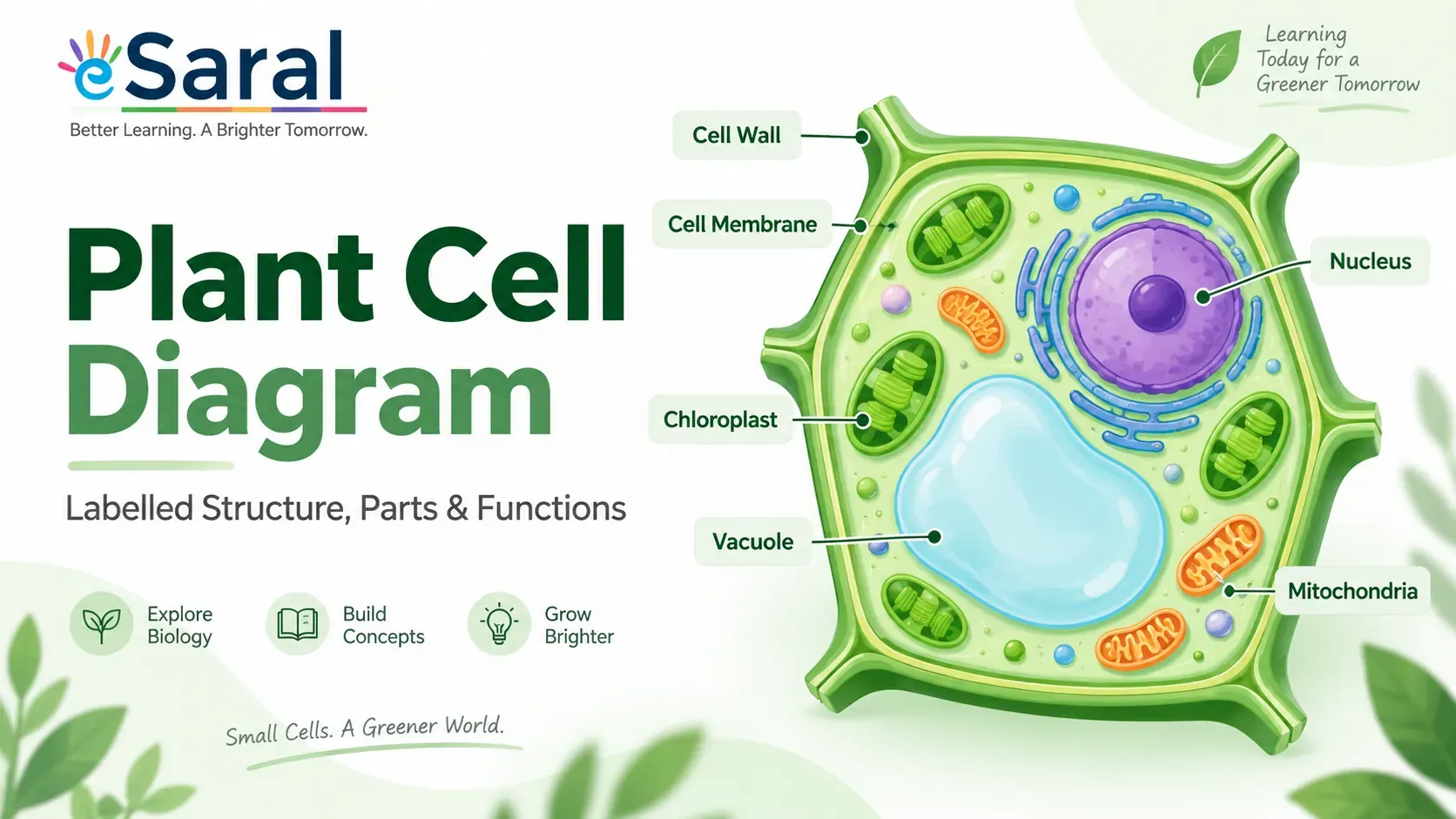
Plant Cell Diagram: Labelled Structure, Parts and Functions
Simple, labelled plant cell diagram with parts and functions. Covers plant cell structure for Class 6, 7, 8, 9, 10 and 11 students, CBSE-aligned.
Saransh Gupta Sir's Visit to IIT Patna: Hostel Life, Placements & Lessons for JEE Aspirants
Inside Saransh Gupta Sir's IIT Patna visit — hostel life, the library, placements, internships, and real advice for JEE aspirants from students living the IIT dream.
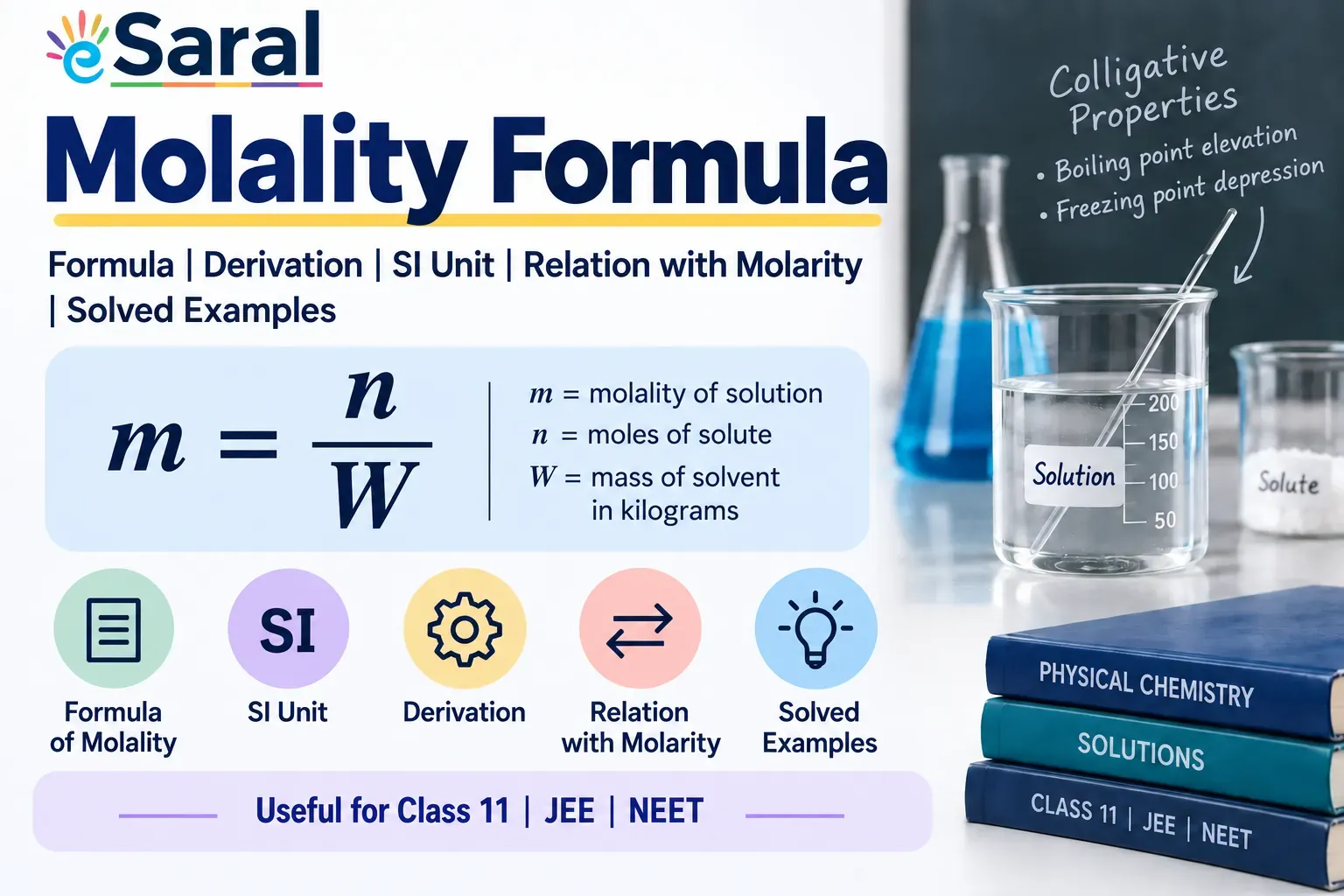
Molality Formula: Formula for Molality, Derivation & Solved Examples
Molality formula is $m = \dfrac{n}{W}$. Learn the formula of molality, its SI unit, derivation, relation with molarity, and solved examples for Class 11, JEE and NEET.
BITSAT Previous Year Question Paper PDF
Download BITSAT previous year question papers PDF. Get year-wise BITSAT PYQs, memory-based papers, exam pattern, and preparation tips to improve your BITSAT preparation.

Teachers’ Day 2026 at eSaral Gurukul: Celebrating the Bond Between Students, Teachers & Mentors
See how Teachers’ Day 2026 was celebrated at eSaral Gurukul, reflecting the bond among students, teachers, and mentors, and the role of guidance beyond academics.
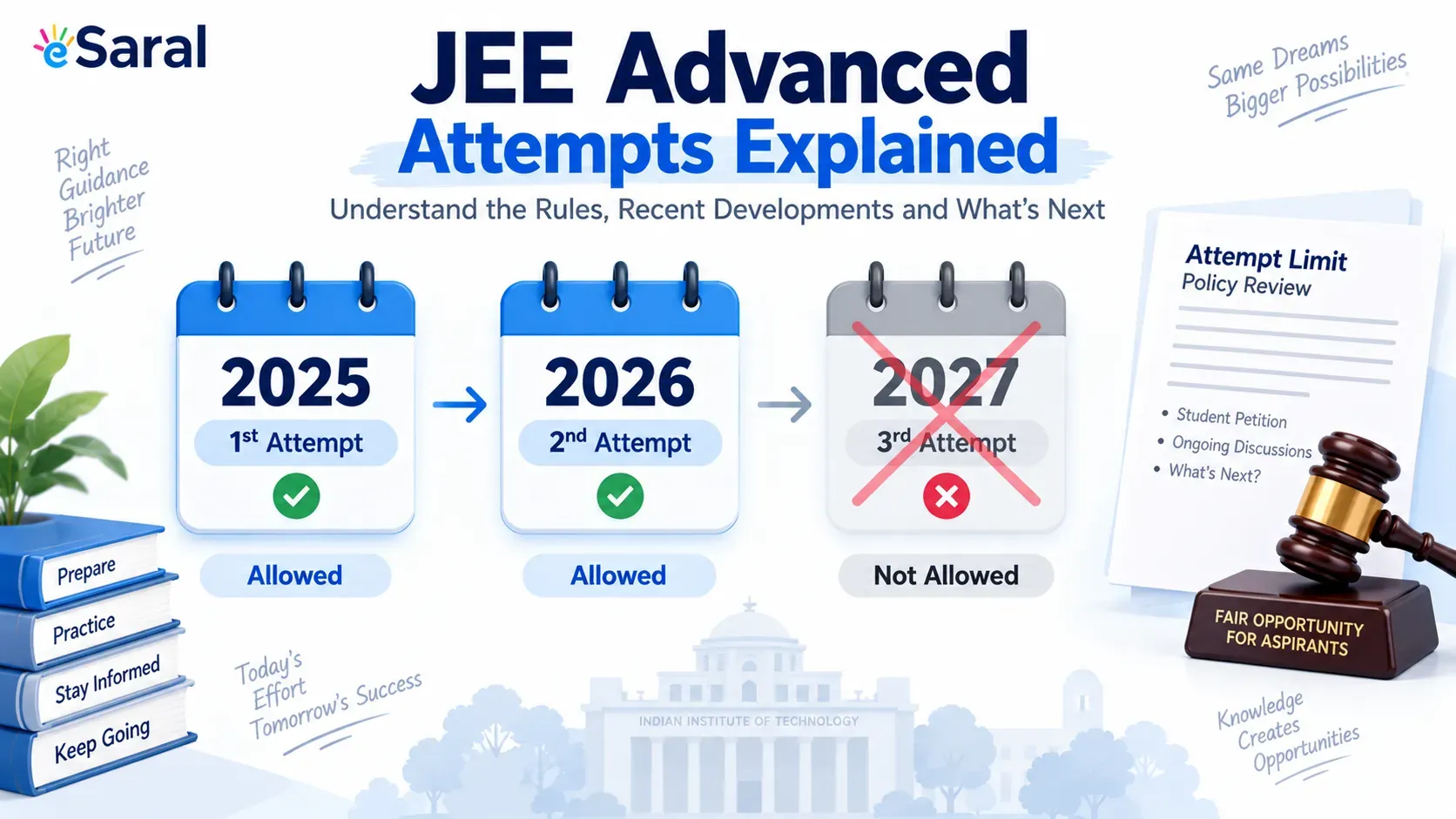
JEE Advanced Attempts: Can You Give It a Third Time? Rules Explained
JEE Advanced attempts: current rule is 2 consecutive years only: full eligibility criteria, the 2025 third-attempt controversy, and the latest 2026 petition news.
Best JEE Preparation App
Best JEE preparation app for Main & Advanced: AI mock tests, live doubt-solving, thousands of practice questions. JEE preparation app for droppers & Class 11-12.
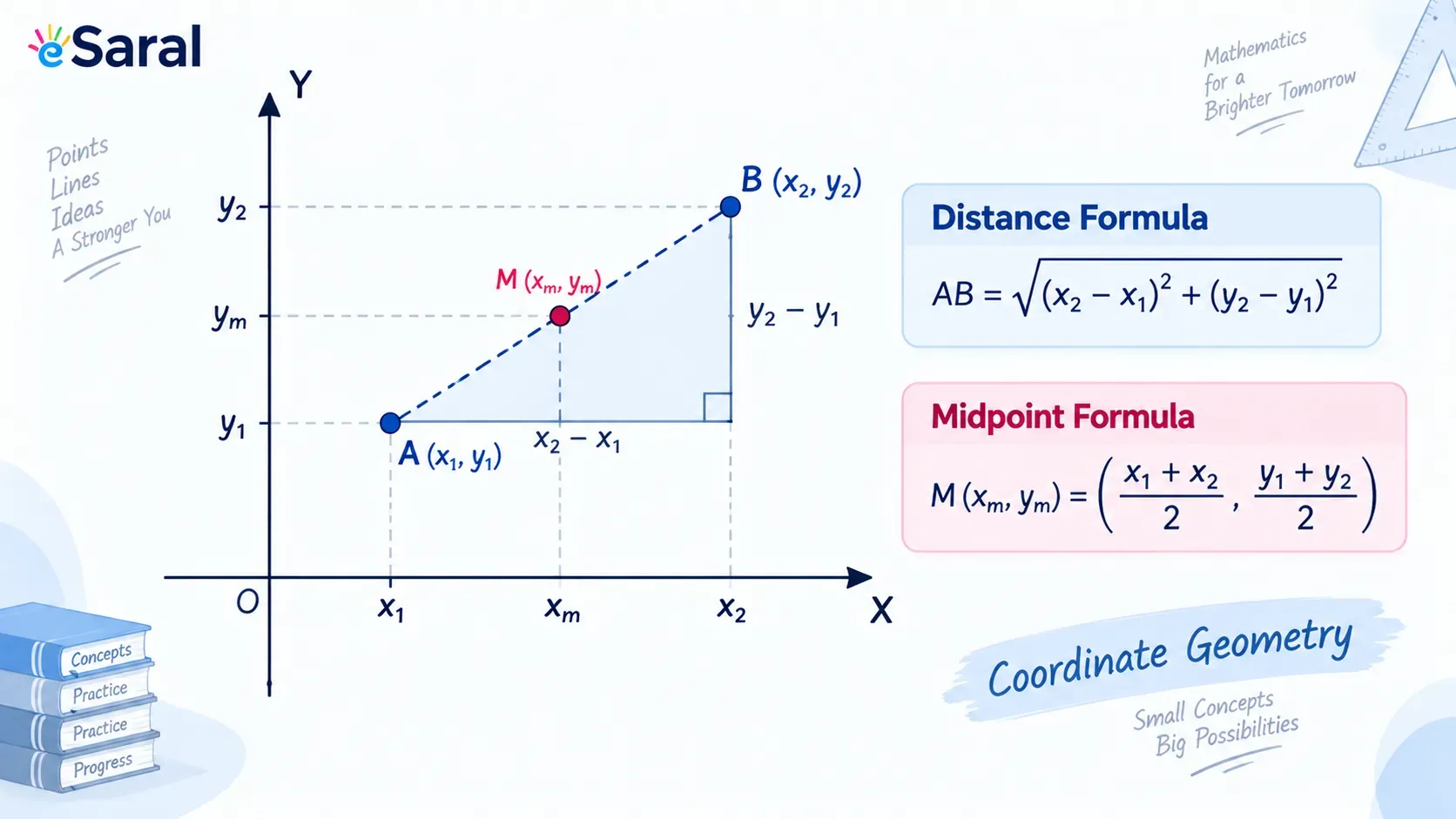
Coordinate Geometry Class 10: Formulas, Notes & Solved Examples
Coordinate geometry class 10: complete CBSE formulas — distance, section, midpoint and area of triangle — with derivation, notes and solved examples.
How to make Notes For JEE Smart Notes Strategy of an AIR 41
Learn how to make notes for JEE the way toppers do — indexing, shorthand, and smart short notes for JEE that cut revision time to just 5–7 days.
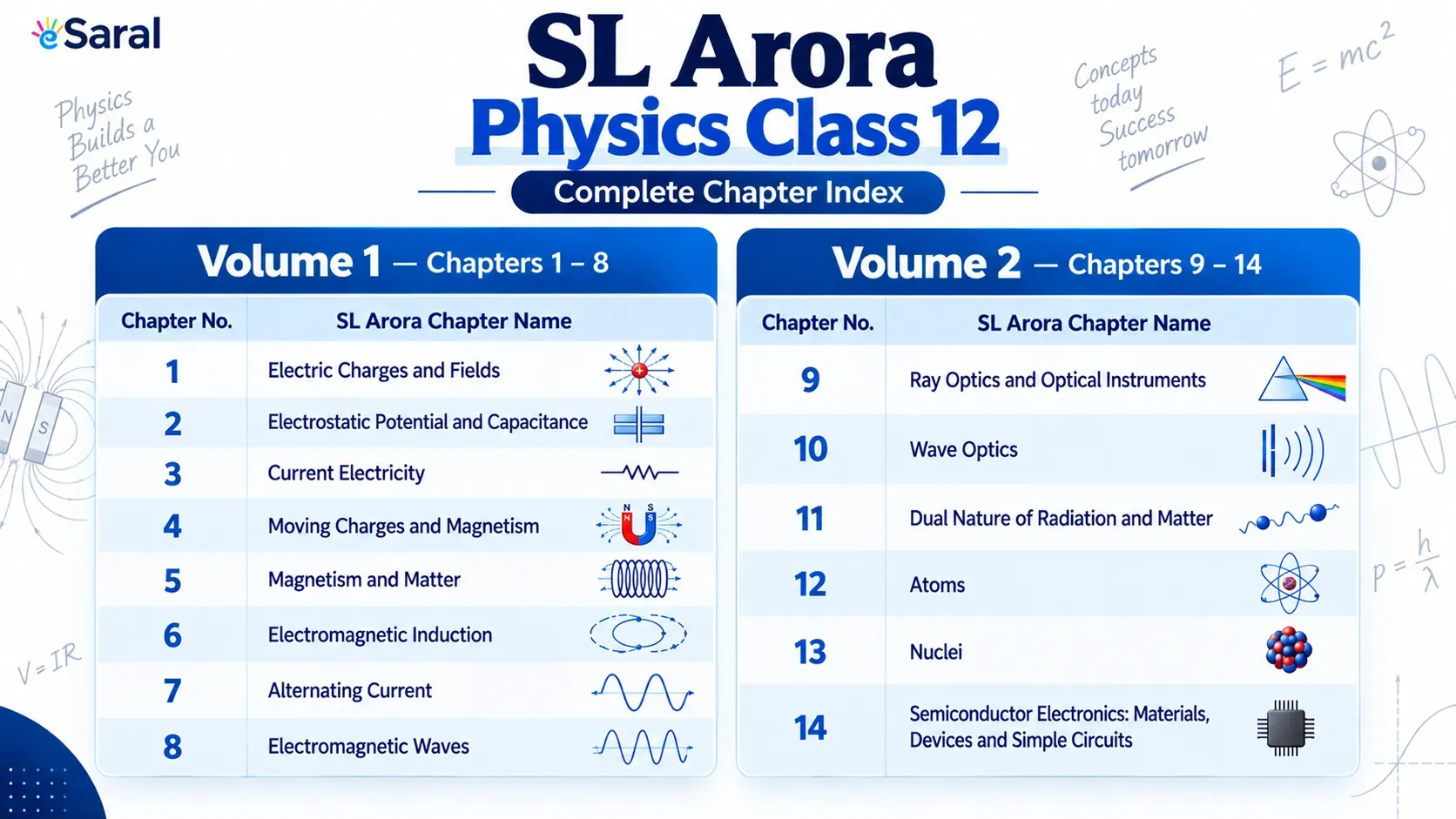
SL Arora Physics Class 12 Index – Chapter List for Volume 1 & 2
SL Arora Physics Class 12 index — complete chapter list for Volume 1 & 2, mapped to NCERT solutions for board, JEE Main, and NEET preparation.