
Class 11 Chemistry NCERT book pdf download in Hindi - NCERT रसायन विज्ञान कक्षा 11 पुस्तक

eSaral Academic and Editorial Team
Summary
The Class 11 Chemistry NCERT book PDF in Hindi (रसायन विज्ञान भाग 1 और भाग 2) can be downloaded chapterwise for free. It covers all 14 chapters across two parts — from रसायन विज्ञान की मूल अवधारणाएँ to पर्यावरणीय रसायन — and is essential for CBSE board exams, JEE Main, and NEET preparation.
Home > Class 11> Class 11 Chemistry NCERT Book PDF Download in Hindi

Why the Class 11 Chemistry NCERT Book Matters
Is the NCERT Book Enough for Class 11 Chemistry Preparation?
For CBSE board students, the NCERT book is not just enough — it is the primary source. CBSE frames almost every board exam question directly from the NCERT content. For competitive exam aspirants, the picture is equally clear: according to NTA's official JEE Main information bulletin, a significant portion of Chemistry questions in JEE Main are based on NCERT concepts, especially in Physical and Organic Chemistry.
For NEET, the situation is even more direct. The NEET Chemistry paper is almost entirely NCERT-based, with questions often lifted verbatim from NCERT theory paragraphs, examples, and in-text questions.
The Hindi medium edition of the NCERT Class 11 Chemistry book (रसायन विज्ञान) carries the same content and weightage as the English edition. Students who are more comfortable reading in Hindi should use this version without hesitation — conceptual clarity in your preferred language always leads to better retention and higher marks.
Who Should Download This Book?
- Class 11 students (Hindi medium) studying under CBSE or state boards aligned with NCERT
- NEET aspirants who want to build a strong foundational Chemistry
- JEE Main aspirants who need Physical and Organic Chemistry clarity
- Dropper students revisiting Class 11 topics from scratch
What Is Covered in the Class 11 Chemistry NCERT Book in Hindi?
Syllabus Overview — Part 1 and Part 2
The Class 11 NCERT Chemistry book is split into two parts containing 14 chapters in total. Here is a quick overview:
Part | Chapter No. | Chapter Name (Hindi) | Chapter Name (English) |
|---|---|---|---|
Part 1 | 1 | रसायन विज्ञान की कुछ मूल अवधारणाएँ | Some Basic Concepts of Chemistry |
Part 1 | 2 | परमाणु की संरचना | Structure of Atom |
Part 1 | 3 | तत्वों का वर्गीकरण एवं गुणधर्मों में आवर्तिता | Classification of Elements & Periodicity |
Part 1 | 4 | रासायनिक आबंधन तथा आण्विक संरचना | Chemical Bonding & Molecular Structure |
Part 1 | 5 | द्रव्य की अवस्थाएँ | States of Matter |
Part 1 | 6 | ऊष्मागतिकी | Thermodynamics |
Part 1 | 7 | साम्यावस्था | Equilibrium |
Part 2 | 8 | अपचयोपचय अभिक्रियाएँ | Redox Reactions |
Part 2 | 9 | हाइड्रोजन | Hydrogen |
Part 2 | 10 | एस-ब्लॉक तत्व | The s-Block Elements |
Part 2 | 11 | पी-ब्लॉक तत्व | The p-Block Elements |
Part 2 | 12 | कार्बनिक रसायन: कुछ आधारभूत सिद्धांत तथा तकनीकें | Organic Chemistry: Basic Principles & Techniques |
Part 2 | 13 | हाइड्रोकार्बन | Hydrocarbons |
Part 2 | 14 | पर्यावरणीय रसायन | Environmental Chemistry |
This structure mirrors the official NCERT syllabus available on ncert.nic.in. Students preparing for JEE Main should pay special attention to Chapters 1, 2, 4, 6, 7, and 12–13. NEET students should treat every chapter with equal seriousness, as NEET draws from the full book.
NCERT Class 11 Chemistry Chapterwise PDF Download in Hindi
Part 1 — रसायन विज्ञान भाग 1
Chapter No. | Chapter Name |
|---|---|
Chapter 1 | |
Chapter 2 | |
Chapter 3 | |
Chapter 4 | |
Chapter 5 | |
Chapter 6 | |
Chapter 7 |
Part 2 — रसायन विज्ञान भाग 2
Chapter No. | Chapter Name |
|---|---|
Chapter 8 | |
Chapter 9 | |
Chapter 10 | |
Chapter 11 | |
Chapter 12 | |
Chapter 13 | |
Chapter 14 |
Once you have finished reading each chapter from the NCERT book, make sure to solve the NCERT exercise questions. You can check your answers using the NCERT Solutions for Class 11 Chemistry available on eSaral — explained step-by-step by IIT-trained faculty.
India's Best Exam Preparation for Class 11th - Download Now
How Should You Study from This NCERT Book for JEE and NEET?
What Is the Right Way to Use the Class 11 Chemistry NCERT Book?
Reading the NCERT book and actually learning from it are two different things. Most students read passively — they go through the text once and move on. That approach rarely produces results in CBSE boards, let alone JEE or NEET.
Here is a structured approach that works:
Step 1 — First Read (Understanding)
Read the chapter once without stopping to memorise. Focus on understanding the concept flow — why one idea leads to the next.
Step 2 — Highlight Key Definitions and Reactions
On the second read, mark all definitions, laws, formulas, and chemical reactions. In Hindi medium books, the terminology is in Hindi, so also note the English equivalents for competitive exam MCQs.
Step 3 — Solve NCERT Exercises
Every NCERT chapter ends with exercise questions. Solve all of them — do not skip in-text questions either. For NEET, NCERT exercise solutions are critical.
Step 4 — Revisit With Notes
After completing a chapter, write a one-page summary from memory. This revision technique significantly improves long-term retention.
Step 5 — Cross-Reference With Solutions
Use NCERT Solutions for Class 11 Maths and NCERT Solutions for Class 11 Physics alongside Chemistry to build cross-subject understanding — especially useful for Physical Chemistry topics like thermodynamics.
Chapter Priority for JEE Main vs NEET
Chapter | JEE Main Priority | NEET Priority |
|---|---|---|
Ch 1 — Basic Concepts | High | High |
Ch 2 — Atomic Structure | High | High |
Ch 3 — Periodic Table | Medium | High |
Ch 4 — Chemical Bonding | High | High |
Ch 5 — States of Matter | Medium | Medium |
Ch 6 — Thermodynamics | High | High |
Ch 7 — Equilibrium | High | High |
Ch 8 — Redox Reactions | Medium | Medium |
Ch 12 — Organic Chemistry Basics | Very High | Very High |
Ch 13 — Hydrocarbons | High | High |
Ch 14 — Environmental Chemistry | Low | High |
How Does Class 11 Chemistry Connect to Class 12?
Why Class 11 NCERT Chemistry Is the Foundation for Class 12
Class 12 Chemistry is built entirely on Class 11 concepts. If your Class 11 foundation is weak, Class 12 becomes significantly harder to follow. Here are the direct connections:
- Thermodynamics (Ch 6) → Electrochemistry (Class 12 Ch 3): Gibbs energy, enthalpy, and entropy directly apply to electrochemical cell calculations.
- Equilibrium (Ch 7) → Ionic Equilibrium and Electrochemistry (Class 12): Le Chatelier's principle and equilibrium constants are used repeatedly.
- Organic Basics (Ch 12) + Hydrocarbons (Ch 13) → Haloalkanes, Amines, Aldehydes, Ketones (Class 12): Without strong Class 11 organic chemistry, Class 12 organic chapters become very difficult.
- Periodic Table (Ch 3) → d and f Block Elements (Class 12 Ch 8): Periodicity trends, electronic configurations, and properties you studied in Class 11 are applied directly.
Once you have built this foundation, move on to practising with NCERT Solutions for Class 12 Chemistry to strengthen your board exam and competitive exam preparation.
You can also find all NCERT books for Class 11 across subjects at NCERT Books Class 11 on eSaral.
Conclusion
3 Key Takeaways
1. The NCERT Class 11 Chemistry book in Hindi is your starting point — whether your goal is CBSE boards, JEE Main, or NEET. Read it multiple times, not just once.
2. All 14 chapters matter — do not skip Environmental Chemistry (Chapter 14) or Redox Reactions (Chapter 8) just because they seem less important. Every chapter contributes marks.
3. NCERT reading + solved examples + exercise questions form the minimum study cycle. Once that is done, move to NCERT solutions and higher-level practice.
India's Best Exam Preparation for Class 11th - Download Now
- Class 11 chemistry chapter 2 notes
- Class 11 physics chapter 2 notes
- Chemistry class 11 important questions
- Physics important questions class 11
- Class 11 Maths ncert solutions chapter 1
- NCERT Solutions for Class 11 Maths Chapter 9
- NCERT Maths Book Class 11 Solutions PDF
- Gravitation Class 11 notes
- Class 11 Maths NCERT book PDF
- Class 11 Chemistry Notes
If you have any Confusion related to Class 11 chemistry NCERT book pdf in Hindi then feel free to ask in the comments section down below. To watch Free Learning Videos on Physics by Prateek Gupta sir Install the eSaral App
Frequently Asked Questions
NCERT Chemistry Class 11 के notes कहाँ से मिलेंगे?
eSaral provides detailed chapter notes for Class 11 Chemistry, prepared by eSaral faculty. These notes follow the NCERT structure closely but also include JEE and NEET-level insights, shortcut tricks for reactions, and concept maps. Students in eSaral's online courses also get access to a 5-layer doubt-solving system — so no question goes unanswered.
क्या Class 11 Chemistry की Hindi NCERT book और English book में content same होता है?
Yes, the content is identical. The Hindi edition (रसायन विज्ञान भाग 1 और भाग 2) is an official NCERT translation of the English edition. All concepts, formulas, reactions, tables, and exercise questions are the same. Students who are more comfortable with Hindi should use the Hindi edition without any concern about missing content.
Class 11 Chemistry में सबसे कठिन chapter कौन सा है?
Most students find Chemical Bonding (Chapter 4), Thermodynamics (Chapter 6), and Organic Chemistry Basics (Chapter 12) the most challenging in Class 11. These chapters involve abstract theory, multiple concepts working together, and — in the case of organic chemistry — an entirely new way of thinking about molecules. Consistent daily study and solving NCERT examples immediately after reading each concept section helps significantly.
क्या NCERT Class 11 Chemistry की Hindi PDF मुफ्त में डाउनलोड हो सकती है?
Yes, the Class 11 Chemistry NCERT book PDF in Hindi is available for free download. NCERT publishes all its textbooks officially on ncert.nic.in. eSaral also provides chapterwise PDF links on this page so students can download individual chapters without needing to download the full book at once — useful when mobile data is limited.
NEET के लिए Class 11 Chemistry NCERT book कितनी important है?
NCERT Class 11 Chemistry is extremely important for NEET. Historically, 40–50% of NEET Chemistry questions come from Class 11 chapters. Chapters like Atomic Structure, Chemical Bonding, Thermodynamics, Equilibrium, and Organic Chemistry Basics are consistently high-weightage topics. Reading the Hindi NCERT book thoroughly — at least twice — is considered the minimum preparation standard for NEET aspirants.
JEE Main के लिए Class 11 NCERT Chemistry काफी है?
For JEE Main, NCERT Class 11 Chemistry is necessary but not fully sufficient. NCERT builds the conceptual foundation, which is essential. However, JEE Main Chemistry also includes application-level questions and numerical problems that require additional practice beyond NCERT exercises. Students should complete NCERT first and then move to JEE-level question banks.
Team eSaral
eSaral Academic and Editorial Team
Team eSaral is the collective author profile for educational content created by eSaral’s teachers and academic contributors. The team draws on expertise from IIT graduates, doctors, experienced educators and subject specialists to develop resources for JEE, NEET and school students. Our articles aim to explain concepts clearly and help students study with confidence.
Related Posts
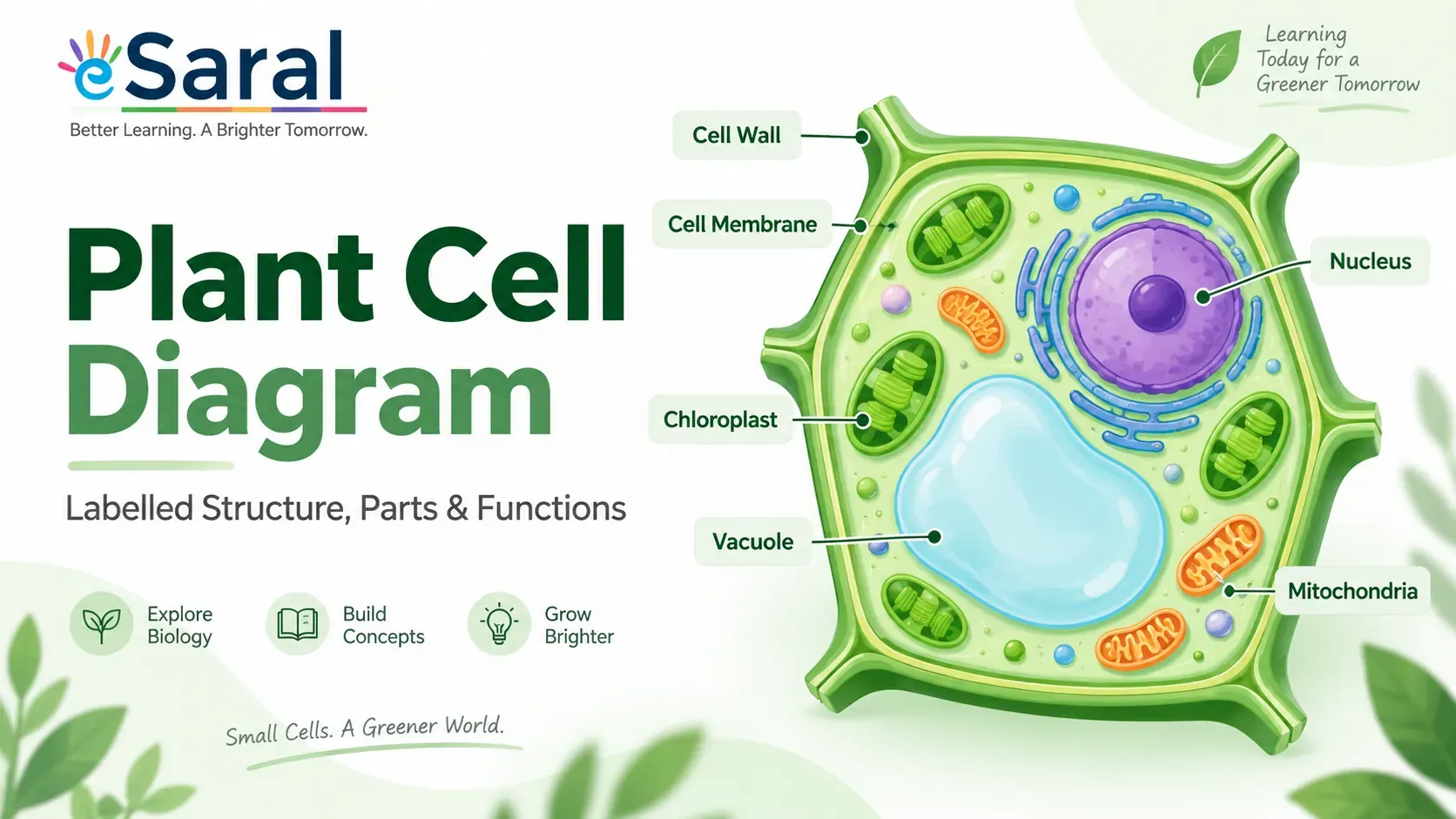
Plant Cell Diagram: Labelled Structure, Parts and Functions
Simple, labelled plant cell diagram with parts and functions. Covers plant cell structure for Class 6, 7, 8, 9, 10 and 11 students, CBSE-aligned.
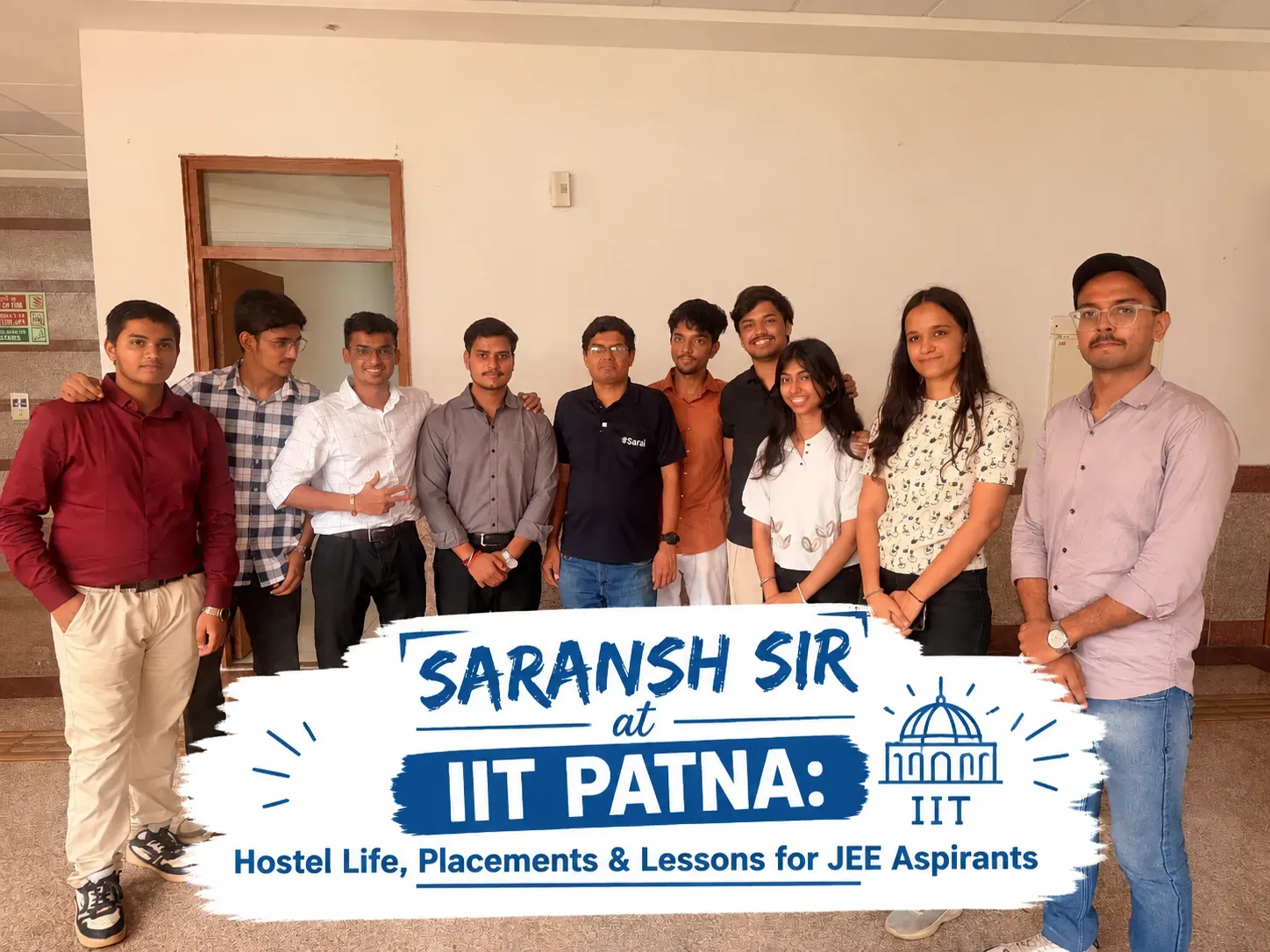
Saransh Gupta Sir's Visit to IIT Patna: Hostel Life, Placements & Lessons for JEE Aspirants
Inside Saransh Gupta Sir's IIT Patna visit — hostel life, the library, placements, internships, and real advice for JEE aspirants from students living the IIT dream.
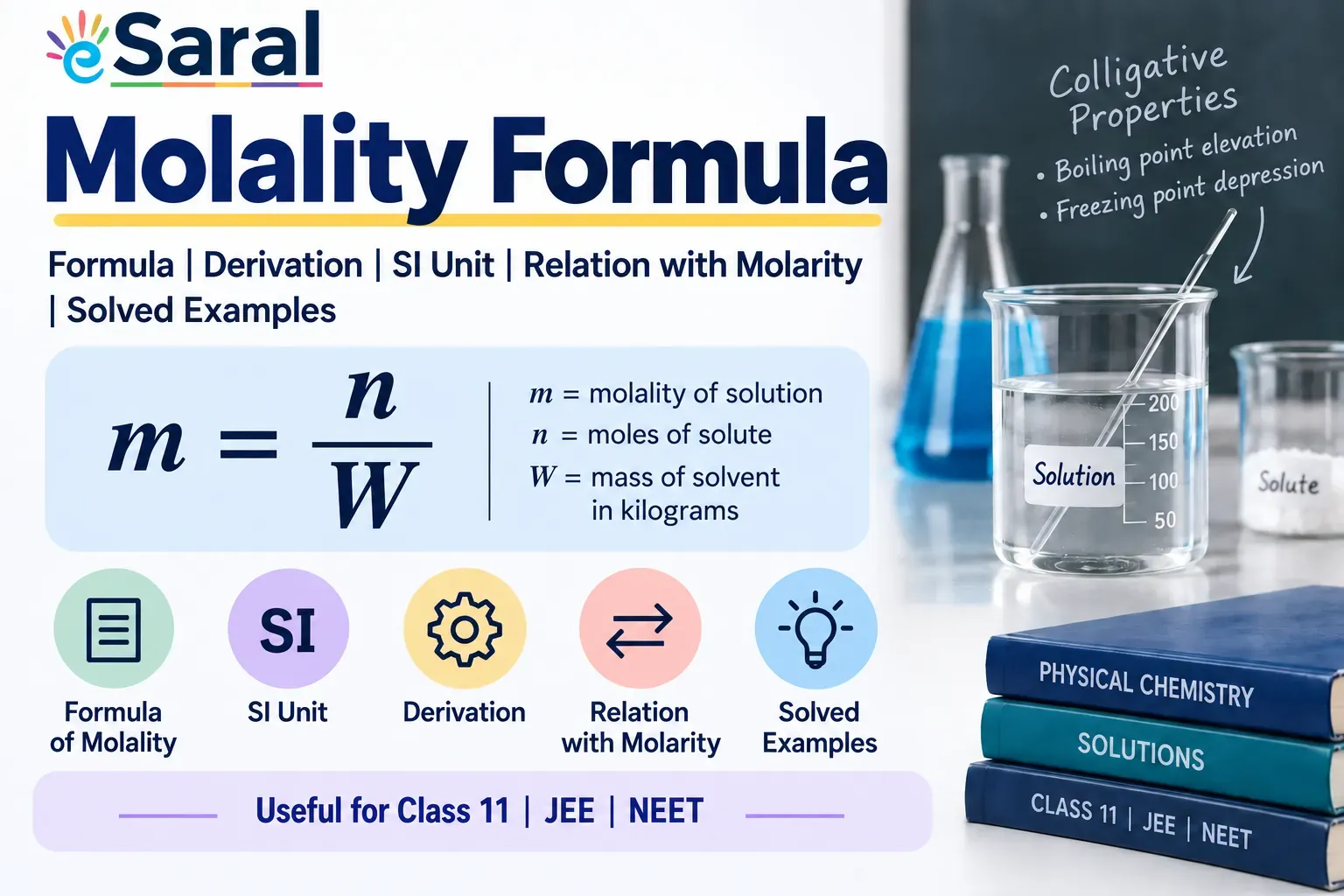
Molality Formula: Formula for Molality, Derivation & Solved Examples
Molality formula is $m = \dfrac{n}{W}$. Learn the formula of molality, its SI unit, derivation, relation with molarity, and solved examples for Class 11, JEE and NEET.
BITSAT Previous Year Question Paper PDF
Download BITSAT previous year question papers PDF. Get year-wise BITSAT PYQs, memory-based papers, exam pattern, and preparation tips to improve your BITSAT preparation.

Teachers’ Day 2026 at eSaral Gurukul: Celebrating the Bond Between Students, Teachers & Mentors
See how Teachers’ Day 2026 was celebrated at eSaral Gurukul, reflecting the bond among students, teachers, and mentors, and the role of guidance beyond academics.
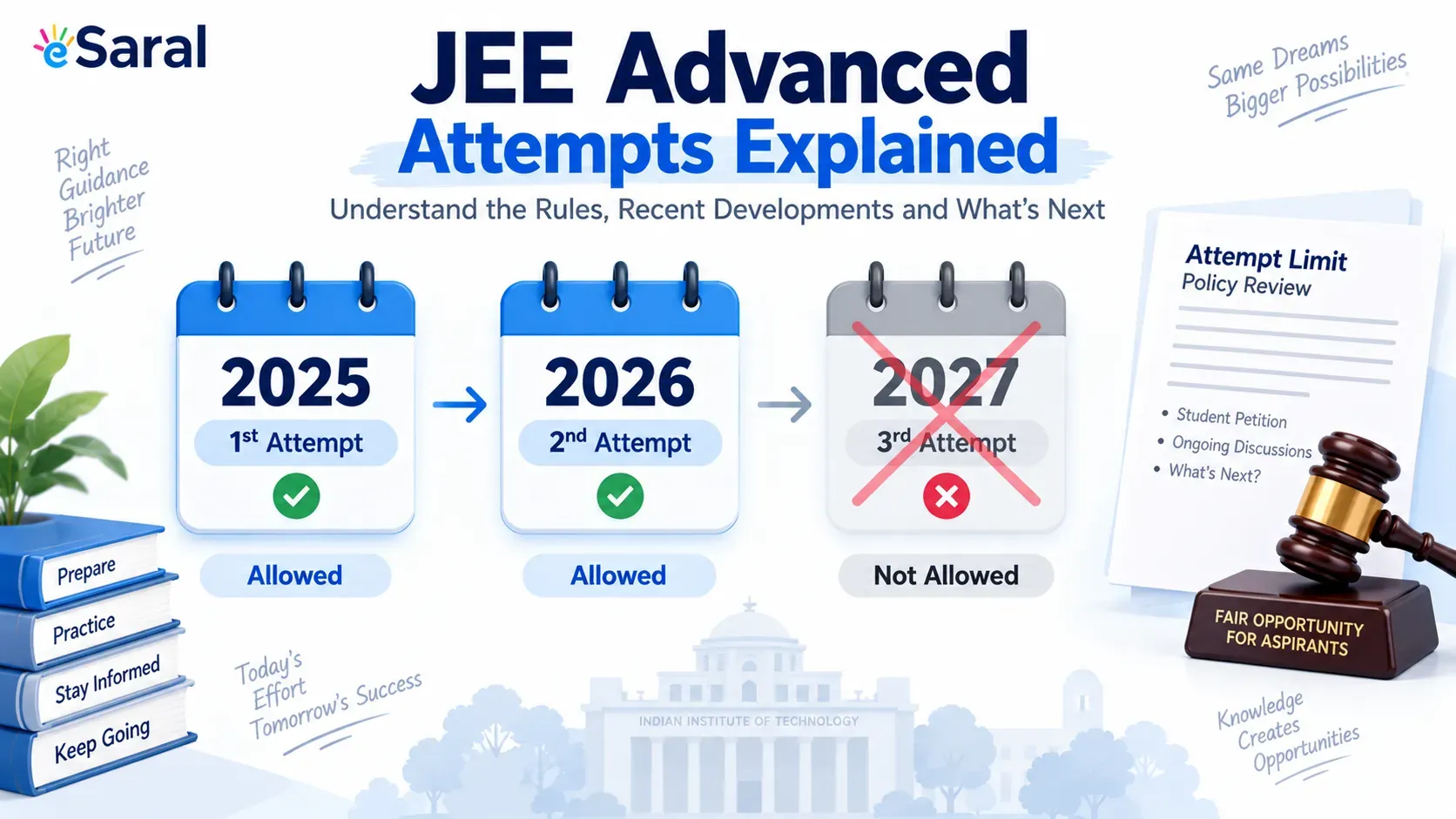
JEE Advanced Attempts: Can You Give It a Third Time? Rules Explained
JEE Advanced attempts: current rule is 2 consecutive years only: full eligibility criteria, the 2025 third-attempt controversy, and the latest 2026 petition news.

Best JEE Preparation App
Best JEE preparation app for Main & Advanced: AI mock tests, live doubt-solving, thousands of practice questions. JEE preparation app for droppers & Class 11-12.
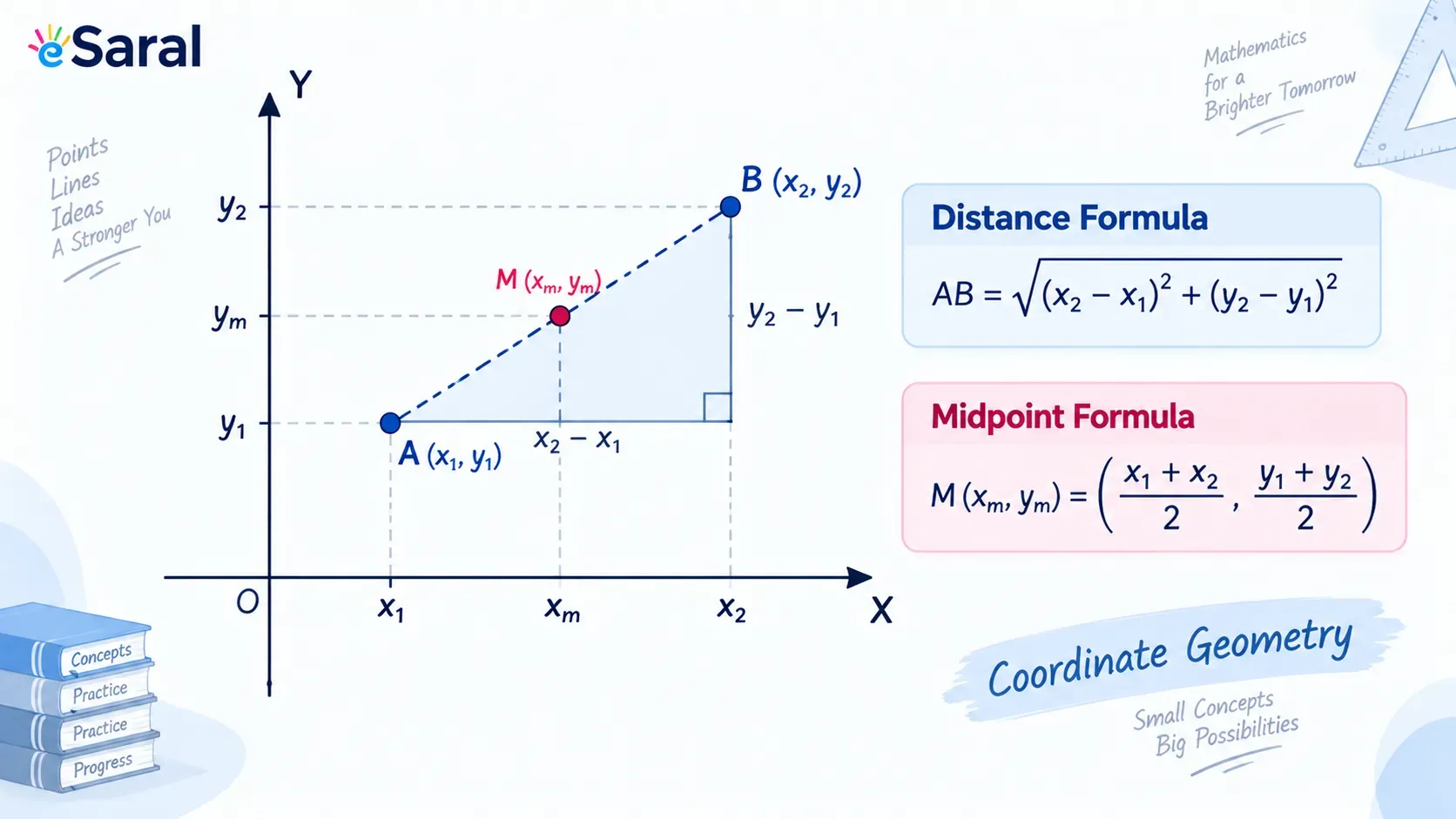
Coordinate Geometry Class 10: Formulas, Notes & Solved Examples
Coordinate geometry class 10: complete CBSE formulas — distance, section, midpoint and area of triangle — with derivation, notes and solved examples.
How to make Notes For JEE Smart Notes Strategy of an AIR 41
Learn how to make notes for JEE the way toppers do — indexing, shorthand, and smart short notes for JEE that cut revision time to just 5–7 days.
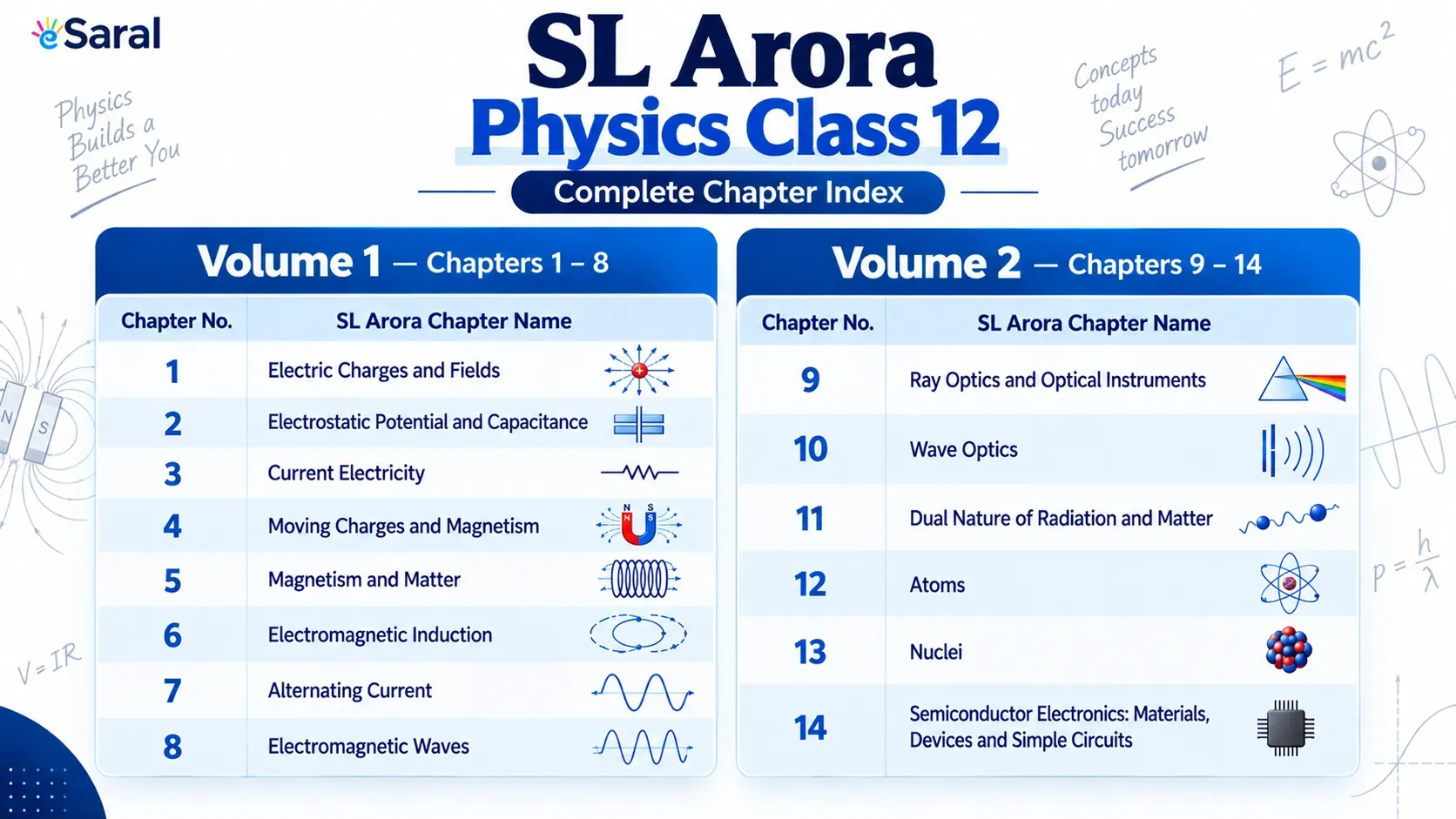
SL Arora Physics Class 12 Index – Chapter List for Volume 1 & 2
SL Arora Physics Class 12 index — complete chapter list for Volume 1 & 2, mapped to NCERT solutions for board, JEE Main, and NEET preparation.