
JEE Main Previous Year Question Paper Chapter Wise PDF with Solutions

eSaral Academic and Editorial Team
Summary
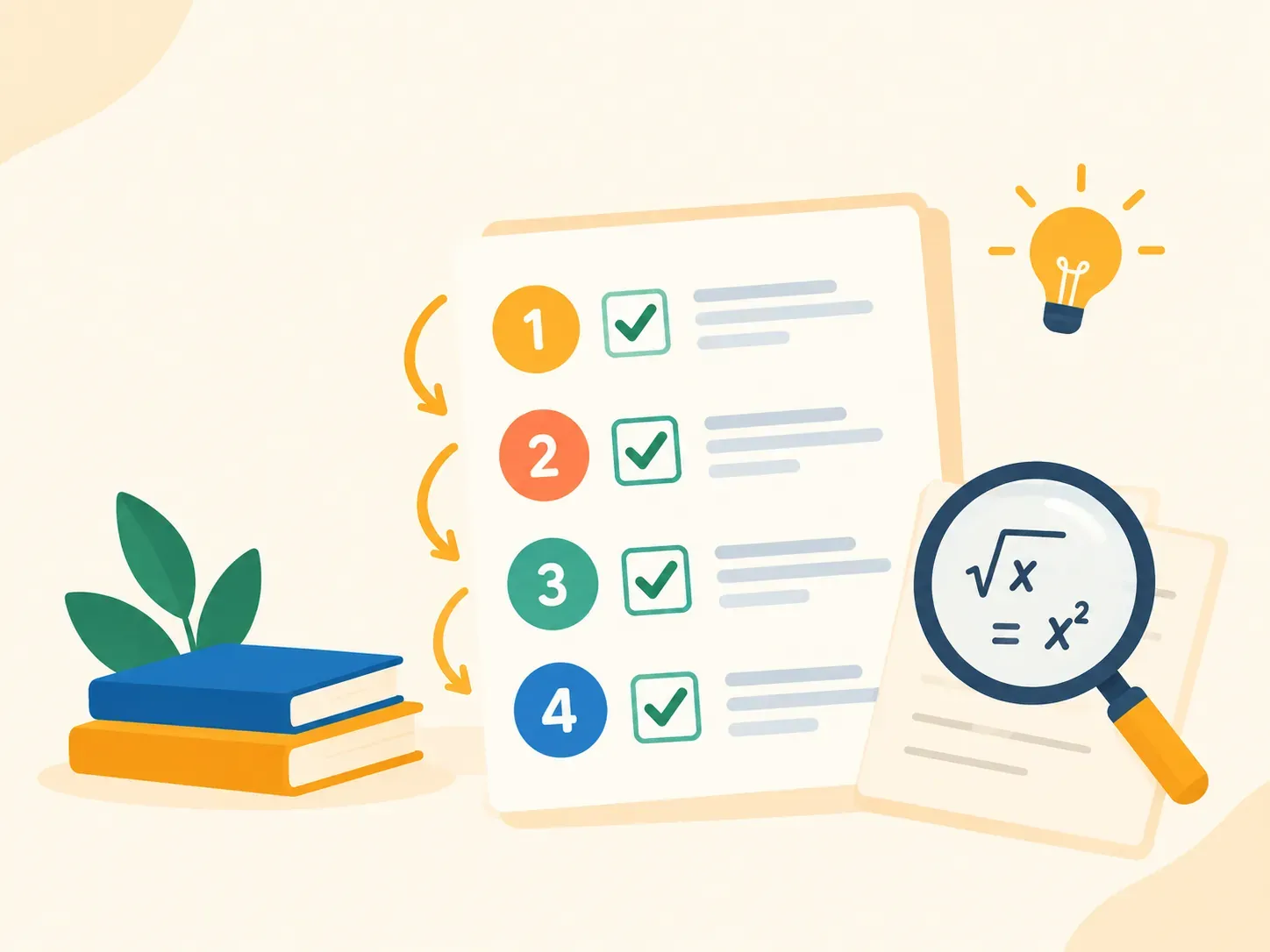
The JEE Main previous year question paper chapter wise is a topic-sorted set of past JEE Main questions with solutions. Instead of full year-wise papers, each chapter's questions from past NTA sessions are grouped together, so you can solve only "Rotational Dynamics" or "Chemical Bonding" in one sitting. eSaral provides chapter wise sets for Physics, Chemistry and Mathematics, which you can view online with step-by-step solutions. Use them right after finishing a chapter's theory, then move to full-length papers.
JEE Main Chapter wise PYQs Quick Overview
- Subjects: Physics, Chemistry, Mathematics
- Classes: 11 and 12
- Format: Chapter wise
- Solutions: Step-by-step, for every question
- Practice: Online and in the eSaral app
- Papers covered: [state the exact range after you count it]
- Best used for: Chapter revision, error analysis and pattern recognition
Looking for complete papers instead of chapter wise questions? Explore the complete JEE Main previous year question paper and practice papers from every session in their original format.
JEE Main Previous Year Question Paper Chapter Wise (View or Download)
JEE Main Physics Chapter wise Previous Year Questions
Chapters | View | Download |
Kinematics 1D | ||
Kinematics 2D | ||
Friction | ||
Work, Power & Energy | ||
Centre of Mass & Collision | ||
Rotational Dynamics | ||
Gravitation | ||
Calorimetry | ||
Elasticity | ||
Thermal Expansion | ||
Heat Transfer | ||
Kinetic Theory of Gases | ||
Thermodynamics | ||
Simple Harmonic Motion | ||
Wave on String | ||
Sound Waves | ||
Fluid Mechanics | ||
Electrostatics | ||
Current Electricity | ||
Capacitor | ||
Magnetic Effect of Current | ||
Magnetism & Matter | ||
Electromagnetic Induction | ||
Atomic Structure | ||
Dual Nature of Matter | ||
Nuclear Physics | ||
Radioactivity | ||
Semiconductors | ||
Communication System | ||
Error in Measurement & Instruments | ||
Alternating Current | ||
Electromagnetic Wave | ||
Geometrical Optics | ||
Wave Optics | ||
X-Rays |
JEE Main Chemistry Chapter wise Previous Year Questions
Chapters | View | Download |
Atomic Structure | ||
Periodic Table | ||
Chemical Bonding | ||
Mole Concept | ||
States of Matter | ||
Thermodynamics | ||
Thermochemistry | ||
Chemical Equilibrium | ||
Ionic Equilibrium | ||
Redox Reaction | ||
Hydrogen | ||
s-block | ||
P-bock | ||
IUPAC Nomenclature | ||
General Organic Chemistry | ||
Structural Isomerism | ||
Hydrocarbons | ||
Environmental Chemistry | ||
Solid State | ||
Halogen Derivatives | ||
Chemical Kinetics | ||
Electrochemistry | ||
Surface Chemistry | ||
Metallurgy | ||
d & f block | ||
Alcohol, Phenol & Ether | ||
Carbonyl Compounds | ||
Oxidation and Reduction | ||
Carboxylic Acid | ||
Salt Analysis | ||
Aromatic Compound | ||
Biomolecule | ||
Polymer | ||
Chemistry in Everyday Life |
JEE Main Mathematics Chapter wise Previous Year Questions
Chapters | View | Download |
Compound Angle | ||
Quadratic Equation | ||
Sequence & series | ||
Trigonometric equation | ||
Height and Distance | ||
Point | ||
Straight Line | ||
Circles | ||
Parabola | ||
Ellipse | ||
Hyperbola | ||
Permutation & Combination | ||
Binomial Theorem | ||
Complex Number | ||
Statistics | ||
Mathematical Induction | ||
Mathematical Reasoning | ||
Sets | ||
Relation | ||
Limit | ||
Continuity | ||
Differentiability | ||
Methods of Differentiation | ||
Tangent & Normal | ||
Monotonicity | ||
Area Under the Curve | ||
Definite Integration | ||
Differential Equation | ||
Matrices | ||
Determinants | ||
3D Geometry | ||
Vector Algebra | ||
Probability |
Every set here is a free jee mains pyq chapter-wise pdf download — no signup wall, with a separate step-by-step solution for each question.
The benefits of solving JEE Main previous year questions are that students become familiar with recurring concepts, question formats, and the level of application expected in the exam. To strengthen your preparation further, solving JEE Main Important Questions after completing previous year papers helps improve accuracy, speed, and confidence for the actual exam. Need help with a concept before solving its PYQs? Use the related concept lecture in the eSaral app, then return to the Chapter wise question.
Use Chapter wise PYQs during syllabus completion. After completing most of the syllabus, switch to full JEE Main previous-year papers under timed conditions to evaluate speed, accuracy, and paper-selection strategy.
[jee-post-banner]
Before diving into the chapter lists below, pair your practice with solid conceptual foundations. Start with NCERT Solutions for Class 11 Physics and NCERT Solutions for Class 12 Physics to ensure your basics are secure before attempting any JEE Main Chapter wise PYQ set.
Why JEE Main Chapter Wise PYQ Practice Beats Solving Full Papers Early On
A full JEE Main paper mixes all three subjects and every chapter at once — useful for simulating exam day, but poor for actually fixing a weak topic, since one bad question in Rotational Dynamics gets buried among 89 others. JEE Main pyq chapter wise practice isolates a single topic across 8+ years of NTA papers, so you see every way that chapter has ever been tested, spot the pattern instantly, and fix the gap before it costs you marks in a real attempt.
Want the full-paper version instead? Explore the complete JEE Main previous year question paper archive
@#img#@
How Many Years of JEE Main Chapter Wise PYQ Should You Solve?
Priority | Years | Why |
|---|---|---|
First | Last 5 sessions | Closest match to current syllabus and NTA's current question style |
Second | (pre-latest-5) | Builds depth once recent years are exhausted |
Optional | (Pre-latest -10) | Extra volume only, lower pattern relevance |
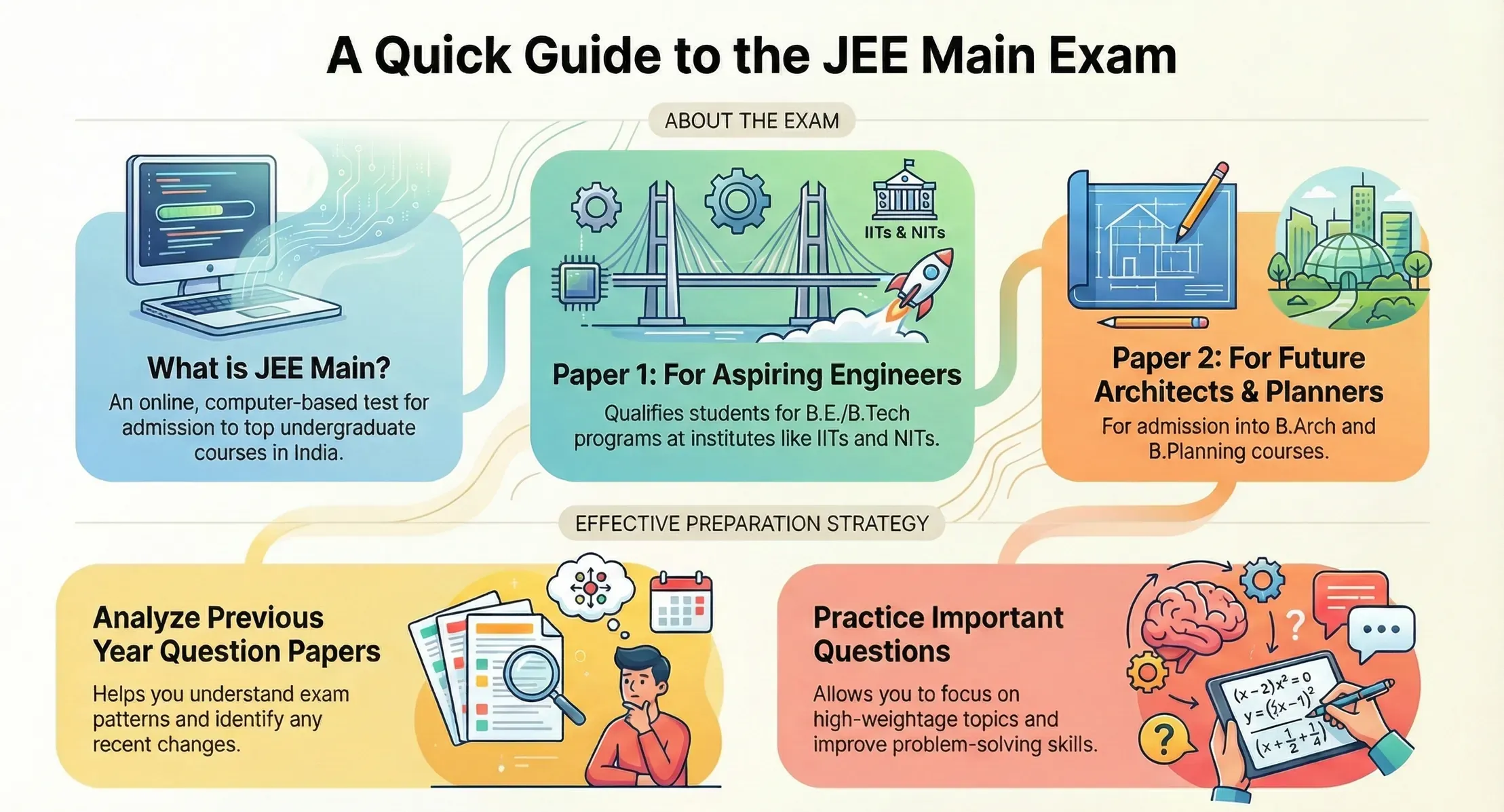
When to Start Solving JEE Main PYQ Chapter Wise
Start the moment you finish a chapter's core theory and NCERT exercises — don't wait for the full syllabus to be done. The correct order is: study the concept → solve textbook examples → solve NCERT exercises → then attempt that chapter's JEE mains chapter wise PYQ set. Solving PYQs before finishing the theory turns practice into guessing.
How to Analyse a Wrong Answer in JEE Main PYQ Chapter Wise Practice
- Identify the error type — conceptual gap, calculation slip, or time pressure.
- Retry without the solution — most "wrong" answers are actually rushed, not misunderstood.
- Revise the exact concept/formula behind the miss.
- Reattempt the same question after 7–10 days to confirm the fix stuck.
Why JEE Main Chapter Wise PYQ Practice Beats Solving Full Papers Early On
A full JEE Main paper mixes all three subjects and every chapter at once, which is useful for simulating exam day but poor for fixing a weak topic, since one bad question in Rotational Dynamics gets buried among dozens of other questions. Chapter wise practice isolates a single topic across many years of NTA papers, so you see every way that chapter has been tested, spot the pattern instantly, and fix the gap before it costs you marks in a real attempt. Solving the JEE Main previous year question paper chapter wise also shows which chapters appear most often, so you can plan revision around them.
Want the full-paper version instead? Explore the complete JEE Main previous year question paper archive
How Many Years of the JEE Main Previous Year Question Paper Should You Solve Chapter Wise?
- First priority, last 5 sessions: closest match to the current syllabus and NTA's current question style.
- Second priority, the next 5 sessions before those: builds depth once recent years are exhausted.
- Optional, anything older: extra volume only, with lower pattern relevance.
A Three-Phase Plan for Chapter Wise PYQs
Phase 1: while studying a chapter, solve its chapter wise set. Phase 2: in revision, re-solve only the questions you got wrong. Phase 3: in the final months, switch to full papers under timed conditions.
When to Start Solving the JEE Main Previous Year Question Paper Chapter Wise
Start the moment you finish a chapter's core theory and NCERT exercises; don't wait for the full syllabus to be done. The correct order is: study the concept, solve textbook examples, solve NCERT exercises, then attempt that chapter's chapter wise PYQ set. Solving PYQs before finishing the theory turns practice into guessing.
How to Analyse a Wrong Answer in JEE Main Previous Year Question Paper Practice
- Identify the error type: conceptual gap, calculation slip, or time pressure.
- Retry without the solution: most "wrong" answers are actually rushed, not misunderstood.
- Revise the exact concept or formula behind the miss.
- Reattempt the same question after 7-10 days to confirm the fix stuck.
[Keep: "How to analyze your weakness in PYQ solving" image]
JEE Mains Chapter Wise PYQ vs Full-Length Papers: When to Switch
- While completing the syllabus: use chapter wise PYQs, topic by topic.
- Syllabus about 80% done: mix chapter wise sets for weak topics with occasional full papers.
- Final 2 to 3 months: solve full JEE Main previous year papers under timed conditions. Check the JEE Main exam pattern and take the JEE Main mock test series alongside.
Ready to convert chapter wise practice into full-paper stamina? Browse the JEE Main previous year question paper archive → After each paper, check where you stand with the JEE Main marks vs percentile tool.
How to Use Chapter wise PYQs Effectively
Simply downloading a chapter wise PDF is not a strategy. Here is how to get the most value from chapter wise PYQ practice.
Step 1: Complete the chapter first, then solve PYQs
Attempting the JEE Main previous year question paper chapter wise before finishing a chapter leads to guessing, not learning. The correct sequence is: study the concept, solve textbook examples, solve NCERT exercises, then attack the PYQs. This way, when you meet a difficult question, you are testing application rather than meeting the concept for the first time. Refer to NCERT Books for Class 11 and Class 12 as the standard reading material.
Step 2: Categorise every error you make
After solving a chapter's set, sort your wrong answers into three buckets:
- Conceptual gap: you did not understand the underlying principle
- Calculation error: the concept was clear, but the arithmetic failed
- Time pressure: you knew the method, but could not finish in time
Each bucket needs a different fix. Conceptual gaps need re-study, calculation errors need drilling, and time pressure needs timed mock sessions. Without categorising errors, students repeat the same mistakes across revision cycles.
Step 3: Track chapter completion and revision dates
Use a simple tracker, even a notebook table, with columns for chapter name, first attempt date, score, revision 1 date and revision 2 date. Tracking your progress this way makes revision measurable, and eSaral's doubt-solving support helps you clear the concepts behind the mistakes you log. Read real JEE success stories from eSaral students.
Frequently Asked Questions
What is the JEE Main previous year question paper chapter wise?
It is a collection of past JEE Main questions sorted by chapter instead of by exam date. Each chapter set groups questions from different sessions with solutions, so you can practise one topic at a time.
What is the difference between year-wise and chapter-wise JEE Main previous year question paper practice?
Year-wise papers show a full exam in its original order and build stamina. Chapter-wise sets group one topic across many papers and fix weak chapters. Use chapter-wise sets while studying and year-wise papers in the final months.
Are these JEE Main chapter wise questions useful for JEE Advanced preparation too?
Partly. JEE Main chapter wise PYQs cover the foundational difficulty level for most chapters and are useful for building speed and accuracy. However, JEE Advanced demands deeper problem-solving and multi-concept questions that go beyond what JEE Main tests. After finishing the JEE Main PYQs for a chapter, students aiming for JEE Advanced should move to JEE Advanced PYQs for the same chapter.
Is solving JEE Main chapter wise PYQ enough, or do I also need full mock tests?
Both are necessary but serve different purposes. Chapter wise PYQs build topic-level accuracy and conceptual confidence. Full mock tests build time management, paper-level stamina, and the ability to switch between subjects under pressure. Finish the chapter wise PYQs first, then shift to full-length mocks in the final two to three months before the exam.
Can I access these JEE Main chapter wise PYQs on mobile?
Yes. All question sets can be viewed online on mobile. The eSaral mobile app provides the same content with the added benefit of video explanations by IIT Bombay faculty, making it easier to understand solutions on the go.
Which Physics chapters should I prioritize in JEE Main PYQ chapter wise practice?
Electrostatics, Current Electricity, Rotational Dynamics and Modern Physics are tested often, so start there. Then move to Optics, SHM and Thermodynamics, and cover low-frequency chapters such as X-Rays and Communication Systems last.
Are the solutions with each JEE Main PYQ chapter wise set detailed enough to self-study from?
Yes. Every question comes with a step-by-step solution, not just the final answer. Solutions are prepared by faculty with IIT credentials, so the approach shown matches the methods expected at JEE Main level, including shortcuts where applicable.
How many years of JEE Main previous year questions are available on eSaral?
The chapter wise sets cover JEE Main questions from [first year] to [latest session]. JEE Main has been computer-based since 2019, so the sets include both older and newer patterns, which gives students a large, varied question bank.
Where can I get a JEE Mains PYQ chapter wise PDF download?
Open any chapter in the tables above to view the questions and step-by-step solutions online. Use the Download button to continue in the eSaral app for offline access.
Team eSaral
eSaral Academic and Editorial Team
Team eSaral is the collective author profile for educational content created by eSaral’s teachers and academic contributors. The team draws on expertise from IIT graduates, doctors, experienced educators and subject specialists to develop resources for JEE, NEET and school students. Our articles aim to explain concepts clearly and help students study with confidence.
Related Posts
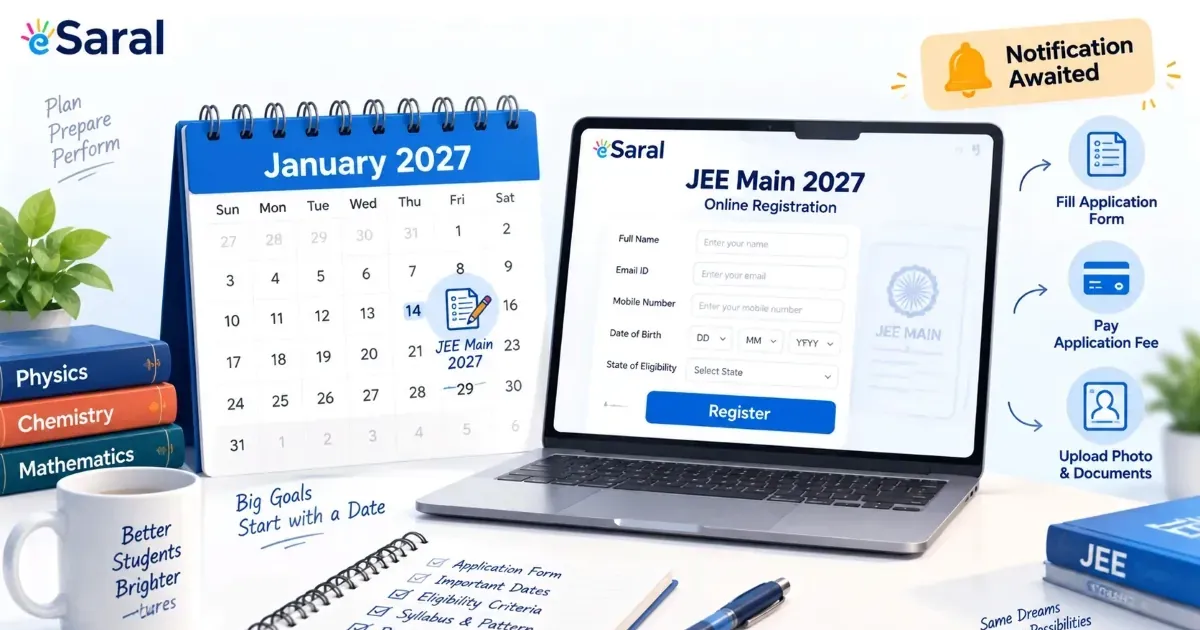
JEE Main 2027 Registration (Open): Last Date, Fees, Documents & Steps to Apply
JEE Main 2027 Session 1 registration is open till 22 Nov 2026. Check exam dates (20–28 Jan), fees, DigiLocker steps, late fee and correction window.
JEE Main Previous Year Question Papers PDF with Solutions (2019–2026)
Download JEE Main previous year question papers (2019–2026) with solution. Free JEE Mains PYQ, shiftwise JEE Mains paper PDFs & chapter-wise practice.
JEE Advanced Marks vs Rank 2026, 2025 2024, 2023
JEE Advanced 2026 Marks vs Rank is a comparison of the marks obtained by the aspirant of the exam with the corresponding rank obtained by them.
JEE Main 2022 Question Paper with Solutions – Free PDF Download (All Shifts)
Download JEE Main 2022 question paper with solutions in PDF format only at eSaral.com. All the questions are solved by experienced teachers.
JEE Main 2027 Syllabus: Complete Chapter-Wise Breakdown with Weightage & Priority Topics
Complete JEE Main 2027 syllabus with chapter-wise breakdown, weightage, and expert strategy and exam pattern
JEE Main 2024 Question Paper PDF – Free Download
Download JEE Main 2024 question papers with answer key PDF for all shifts (Jan & Apr). Free solutions by IIT Bombay faculty. Start practising now!
JEE Main 2025 Question Papers With Solutions - Free PDF Download
Get JEE Main 2025 question papers with solutions, answer keys & difficulty analysis. Free PDF for all shifts to boost your jee 2026 preparation.
NCERT Class 9 Science Book in Hindi — 2026-27 New Syllabus, 13 Chapters
Download the NCERT Class 9 Science Book in Hindi — chapter-wise PDF, all 13 chapters, 2026-27 syllabus.
JEE Main 2026 Question Paper, Answer Key & Solutions (Session 1 & Session 2)
All 19 JEE Main 2026 question paper PDFs (Jan & April) with solutions, official answer key dates, cutoff, and JEE Main 2027 exam dates.
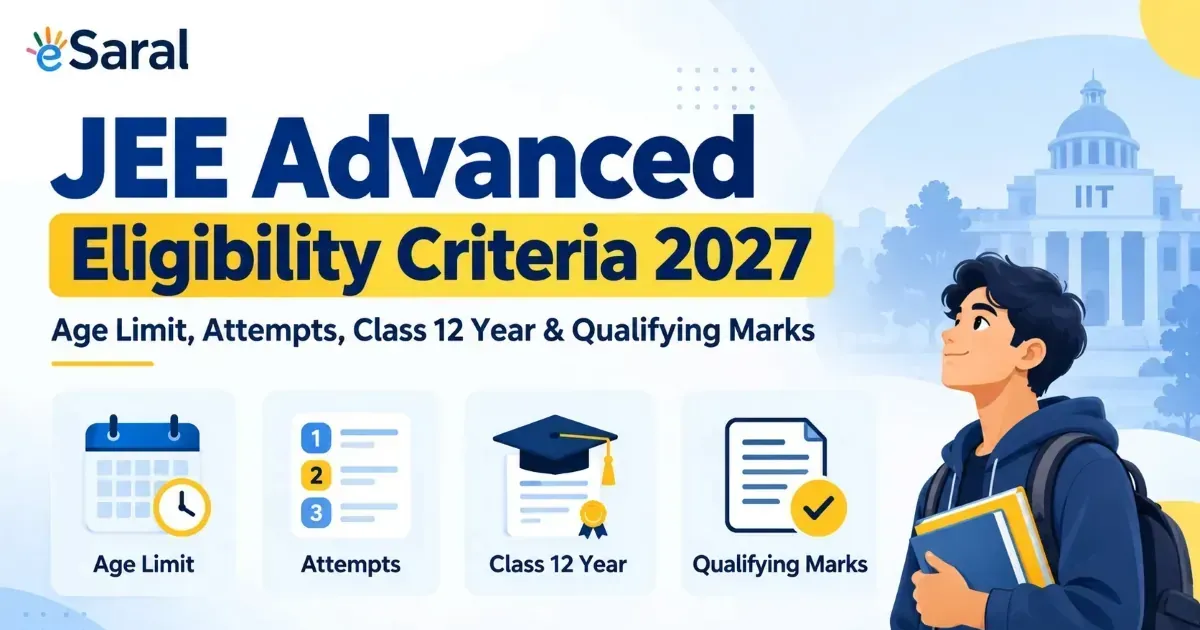
JEE Advanced Eligibility Criteria 2027: Age Limit, Attempts, Class 12 Year & Qualifying Marks
JEE Advanced eligibility 2027 (expected): top 2.5 lakh in JEE Main, born on/after 1 Oct 2002, 2 attempts, Class 12 first appeared in 2026/2027.