
Chemistry Topic-wise JEE Advanced Previous Year Question with Solutions

eSaral Academic and Editorial Team
Summary
Chemistry topic-wise JEE Advanced Previous Year Questions with Solutions cover 22 chapters — from Mole Concept and Chemical Bonding to Organic Chemistry and Thermodynamics — spanning papers. Practising these papers helps JEE aspirants identify high-weightage topics, understand question patterns set by IIT faculty, and benchmark their preparation before the actual exam.
eSaral > JEE Advanced PYQ > Chemistry JEE Advanced Previous Year Questions & Solutions

Most JEE aspirants download a full-year paper and attempt it start to finish. That approach works for mock tests — but not for targeted revision. When you sort JEE Advanced questions by topic, three things happen that full-paper practice cannot replicate:
- You immediately spot recurring concepts within a chapter (e.g., back-to-back years of linked question types in Electrochemistry or Coordination Chemistry).
- You can measure chapter-level accuracy, not just an overall score.
- You understand exactly how IIT paper-setters phrase a concept — subtle language shifts that trip unprepared students.
JEE Advanced is conducted by one of the IITs (on a rotational basis) under the supervision of the Joint Admission Board (JAB). According to the official JEE Advanced information brochure published on jeeadv.ac.In Chemistry, it is divided into Physical, Organic, and Inorganic sections, each tested across both Paper 1 and Paper 2. Solving questions section-by-section builds the granular accuracy this format demands.
Students in eSaral's JEE Advanced batch — taught by IIT Bombay faculty, including verified AIR-41 rankers — use topic-wise papers as a weekly audit tool: one chapter analysed deeply every week alongside concept classes.
"Don't just check whether your answer was right. Read the official solution even when you got the question correct. JEE Advanced setters often design a shorter or more elegant route — spotting those routes builds the speed you need on exam day."
Which Chemistry Topics Carry the Most Weight in JEE Advanced?
How Many Questions Come from Each Chemistry Section?
JEE Advanced Chemistry is broadly split 33–35% each across Physical, Organic, and Inorganic Chemistry. Within those sections, certain chapters consistently generate more questions. The table below is compiled from question-distribution analysis across JEE Advanced papers.
Chapter / Topic | Section | Avg. Questions per Year | Difficulty Level |
|---|---|---|---|
Mole Concept | Physical | 1–2 | Medium |
Chemical Bonding | Physical/Inorganic | 1–2 | Medium–High |
Chemical Equilibrium | Physical | 1–2 | High |
Ionic Equilibrium | Physical | 1 | High |
Thermodynamics | Physical | 1–2 | High |
Electrochemistry (Redox/Oxidation) | Physical | 1–2 | Medium |
Coordination Compounds (p-block, s-block) | Inorganic | 2–3 | High |
Atomic Structure | Physical | 1 | Medium |
General Organic Chemistry | Organic | 1–2 | Medium–High |
Carbonyl Compounds | Organic | 1–2 | High |
Aromatic Compounds | Organic | 1 | Medium |
Halogen Derivatives | Organic | 1 | Medium |
Biomolecules | Organic | 1 | Low–Medium |
Which Three Chemistry Topics Should You Prioritise First?
Based on the weightage data above and patterns seen in IIT question papers since 2009, three topics deserve the closest attention in your revision schedule:
- Chemical Equilibrium + Ionic Equilibrium — Almost every year, at least one multi-concept question links both. Master Ka, Kb, Ksp, and buffer calculations together.
- Carbonyl Compounds + General Organic Chemistry — Named reactions, mechanism-based questions, and multi-step synthesis problems appear in pairs. Build your mechanism maps before attempting past papers.
- p-block and Coordination Chemistry — Inorganic questions look memory-based, but JEE Advanced frames them around applications. Revisit NCERT first: NCERT Solutions for Class 12 Chemistry covers these chapters with solved examples that mirror JEE-style framing.
"Students lose the most marks in Inorganic Chemistry not because the concepts are hard, but because they skip NCERT thoroughly. Every single p-block and s-block question in JEE Advanced from 2015 to 2026 had its root concept in NCERT Class 11 or Class 12. Do not underestimate those chapters."
Complete List of Topic-wise Chemistry Questions with Solutions
Below is the full set of topic-wise JEE Advanced Previous Year Questions with detailed solutions. Each link takes you directly to the chapter-specific question bank:
- Oxidation & Reduction - JEE Advanced Previous Year Questions with Solutions
- Carbonyl Compounds - JEE Advanced Previous Year Questions with Solutions
- Biomolecule - JEE Advanced Previous Year Questions with Solutions
- Alcohol & Ether - JEE Advanced Previous Year Questions with Solutions
- Hydrocarbon - JEE Advanced Previous Year Questions with Solutions
- Halogen Derivatives - JEE Advanced Previous Year Questions with Solutions
- General Organic Chemistry - JEE Advanced Previous Year Questions with Solutions
- Aromatic Compounds - JEE Advanced Previous Year Questions with Solutions
- s-block - JEE Advanced Previous Year Questions with Solutions
- Atomic Structure - JEE Advanced Previous Year Questions with Solutions
- Chemical Equilibrium - JEE Advanced Previous Year Questions with Solutions
- Ionic Equilibrium - JEE Advanced Previous Year Questions with Solutions
- Mole Concept - JEE Advanced Previous Year Questions with Solutions
- Redox Reaction - JEE Advanced Previous Year Questions with Solutions
- Thermochemistry - JEE Advanced Previous Year Questions with Solutions
- States of Matter - JEE Advanced Previous Year Questions with Solution
- Chemical Bonding - JEE Advanced Previous Year Questions with Solutions
- Hydrogen - JEE Advanced Previous Year Questions with Solutions
- Periodic Table - JEE Advanced Previous Year Questions with Solutions
- p-block - JEE Advanced Previous Year Questions with Solutions
- Thermodynamics - JEE Advanced Previous Year Questions with Solutions
- Nomenclature - JEE Advanced Previous Year Questions with Solutions
Once you’ve completed the Chemistry chapters one by one, move on to the complete JEE Advanced exam papers to practise full-length papers and evaluate your preparation under actual exam conditions.
How Should You Use JEE Advanced Previous Year Chemistry Papers Effectively?
Step-by-Step Approach for Maximum Benefit
Solving previous year questions without a structured approach gives you practice but not preparation. Follow this four-step method used inside eSaral's Kota-quality online batches:
Step 1 — Finish the Chapter First
Never jump to previous year questions mid-chapter. Complete the concept, solve standard examples, and attempt NCERT exercises. For Class 11 topics, NCERT Solutions for Class 11 Chemistry are a strong baseline before moving to JEE-level questions.
Step 2 — Attempt Without Solutions
Set a timer. Give each question a genuine effort. JEE Advanced questions are designed to reward structured thinking, not speed. Write down your full working — even for wrong answers.
Step 3 — Analyse Your Errors by Type
Errors fall into three categories: concept gap, calculation mistake, or misreading the question. Log each. Concept gaps send you back to study material. Calculation errors need timed drills. Misreads improve with practice and slowing down on instructions.
Step 4 — Review the Official Solution Path
Even if correct, compare your method with the solution. Practising with eSaral's 5-layer doubt-solving system means any step you don't understand can be escalated from written notes → video solution → live doubt session, so no gap stays unresolved.
How Many Previous Year Papers Should You Solve Before JEE Advanced?
Aim to complete the full topic-wise question bank (at least 2009–2026) for your three highest-priority chapters before moving to the remaining topics. For the final two months, solve complete papers from the last five years under timed, exam-like conditions.
Click here to download Physics Topic-wise JEE Advanced Previous Year Questions with Solutions
Click Here to Download Mathematics Topic-wise JEE Advanced Previous Year Question with Solutions
Click Here to Download Topic-wise JEE Main Previous Year Questions with Solutions
Frequently Asked Questions
Can solving only previous year questions help me crack JEE Advanced Chemistry?
Previous year questions are a vital tool but not a complete strategy on their own. They work best after finishing the chapter concepts and standard problems. Use them to audit your understanding, spot weak areas, and get familiar with IIT's question-framing style — not as a substitute for concept-building
Which Chemistry section is hardest in JEE Advanced — Physical, Organic, or Inorganic?
Physical Chemistry is consistently rated the most calculation-intensive, with Thermodynamics and Equilibrium requiring multi-step reasoning. Organic Chemistry is conceptually demanding because questions combine multiple chapters (for example, GOC + Carbonyl). Inorganic Chemistry is factual but requires precise NCERT knowledge. Most students find Physical Chemistry takes the most preparation time.
How many years of JEE Advanced Chemistry previous year questions are available here?
Questions from 2009 to 2024 are available, giving you 15+ years of topic-wise papers with detailed solutions. This range covers multiple shifts in paper pattern — including the introduction of numerical answer-type and matrix-matching questions — so you can see exactly how each chapter has evolved.
Should I solve JEE Advanced Chemistry papers topic-wise or year-wise?
Topic-wise practice is recommended during the preparation phase (Class 11–12 or early in a dropper year) because it builds chapter-level accuracy. Year-wise full-paper practice is best in the last 8–10 weeks before the exam to simulate real exam pressure, time management, and the mixed-chapter experience of the actual test.
Which Chemistry topics from JEE Advanced are also important for JEE Main?
Almost all topics overlap. Mole Concept, Chemical Bonding, Equilibrium, Organic Reaction Mechanisms, and p-block Chemistry are heavily tested in both exams. However, JEE Advanced questions demand deeper conceptual reasoning and often combine two or more chapters in a single question, unlike JEE Main's more direct format.
Are JEE Advanced Chemistry solutions on eSaral solved step-by-step?
Yes. Each solution is worked out step-by-step with concept explanations, not just final answers. Solutions are prepared by eSaral's IIT Bombay faculty team, including faculty with All India AIR-41, ensuring the method taught reflects how top rankers actually approach the problem.
Team eSaral
eSaral Academic and Editorial Team
Team eSaral is the collective author profile for educational content created by eSaral’s teachers and academic contributors. The team draws on expertise from IIT graduates, doctors, experienced educators and subject specialists to develop resources for JEE, NEET and school students. Our articles aim to explain concepts clearly and help students study with confidence.
Related Posts
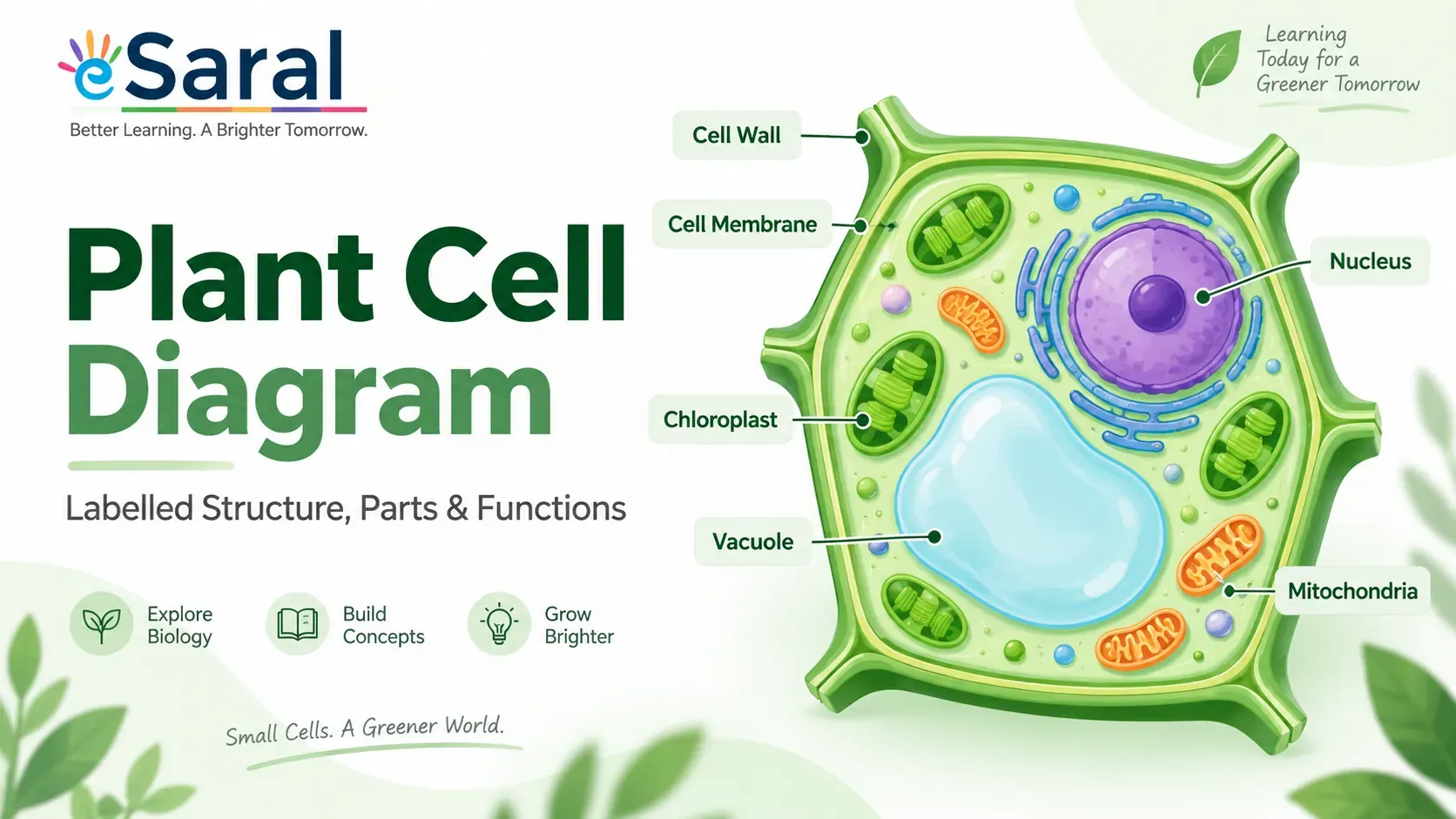
Plant Cell Diagram: Labelled Structure, Parts and Functions
Simple, labelled plant cell diagram with parts and functions. Covers plant cell structure for Class 6, 7, 8, 9, 10 and 11 students, CBSE-aligned.
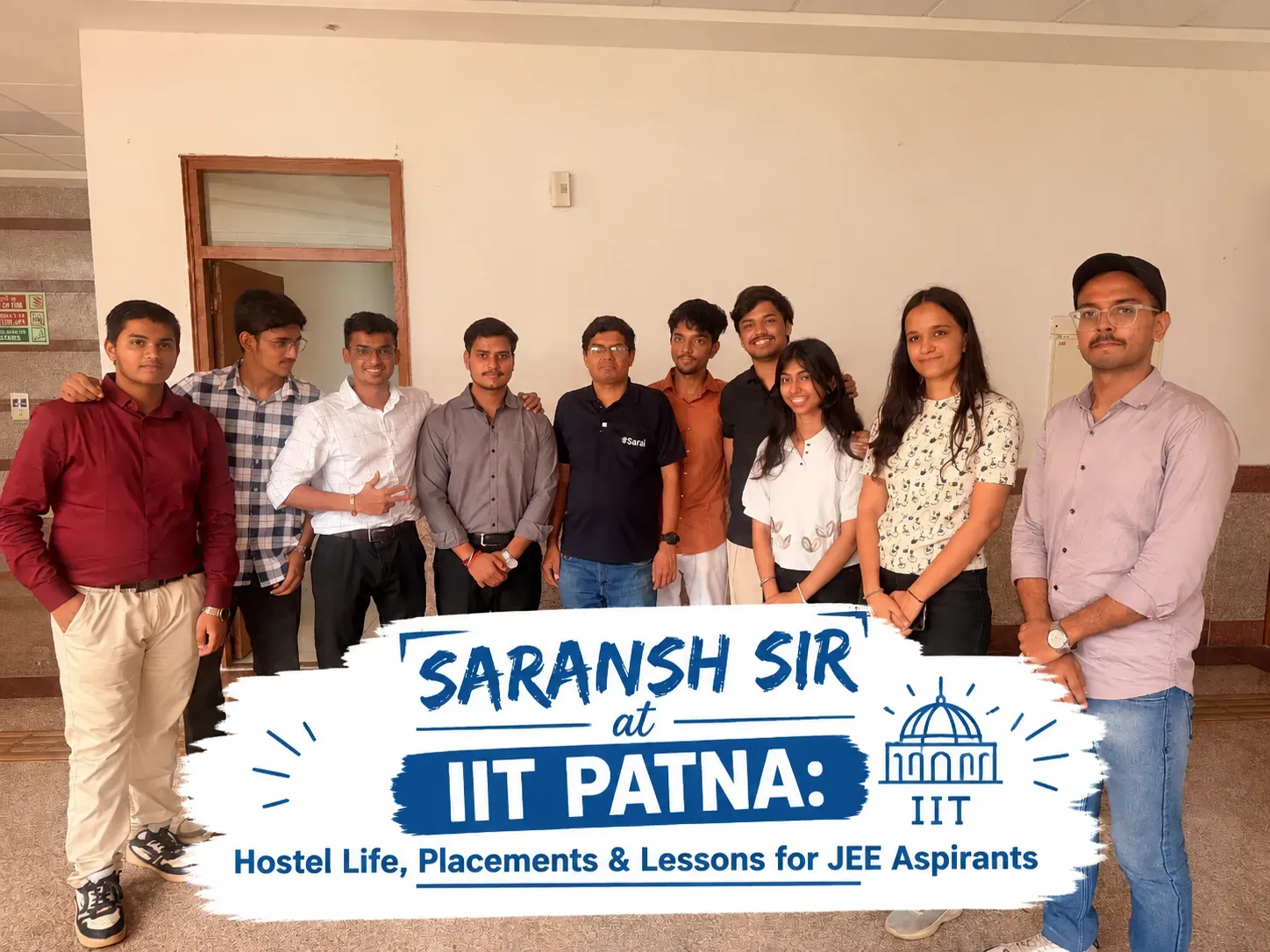
Saransh Gupta Sir's Visit to IIT Patna: Hostel Life, Placements & Lessons for JEE Aspirants
Inside Saransh Gupta Sir's IIT Patna visit — hostel life, the library, placements, internships, and real advice for JEE aspirants from students living the IIT dream.
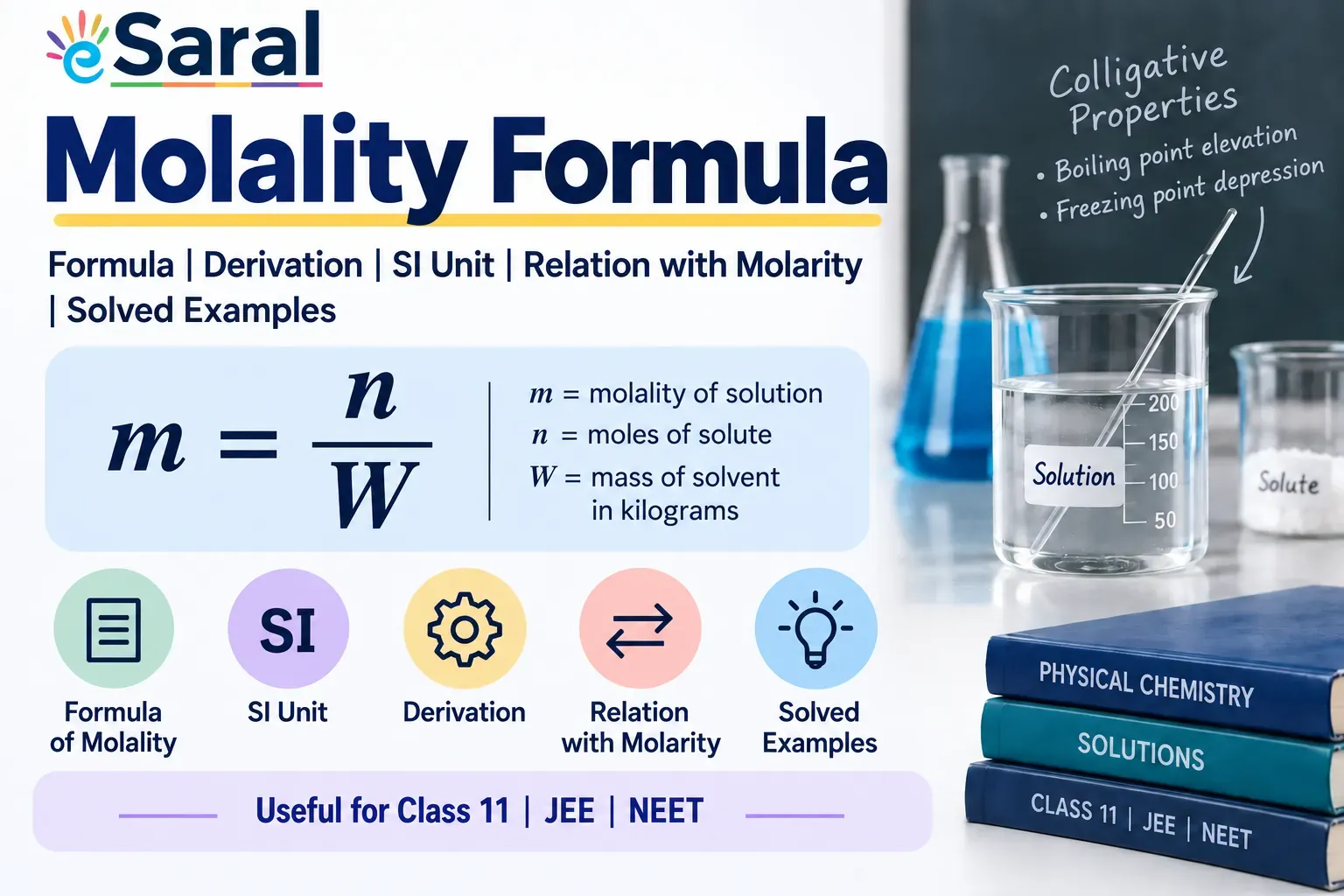
Molality Formula: Formula for Molality, Derivation & Solved Examples
Molality formula is $m = \dfrac{n}{W}$. Learn the formula of molality, its SI unit, derivation, relation with molarity, and solved examples for Class 11, JEE and NEET.
BITSAT Previous Year Question Paper PDF
Download BITSAT previous year question papers PDF. Get year-wise BITSAT PYQs, memory-based papers, exam pattern, and preparation tips to improve your BITSAT preparation.

Teachers’ Day 2026 at eSaral Gurukul: Celebrating the Bond Between Students, Teachers & Mentors
See how Teachers’ Day 2026 was celebrated at eSaral Gurukul, reflecting the bond among students, teachers, and mentors, and the role of guidance beyond academics.
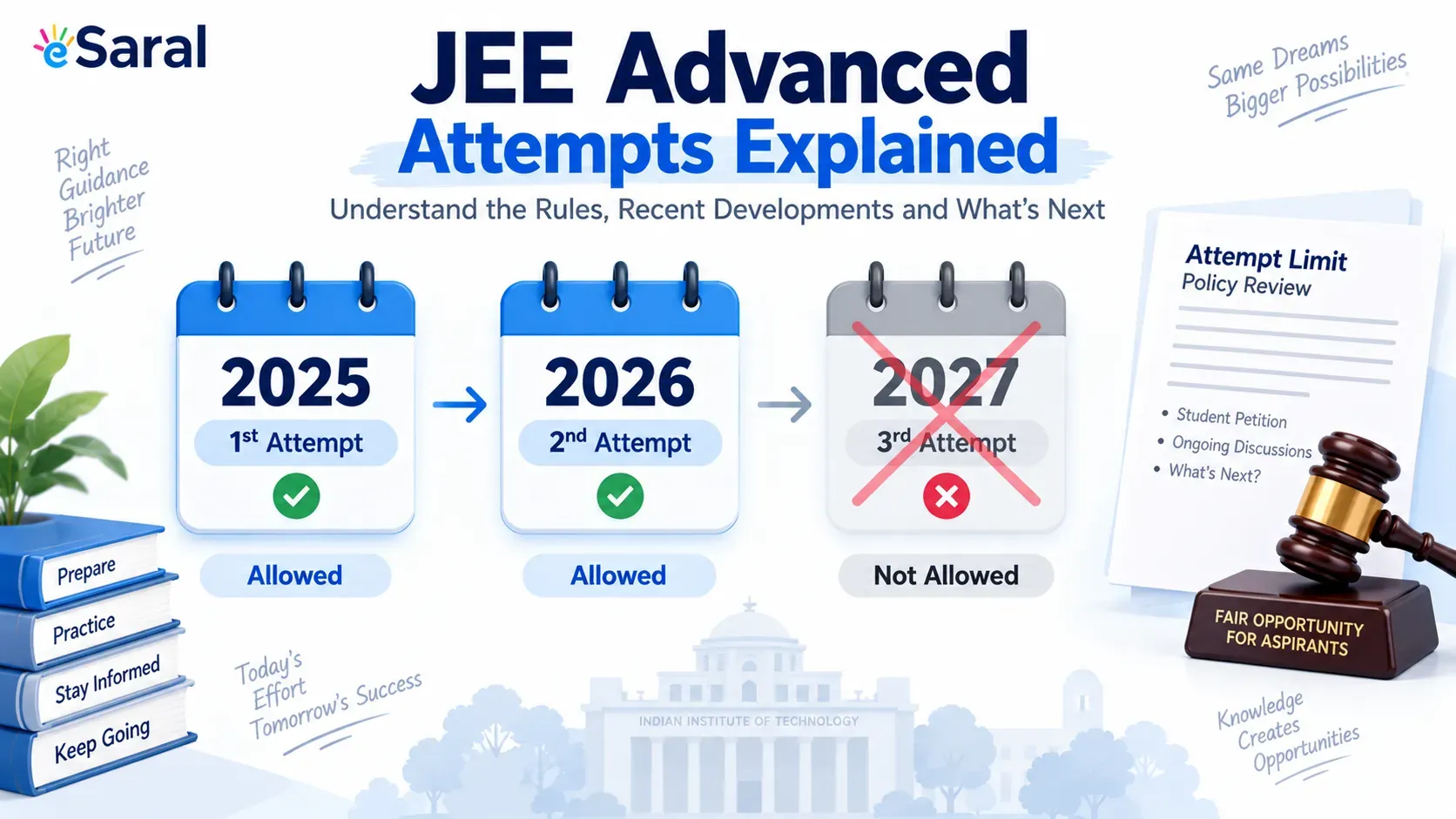
JEE Advanced Attempts: Can You Give It a Third Time? Rules Explained
JEE Advanced attempts: current rule is 2 consecutive years only: full eligibility criteria, the 2025 third-attempt controversy, and the latest 2026 petition news.
Best JEE Preparation App
Best JEE preparation app for Main & Advanced: AI mock tests, live doubt-solving, thousands of practice questions. JEE preparation app for droppers & Class 11-12.
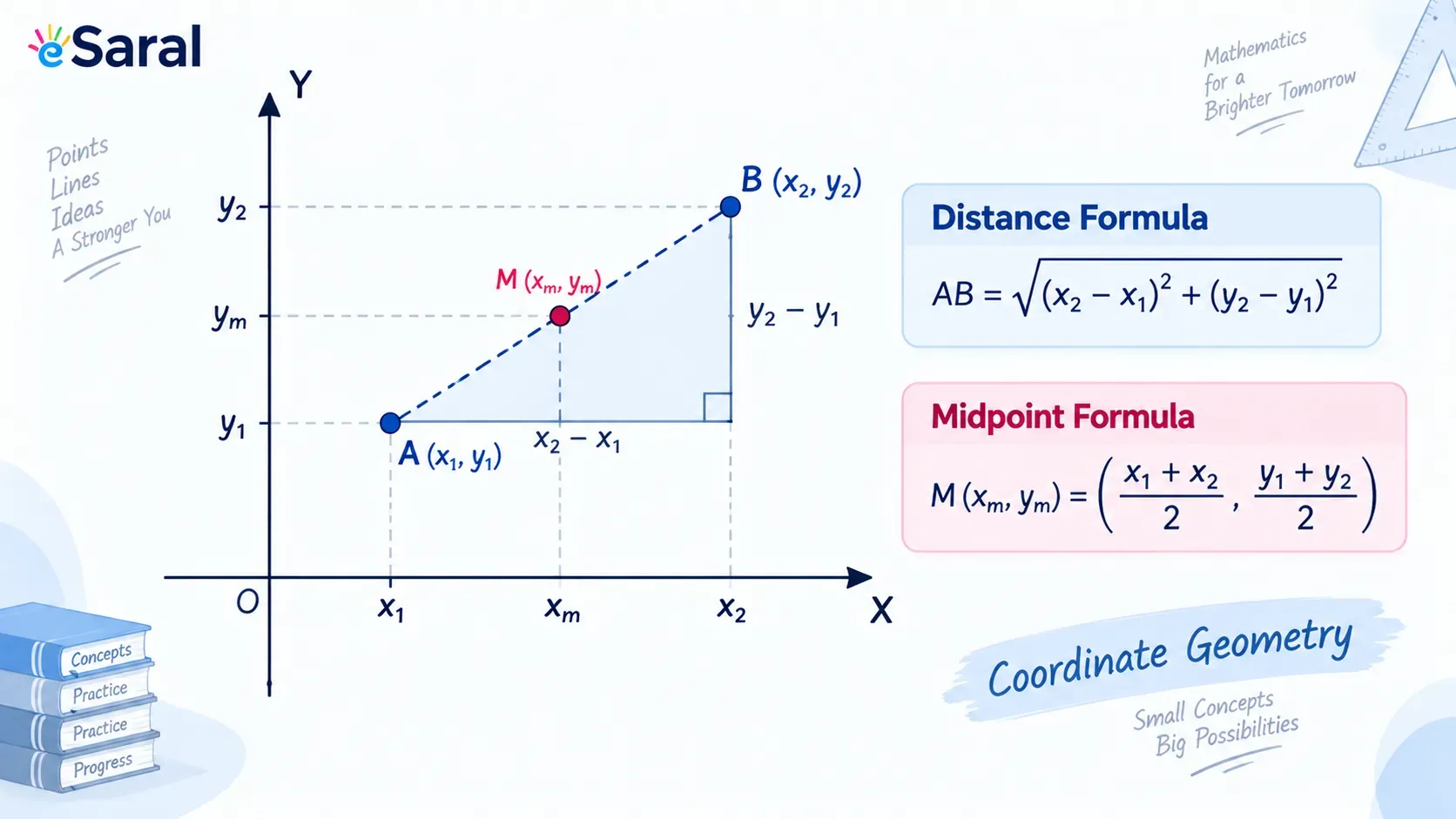
Coordinate Geometry Class 10: Formulas, Notes & Solved Examples
Coordinate geometry class 10: complete CBSE formulas — distance, section, midpoint and area of triangle — with derivation, notes and solved examples.
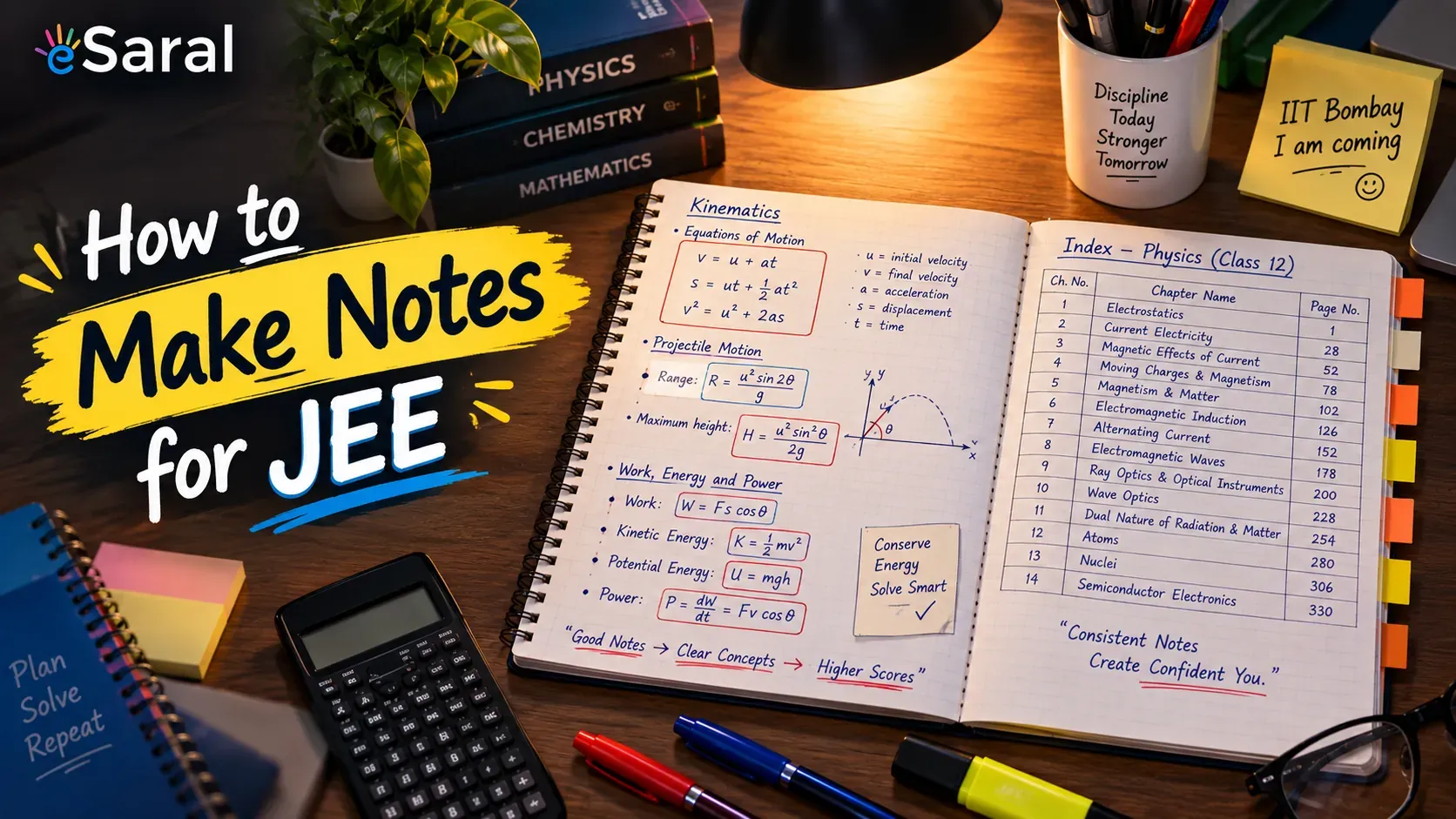
How to make Notes For JEE Smart Notes Strategy of an AIR 41
Learn how to make notes for JEE the way toppers do — indexing, shorthand, and smart short notes for JEE that cut revision time to just 5–7 days.
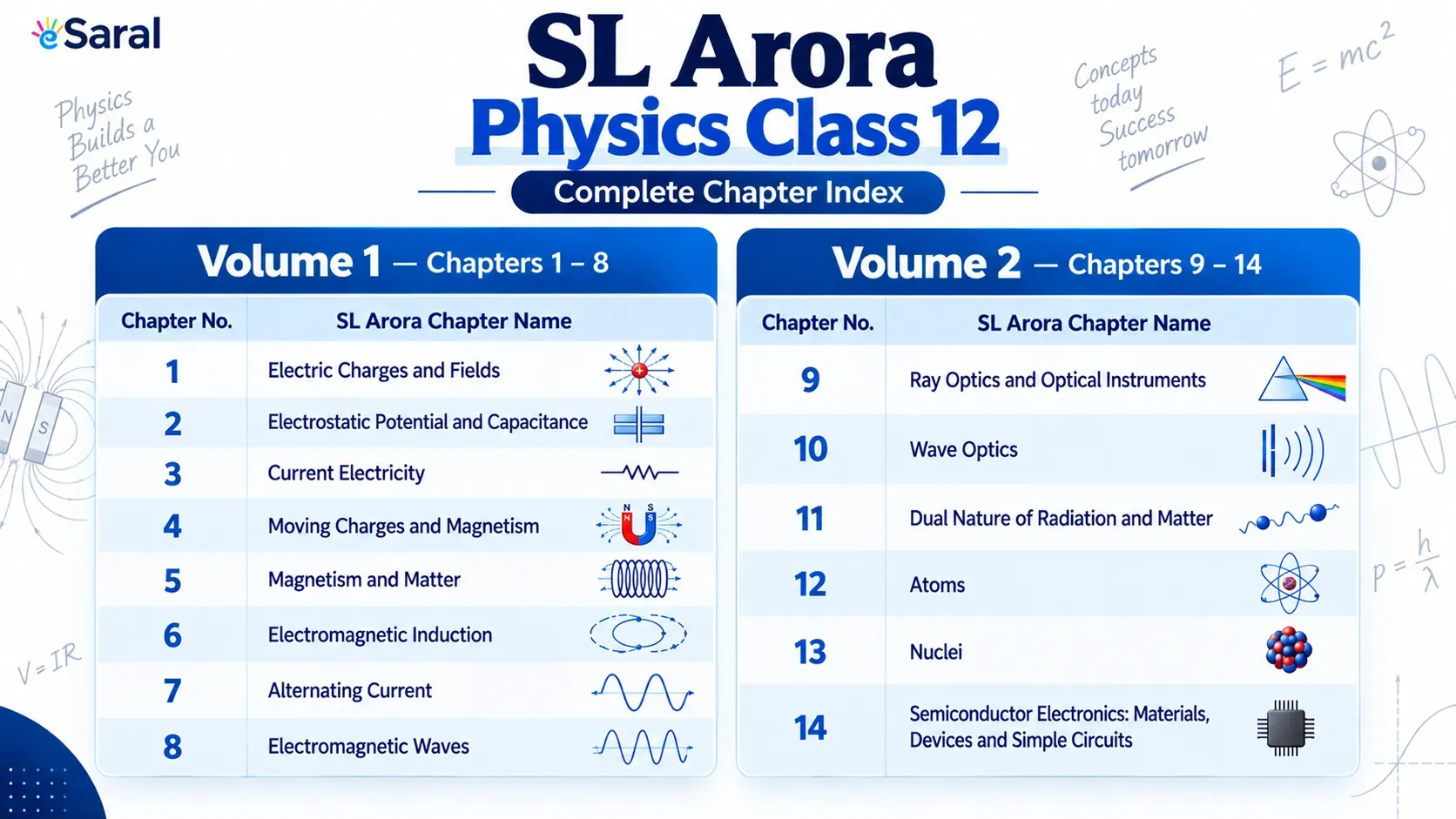
SL Arora Physics Class 12 Index – Chapter List for Volume 1 & 2
SL Arora Physics Class 12 index — complete chapter list for Volume 1 & 2, mapped to NCERT solutions for board, JEE Main, and NEET preparation.